
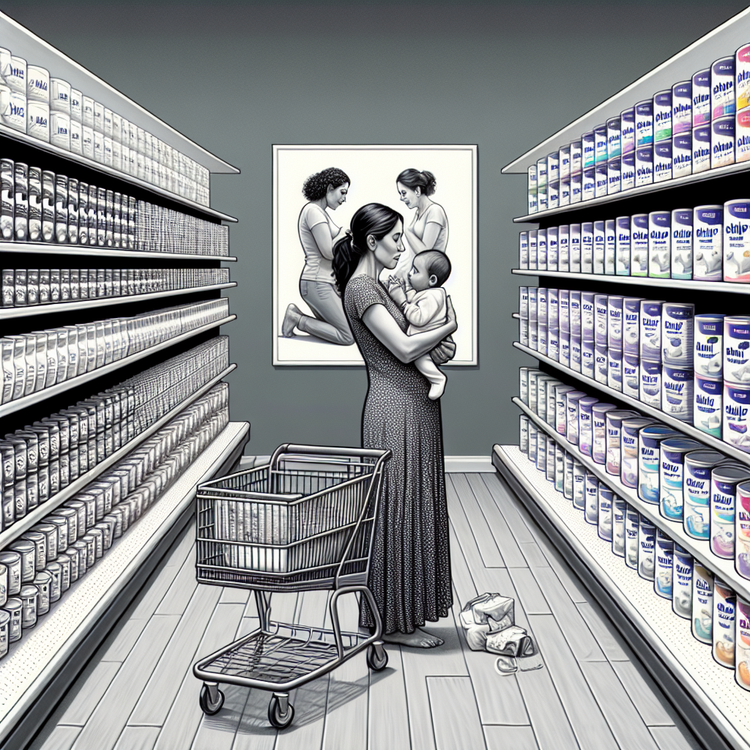
The cost of baby formula has been increasing, causing financial difficulties for many parents. Single mother Emma Davies, for example, struggles to afford formula for her 13-week-old daughter. Despite the high cost, she refuses to buy cheaper alternatives because she wants the best for her child. Other parents share this sentiment and are willing to make sacrifices to ensure their children are well-fed. According to the Competition and Markets Authority (CMA), formula prices have risen by 25% in the past two years, resulting in significant profits for formula manufacturers.
The market for baby formula is dominated by two major players: Danone, which owns the Aptamil and Cow & Gate brands, and Nestle, which owns SMA and Little Steps. These companies hold an 85% market share, limiting the availability of alternative brands. The CMA suggests that parents could save £500 in the first year of their baby's life by exploring other options. However, some parents worry that cheaper brands may be less nutritious. Professor Amy Brown, an expert in maternal and infant health, reassures parents that all infant formulas are tightly regulated to ensure they contain the necessary nutrients.
One reason parents may be hesitant to switch to cheaper brands is the belief that higher prices indicate better quality. However, price does not necessarily reflect the quality of the product. The UK law prohibits the advertising of infant formula for babies up to six months old, as it may discourage breastfeeding. Retailers are also restricted from promoting special offers for infant formula, although they can do so for follow-on formula for babies older than six months. Some supermarkets, such as Iceland, are calling for a change in these regulations to provide more options for parents and alleviate financial pressures.
The limited availability of own-brand formula products contributes to the problem. Currently, Aldi is the only supermarket that offers its own brand of formula called Mamia. Campaigners are urging more retailers to follow suit to provide affordable alternatives. The rising cost of formula, along with other expenses such as bills and rent, has put many families under significant financial strain. Sophie Livingstone, CEO of charity Little Village HQ, reports that families are making difficult choices, such as diluting formula or rationing diapers, due to financial constraints.
The CMA has announced an investigation into the baby formula market, with an update expected in mid-2024. The increasing demand for assistance from charities like Little Village HQ indicates the growing pressure on families. The cost of living has risen, making it even more challenging for parents to provide for their children.
Original news source: Baby formula soaring costs: 'I struggle, but I won’t buy a cheaper brand' (BBC)
🎧 Listen:
📖 Vocabulary:
Group or Classroom Activities
Warm-up Activities:
– News Summary
Instructions: In pairs or small groups, students will read the article and then collaboratively write a summary of the main points. They should focus on capturing the key information and presenting it in a concise and clear manner. Afterward, each group can share their summaries with the class.
– Opinion Poll
Instructions: Students will work individually or in pairs to create a short opinion poll related to the topic of baby formula prices. They should come up with at least five questions that explore different perspectives and attitudes. Once the polls are created, students can exchange them with their classmates and collect responses. They can then analyze and discuss the results as a class.
– Headline Creation
Instructions: In pairs or small groups, students will create catchy and informative headlines based on the article. They should aim to capture the essence of the topic and attract readers' attention. Afterward, each group can share their headlines and discuss why they chose them.
– Pros and Cons
Instructions: Students will create a pros and cons list related to the topic of baby formula prices. They should consider both sides of the argument and include at least three points in each list. Once the lists are complete, students can pair up and engage in a debate, presenting their points and discussing the advantages and disadvantages of different perspectives.
– Future Predictions
Instructions: In pairs or small groups, students will discuss and make predictions about the future of baby formula prices. They should consider factors such as market trends, consumer demands, and potential regulatory changes. Each group can then present their predictions to the class and engage in a discussion about the likelihood and potential impact of their scenarios.
🤔 Comprehension Questions:
🎧✍️ Listen and Fill in the Gaps:
The cost of baby formula has been increasing, causing financial difficulties for many parents. mother Emma Davies, for example, struggles to afford formula for her 13-week-old daughter. Despite the high cost, she refuses to buy alternatives because she wants the best for her child. Other parents share this sentiment and are to make sacrifices to ensure their children are well-fed. According to the Competition and Authority (CMA), formula prices have risen by 25% in the past two years, resulting in significant profits for formula manufacturers. The market for baby formula is dominated by two major players: Danone, which owns the Aptamil and Cow & Gate brands, and Nestle, which owns SMA and Little Steps. These companies hold an 85% market share, limiting the availability of alternative brands. The CMA suggests that parents could save £500 in the first year of their baby's life by exploring other options. However, some parents worry that cheaper brands may be less . Professor Amy Brown, an expert in maternal and infant health, parents that all infant formulas are tightly regulated to ensure they contain the necessary nutrients. One reason parents may be hesitant to switch to cheaper brands is the belief that higher indicate quality. However, price does not necessarily reflect the quality of the product. The UK law the advertising of infant formula for babies up to six months old, as it may discourage breastfeeding. Retailers are also restricted from promoting special for infant formula, although they can do so for follow-on formula for babies older than six months. Some supermarkets, such as , are calling for a in these regulations to provide more options for parents and alleviate financial pressures. The limited availability of own-brand formula products contributes to the problem. Currently, Aldi is the only supermarket that offers its own brand of formula called Mamia. Campaigners are urging more retailers to follow suit to provide affordable alternatives. The rising cost of formula, along with other expenses such as bills and rent, has put many under significant financial strain. Sophie Livingstone, CEO of charity Little Village HQ, reports that families are making difficult choices, such as diluting formula or rationing diapers, due to financial constraints. The CMA has an into the baby formula market, with an update expected in mid-2024. The increasing demand for from charities like Little Village HQ indicates the growing pressure on families. The cost of living has risen, making it even more challenging for parents to provide for their children.
💬 Discussion Questions:
1. What is your opinion on the rising cost of baby formula?
2. How would you feel if you were a parent struggling to afford formula for your child?
3. Do you think it's worth it for parents to buy more expensive formula for their children? Why or why not?
4. What are some sacrifices you think parents might have to make in order to afford formula for their children?
5. How do you think the limited availability of alternative brands affects parents' choices?
6. Do you believe that higher prices always indicate better quality? Why or why not?
7. What do you think about the UK law that prohibits the advertising of infant formula for babies up to six months old?
8. Should retailers be allowed to promote special offers for infant formula? Why or why not?
9. How do you think the limited availability of own-brand formula products contributes to the problem?
10. Have you ever had to make difficult choices due to financial constraints? Can you share your experience?
11. What do you think about the CMA's investigation into the baby formula market? Do you think it will lead to any changes?
12. Have you noticed an increase in the cost of living in your country? How has it affected families?
13. Do you think the government should provide more financial assistance to families struggling to afford baby formula? Why or why not?
14. What are some other ways parents can save money on baby formula without compromising their child's nutrition?
15. How do you think the rising cost of formula affects parents' overall well-being and stress levels?
Individual Activities
📖💭 Vocabulary Meanings:
Click a dot next to a word, then click the dot next to its meaning to draw a line connecting them.
Words
Meanings
🔡 Multiple Choice Questions:
🕵️ True or False Questions:
📝 Write a Summary:
Write a summary of this news article in two sentences.
Check your writing now with the best free AI for English writing!