

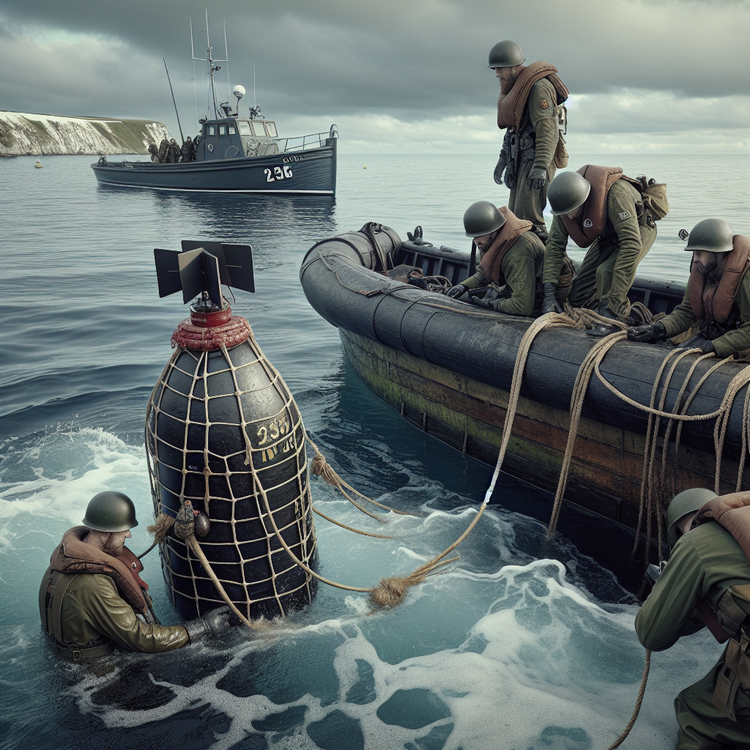
The bomb was found near Langeland, a Danish island located in the southern part of the country. It had become entangled in the fisherman's net, prompting him to seek help. The Danish navy responded swiftly to the situation and took the necessary steps to ensure the safe detonation of the bomb.
The controlled explosion was carried out to minimize any potential risks or damage. By placing the bomb back in the water and attaching an explosive charge, the navy was able to control the explosion and ensure that it occurred at a safe depth. This approach allowed for the bomb to be safely disposed of without causing harm to anyone or any property.
This incident serves as a reminder of the lasting impact of World War Two and the presence of unexploded ordnance in certain areas. It also highlights the importance of prompt reporting and cooperation between civilians and authorities in dealing with such situations. The Danish navy's quick response and expertise in handling the bomb ensured a safe outcome for everyone involved.
Original news source: World War Two bomb detonated off coast of Denmark (BBC)
🎧 Listen:
📖 Vocabulary:
Group or Classroom Activities
Warm-up Activities:
– News Summary
Instructions:
1. Divide the class into pairs.
2. Give each pair a copy of the article.
3. Instruct the pairs to read the article and summarize it in 3-4 sentences.
4. After a designated time, have pairs share their summaries with the class.
5. Encourage discussion and compare the different summaries.
– Vocabulary Pictionary
Instructions:
1. Write a list of vocabulary words from the article on the board.
2. Divide the class into teams.
3. Give each team a whiteboard or a piece of paper.
4. Instruct each team to choose a word from the list and draw a picture representing that word.
5. The other teams must guess the word based on the drawing.
6. Each team takes turns drawing and guessing until all the words have been used.
– Pros and Cons
Instructions:
1. Divide the class into two groups.
2. Assign one group to represent the pros of detonating the bomb and the other group to represent the cons.
3. Give the groups time to discuss and come up with arguments to support their assigned position.
4. Have each group present their arguments to the class.
5. Encourage discussion and debate among the students.
– Future Predictions
Instructions:
1. Instruct each student to individually write down three predictions about the impact of the detonated bomb.
2. After a designated time, have students share their predictions with a partner.
3. Encourage discussion and ask students to explain their reasoning behind each prediction.
4. Have a few students share their predictions with the class and facilitate a class discussion about the potential outcomes.
🤔 Comprehension Questions:
The bomb weighed 130kg.
The bomb was discovered by a fisherman.
The fisherman immediately reported the bomb to the authorities.
The Danish navy placed the bomb back in the water and attached a 10kg explosive charge to it to ensure a controlled explosion at a safe depth.
The bomb was found near Langeland, a Danish island located in the southern part of the country.
The navy placed the bomb back in the water to control the explosion and ensure it occurred at a safe depth.
The purpose of the controlled explosion was to safely dispose of the bomb without causing harm to anyone or any property.
This incident reminds us of the lasting impact of World War Two and the presence of unexploded ordnance in certain areas. It also highlights the importance of prompt reporting and cooperation between civilians and authorities in dealing with such situations.
🎧✍️ Listen and Fill in the Gaps:
A World War Two bomb was recently d off the coast of . The bomb, weighing 130kg, was by a fisherman who immediately reported it to the authorities. In order to safely detonate the bomb, sappers from the Danish navy placed it back in the water and attached a 10kg charge to it. The controlled explosion took place 15 meters below the surface, to the defense department. The bomb was found near Langeland, a Danish island located in the part of the . It had become entangled in the fisherman's net, him to seek help. The Danish navy responded swiftly to the situation and took the necessary steps to ensure the safe detonation of the bomb. The controlled explosion was carried out to minimize any potential risks or damage. By the bomb back in the and an explosive charge, the navy was able to control the explosion and ensure that it occurred at a safe depth. This approach allowed for the bomb to be safely of without causing harm to anyone or any property. This incident serves as a reminder of the lasting impact of World War Two and the presence of unexploded ordnance in certain . It also highlights the of reporting and cooperation between civilians and authorities in dealing with such situations. The Danish navy's quick response and expertise in handling the bomb a safe outcome for everyone involved.
💬 Discussion Questions:
1. What is your opinion on the presence of unexploded ordnance from World War Two in certain areas?
2. How would you feel if you discovered a bomb while fishing?
3. Do you think the fisherman did the right thing by immediately reporting the bomb to the authorities? Why or why not?
4. Have you ever encountered a dangerous situation like this? If so, how did you handle it?
5. What measures do you think should be taken to prevent accidents or harm caused by unexploded ordnance?
6. Do you think the Danish navy's response to this situation was effective? Why or why not?
7. How do you think the presence of unexploded ordnance affects the local communities and their daily lives?
8. Have you ever been involved in a situation where prompt reporting and cooperation between civilians and authorities was necessary? If so, what was it like?
9. What do you think are the challenges faced by authorities in dealing with unexploded ordnance?
10. How do you think the controlled explosion was carried out to minimize risks and damage?
11. Do you think it is important for governments to allocate resources to deal with unexploded ordnance? Why or why not?
12. How do you think the presence of unexploded ordnance affects tourism and economic development in certain areas?
13. What precautions do you think fishermen and other people who work in the sea should take to avoid encountering dangerous objects like bombs?
14. Do you think the lasting impact of World War Two and the presence of unexploded ordnance should be more widely discussed? Why or why not?
15. How do you think the experience of finding and safely detonating a bomb would affect the fisherman and the navy personnel involved?
Individual Activities
📖💭 Vocabulary Meanings:
Click a dot next to a word, then click the dot next to its meaning to draw a line connecting them.
Words
Meanings
🔡 Multiple Choice Questions:
🕵️ True or False Questions:
📝 Write a Summary:
Write a summary of this news article in two sentences.
Check your writing now with the best free AI for English writing!