
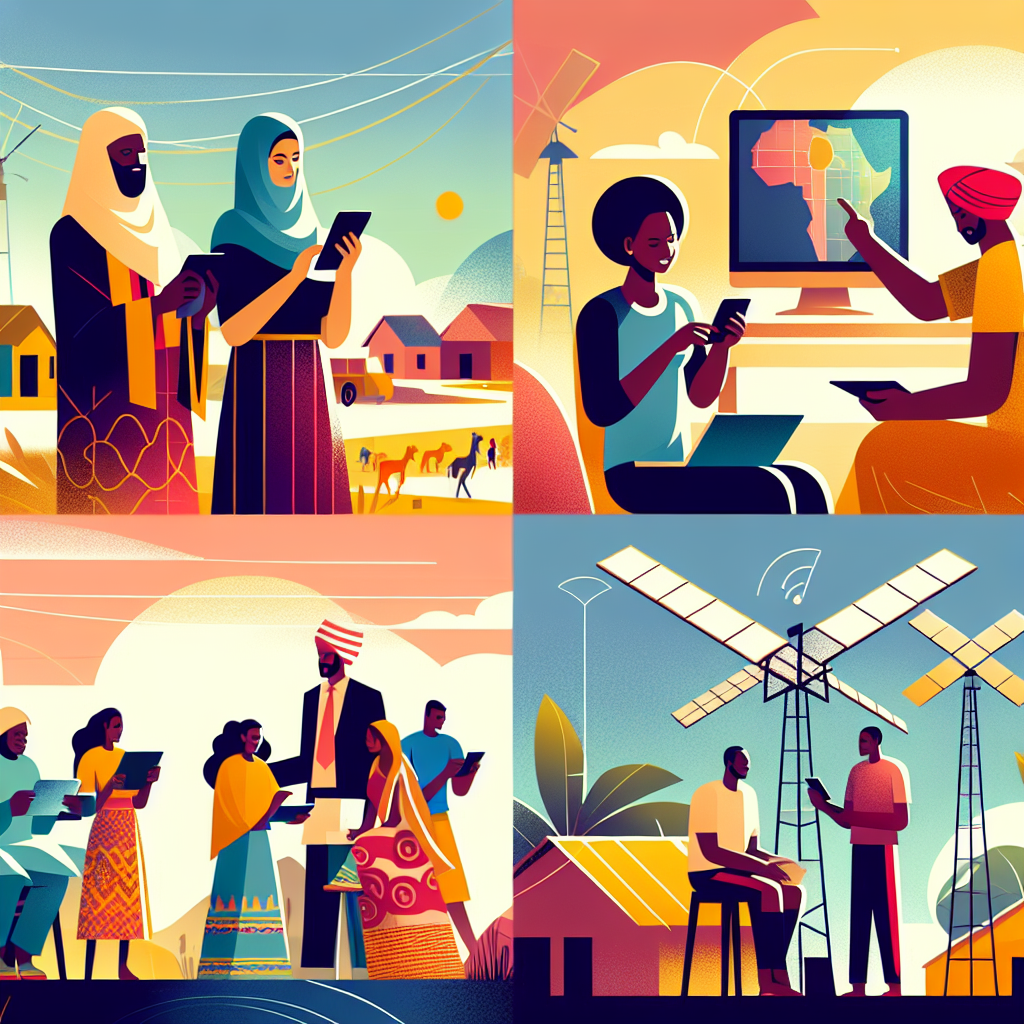
Elon Musk's Starlink, a satellite internet company, is making waves in Africa by promising to provide high-speed broadband services to remote areas. As the largest satellite internet provider globally, Starlink has already launched its services in multiple African countries. The question now is whether Starlink can effectively address the issue of unreliable internet access in Africa.
The potential impact of Starlink in Africa is significant, as it could bridge the digital divide and improve connectivity in underserved regions. By offering superfast broadband services, Starlink has the potential to revolutionize how people in Africa access the internet, enabling them to participate more fully in the digital economy and global communication networks.
Despite the promise of Starlink, challenges such as affordability and infrastructure limitations may hinder its widespread adoption in Africa. While the technology holds great promise, its long-term sustainability and scalability in the African context remain to be seen. Additionally, regulatory hurdles and competition from existing internet service providers could also impact Starlink's success in the region.
As Africa continues to strive for greater digital inclusion and connectivity, innovative solutions like Starlink play a crucial role in advancing these goals. The success of Starlink in Africa could pave the way for similar initiatives to expand internet access and bridge the digital divide in other underserved regions around the world.
In conclusion, while Starlink has the potential to be a game-changer for Africa by providing high-speed broadband services to remote areas, its long-term impact and scalability in the region remain uncertain. As technology continues to evolve, initiatives like Starlink offer hope for improved connectivity and digital inclusion in Africa and beyond.
Original news source: Is Elon Musk’s Starlink a game changer for Africa? (BBC)
🎧 Listen:
📖 Vocabulary:
Group or Classroom Activities
Warm-up Activities:
– News Summary
Instructions: Ask students to work in pairs and summarize the main points of the article in their own words. Encourage them to focus on the key information and main ideas while practicing paraphrasing skills.
– Opinion Poll
Instructions: Divide the class into groups and have each group come up with two questions related to the article to ask their classmates. Encourage them to discuss and debate their opinions on the topic, fostering critical thinking and communication skills.
– Vocabulary Pictionary
Instructions: Write down key vocabulary words from the article on separate cards. Divide the class into teams and have one student pick a card and draw the word on the board without using letters or numbers. Their team must guess the word based on the drawing. This activity helps reinforce vocabulary retention and creativity.
– Pros and Cons
Instructions: Ask students to list the pros and cons of using satellite internet services like Starlink in Africa. Encourage them to think critically about the benefits and drawbacks, and facilitate a class discussion to explore different perspectives and viewpoints on the topic.
– Future Predictions
Instructions: In pairs, have students discuss and make predictions about the future of internet access in Africa with the introduction of services like Starlink. Encourage them to consider potential challenges, advancements, and societal impacts. After the discussion, ask some pairs to share their predictions with the class.
🤔 Comprehension Questions:
Starlink could bridge the digital divide in Africa by improving connectivity in underserved regions and enabling people to participate more fully in the digital economy and global communication networks.
Challenges such as affordability, infrastructure limitations, regulatory hurdles, and competition from existing internet service providers could hinder the widespread adoption of Starlink in Africa.
Starlink's superfast broadband services could revolutionize internet access in Africa by providing high-speed broadband services to remote areas, thereby improving connectivity and enabling greater participation in the digital economy.
Regulatory hurdles and competition from existing internet service providers could impact Starlink's success in Africa by posing challenges to its long-term sustainability and scalability in the region.
The success of Starlink in Africa could pave the way for similar initiatives to expand internet access and bridge the digital divide in other underserved regions globally, showcasing the potential impact of innovative solutions in advancing digital inclusion.
It is important for Africa to strive for greater digital inclusion and connectivity to bridge the digital divide, improve access to information and opportunities, and enable participation in the global digital economy.
Uncertainties remain regarding the long-term impact and scalability of Starlink in Africa, particularly in terms of its sustainability, affordability, and ability to overcome infrastructure limitations and regulatory challenges.
Initiatives like Starlink offer hope for improved connectivity and digital inclusion in Africa and beyond by providing innovative solutions to bridge the digital divide, improve internet access, and enable greater participation in the global digital economy.
🎧✍️ Listen and Fill in the Gaps:
Elon Musk's Starlink, a satellite internet , is making waves in Africa by promising to provide high-speed broadband services to remote . As the satellite internet provider globally, Starlink has already launched its services in multiple countries. The question now is whether Starlink can effectively address the issue of unreliable internet access in Africa. The potential impact of Starlink in Africa is significant, as it could bridge the digital divide and improve connectivity in regions. By offering superfast broadband services, Starlink has the to revolutionize how people in Africa access the internet, enabling them to more fully in the digital and global communication networks. Despite the promise of Starlink, challenges such as affordability and infrastructure limitations may hinder its widespread adoption in Africa. While the technology holds great promise, its long-term sustainability and scalability in the African context remain to be seen. Additionally, regulatory and competition from existing internet service providers could also 's success in the . As Africa continues to strive for greater digital inclusion and connectivity, innovative solutions like Starlink play a crucial role in advancing these goals. The success of Starlink in Africa could pave the way for similar initiatives to expand access and bridge the digital divide in other underserved regions around the world. In conclusion, while Starlink has the potential to be a game-changer for Africa by providing high-speed broadband services to remote areas, its long-term impact and scalability in the region remain uncertain. As technology to , initiatives like Starlink offer hope for improved connectivity and digital in Africa and beyond.
💬 Discussion Questions:
1. What is the importance of reliable internet access in today's digital world?
2. How do you think access to high-speed broadband services can impact the economic development of underserved regions?
3. Do you believe that initiatives like Starlink can truly bridge the digital divide in Africa? Why or why not?
4. How would you feel if you lived in a remote area with limited internet access and suddenly had access to superfast broadband services like Starlink?
5. Do you think affordability will be the main barrier for widespread adoption of Starlink in Africa? Why or why not?
6. What are some potential challenges that Starlink may face in terms of infrastructure limitations in Africa?
7. How do you think the success of Starlink in Africa could influence internet access initiatives in other underserved regions globally?
8. Do you believe that regulatory hurdles will pose a significant challenge to Starlink's success in Africa? Why or why not?
9. What impact do you think increased internet access in Africa could have on education and learning opportunities?
10. How important is it for internet service providers to focus on sustainability and scalability when expanding services in developing regions like Africa?
11. Do you think competition from existing internet service providers will help or hinder Starlink's success in Africa? Why?
12. What are some potential benefits and drawbacks of relying on satellite internet services like Starlink in remote areas?
13. How do you think the digital economy in Africa could be transformed by widespread access to high-speed broadband services?
14. Why do you think initiatives like Starlink are crucial for advancing digital inclusion and connectivity in underserved regions?
15. In your opinion, what role should governments play in supporting initiatives like Starlink to improve internet access in remote areas?
Individual Activities
📖💭 Vocabulary Meanings:
Click a dot next to a word, then click the dot next to its meaning to draw a line connecting them.
Words
Meanings
🔡 Multiple Choice Questions:
🕵️ True or False Questions:
📝 Write a Summary:
Write a summary of this news article in two sentences.
Check your writing now with the best free AI for English writing!