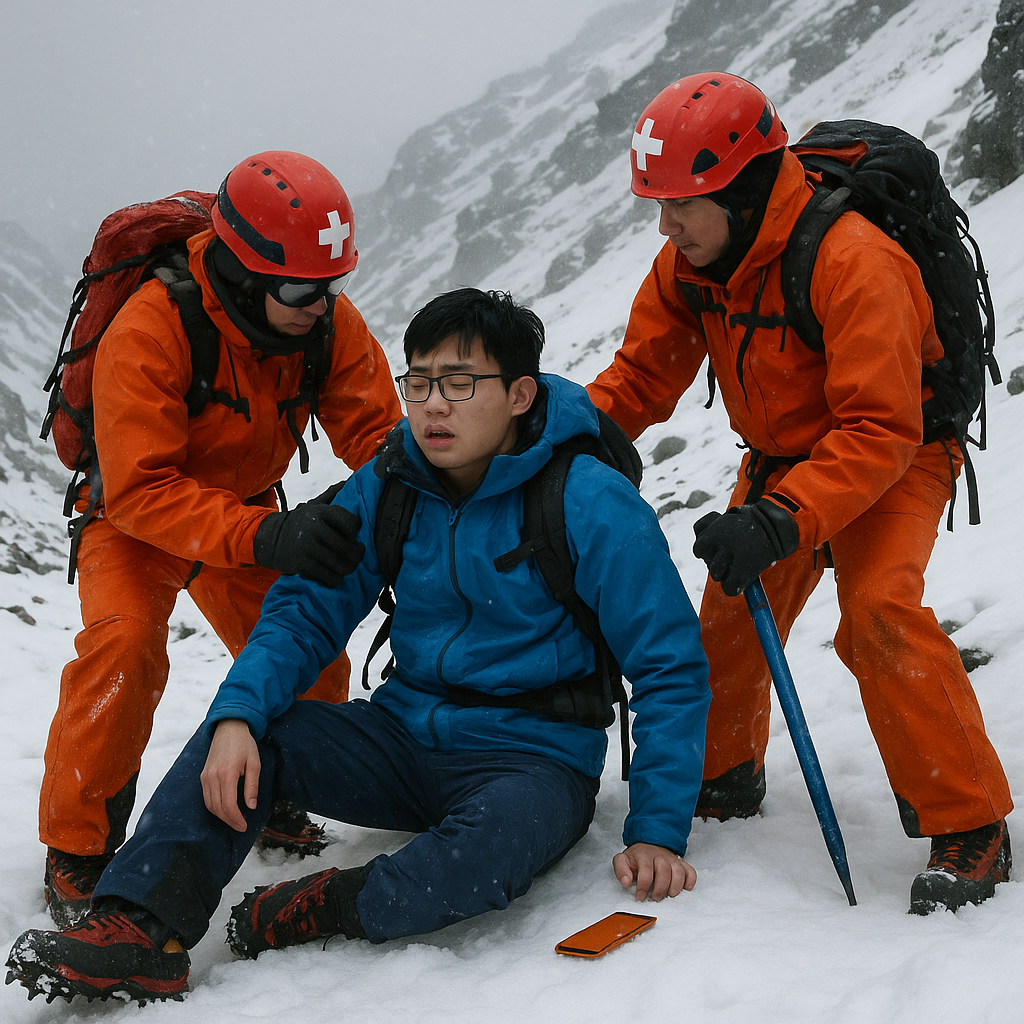
A 27-year-old student from China needed help twice while climbing Mount Fuji in Japan. The first time, he got sick because the mountain is very high. He was rescued on April 22 but left his phone and other things behind. A few days later, he went back to get them and needed help again.
On April 26, another climber found him sick again and called for help. People were upset and thought he should be punished for going back to the mountain when it was dangerous. There are no punishments for needing rescue, but it showed how risky it is to climb Mount Fuji when it’s not the right season. The safe time to climb is from July to early September.
After these events, the police reminded everyone to be careful when climbing. The mountain can be very cold and snowy, even in spring. There are no strict rules against climbing off-season, but there are fees and limits on how many people can climb. These rules might be used on more trails soon to keep people safe.
Original news source: Student rescued from mountain twice in four days – after going back to find his phone (Sky News)
🎧 Listen:
Slow
Normal
Fast
📖 Vocabulary:
| 1 | rescued | Saved from a bad situation |
| 2 | punished | Made to suffer for doing something wrong |
| 3 | risky | Full of danger or chance of harm |
| 4 | season | A time of year when something happens |
| 5 | reminded | Told again to remember something |
| 6 | strict | Very serious and not allowing any changes |
| 7 | limits | The most you can have or do |
| 8 | trails | Paths or routes for walking or hiking |
| 9 | climber | A person who goes up mountains |
| 10 | dangerous | Likely to cause harm or injury |
| 11 | punished | Made to suffer for doing something wrong |
| 12 | fees | Money you pay for a service or activity |
Group or Classroom Activities
Warm-up Activities:
– CHARADES
Instructions: Divide the students into two teams. Each team will take turns acting out key vocabulary words from the article (e.g., “climb,” “rescue,” “mountain,” “cold”). The other team must guess the word. Set a timer for each turn to keep the game moving.
– OPINION POLL
Instructions: Ask students if they think it is safe to climb Mount Fuji outside of the climbing season. Have them raise their hands to agree or disagree. After the poll, encourage a brief discussion about their opinions and reasons behind them.
– MIND MAP
Instructions: On the board, write “Climbing Mount Fuji” in the center. Ask students to brainstorm words and phrases related to the topic (e.g., dangers, safety tips, seasons) and draw connections to create a mind map. This will help them visualize related concepts from the article.
– HEADLINE CREATION
Instructions: Have students work in pairs to create a catchy headline for the article. They should focus on capturing the main idea and any important details. Afterward, each pair can share their headlines with the class, and you can discuss which ones are the most effective and why.
– SKETCH IT
Instructions: Provide students with paper and colored pencils. Ask them to draw a scene from the article, such as the mountain climber being rescued or the mountain itself. After they finish, let them present their drawings and explain their choices to the class, practicing their speaking skills.
🤔 Comprehension Questions:
1. How old was the student from China who climbed Mount Fuji?
2. What happened to the student the first time he needed help on the mountain?
3. When did the student go back to the mountain to get his things?
4. Who found the student sick the second time he needed help?
5. Why were people upset about the student’s actions on the mountain?
6. When is the safest time to climb Mount Fuji?
7. What did the police remind everyone to do after these events?
Go to answers ⇩
🎧✍️ Listen and Fill in the Gaps:
A 27-year-old student from China needed (1)______ twice while climbing Mount Fuji in Japan. The first time, he got sick because the mountain is very high. He was rescued on April 22 but (2)______ his phone and (3)______ things behind. A few days later, he went back to get them and needed help again.
On April 26, another climber found him sick again and called for help. People were upset and thought he should be punished for going back to the mountain when it was dangerous. There are no punishments for (4)______ rescue, but it showed how risky it is to climb Mount Fuji when it’s not the right (5)______. The safe time to climb is from July to early September.
After these events, the police reminded everyone to be careful when climbing. The mountain can be very cold and snowy, even in spring. There are no strict rules against climbing off-season, but there are fees and limits on how many (6)______ can climb. These rules might be used on more (7)______ soon to keep people safe.
Go to answers ⇩
💬 Discussion Questions:
Students can ask a partner these questions, or discuss them as a group.
1. What is your favorite mountain or hill to climb?
2. How would you feel if you got lost while hiking?
3. Do you like climbing mountains? Why or why not?
4. What do you think is the most important thing to bring when climbing a mountain?
5. Have you ever been on a hike? What was it like?
6. Do you think it is safe to climb mountains in winter? Why or why not?
7. What is a good reason to climb a mountain?
8. How would you feel if someone needed help while climbing?
9. Do you think people should be punished for needing help while hiking? Why or why not?
10. What do you think is the best time of year to climb a mountain?
11. How would you prepare for a big hike?
12. Do you think climbing is a fun activity? Why or why not?
Individual Activities
📖💭 Vocabulary Meanings:
Match each word to its meaning.
Words:
1. rescued
2. punished
3. risky
4. season
5. reminded
6. strict
7. limits
8. trails
9. climber
10. dangerous
11. punished
12. fees
Meanings:
(A) Paths or routes for walking or hiking
(B) Made to suffer for doing something wrong
(C) Likely to cause harm or injury
(D) Very serious and not allowing any changes
(E) Money you pay for a service or activity
(F) Full of danger or chance of harm
(G) A time of year when something happens
(H) Saved from a bad situation
(I) Told again to remember something
(J) A person who goes up mountains
(K) The most you can have or do
(L) Made to suffer for doing something wrong
Go to answers ⇩
🔡 Multiple Choice Questions:
1. How old is the student from China?
(a) 30 years old
(b) 25 years old
(c) 20 years old
(d) 27 years old
2. Where is Mount Fuji located?
(a) China
(b) Korea
(c) Thailand
(d) Japan
3. When did the student first need help?
(a) April 22
(b) April 26
(c) May 1
(d) March 15
4. Why did the student get sick while climbing?
(a) Because he was too cold
(b) Because he forgot to eat
(c) Because the mountain is very high
(d) Because he was tired
5. What did the student leave behind when he was rescued?
(a) His backpack
(b) His phone and other things
(c) His jacket
(d) His water bottle
6. When is the safe time to climb Mount Fuji?
(a) From July to early September
(b) From January to March
(c) From April to June
(d) From October to December
7. What did the police remind everyone to do?
(a) Climb faster
(b) Be careful when climbing
(c) Bring more friends
(d) Take pictures
8. Are there strict rules against climbing Mount Fuji off-season?
(a) Yes, it is not allowed
(b) Yes, but only for some people
(c) No, but there are fees and limits
(d) No, anyone can climb anytime
Go to answers ⇩
🕵️ True or False Questions:
1. He did not need help again on April 26 when another climber found him sick.
2. Some people thought he should be punished for climbing when it was dangerous.
3. The police warned everyone to be careful when climbing the mountain.
4. The best time to climb Mount Fuji is from July to early September.
5. He was rescued on April 22 before getting sick.
6. He went back to the mountain a few days later to leave his things.
7. He got sick because Mount Fuji is not very high.
8. A 27-year-old student from China climbed Mount Fuji in Japan.
Go to answers ⇩
📝 Write a Summary:
Write a summary of this news article in two sentences.
Check your writing now with the best free AI for English writing!
Writing Questions:
Answer the following questions. Write as much as you can for each answer.
Check your answers with our free English writing assistant!
1. Why did the student from China need help while climbing Mount Fuji?
2. What happened to the student’s phone and other things when he was rescued the first time?
3. How did people feel about the student going back to the mountain after getting sick?
4. When is the best time to climb Mount Fuji safely?
5. What do the police want people to remember when climbing mountains?
✅ Answers
🤔✅ Comprehension Question Answers:
1. How old was the student from China who climbed Mount Fuji?
He was 27 years old.
2. What happened to the student the first time he needed help on the mountain?
He got sick because the mountain is very high.
3. When did the student go back to the mountain to get his things?
He went back on April 26.
4. Who found the student sick the second time he needed help?
Another climber found him sick.
5. Why were people upset about the student’s actions on the mountain?
They thought he should not have gone back when it was dangerous.
6. When is the safest time to climb Mount Fuji?
The safest time is from July to early September.
7. What did the police remind everyone to do after these events?
The police reminded everyone to be careful when climbing.
Go back to questions ⇧
🎧✍️✅ Listen and Fill in the Gaps Answers:
(1) help
(2) left
(3) other
(4) needing
(5) season
(6) people
(7) trails
Go back to questions ⇧
📖💭✅ Vocabulary Meanings Answers:
1. rescued
Answer: (H) Saved from a bad situation
2. punished
Answer: (B) Made to suffer for doing something wrong
3. risky
Answer: (F) Full of danger or chance of harm
4. season
Answer: (G) A time of year when something happens
5. reminded
Answer: (I) Told again to remember something
6. strict
Answer: (D) Very serious and not allowing any changes
7. limits
Answer: (K) The most you can have or do
8. trails
Answer: (A) Paths or routes for walking or hiking
9. climber
Answer: (J) A person who goes up mountains
10. dangerous
Answer: (C) Likely to cause harm or injury
11. punished
Answer: (B) Made to suffer for doing something wrong
12. fees
Answer: (E) Money you pay for a service or activity
Go back to questions ⇧
🔡✅ Multiple Choice Answers:
1. How old is the student from China?
Answer: (d) 27 years old
2. Where is Mount Fuji located?
Answer: (d) Japan
3. When did the student first need help?
Answer: (a) April 22
4. Why did the student get sick while climbing?
Answer: (c) Because the mountain is very high
5. What did the student leave behind when he was rescued?
Answer: (b) His phone and other things
6. When is the safe time to climb Mount Fuji?
Answer: (a) From July to early September
7. What did the police remind everyone to do?
Answer: (b) Be careful when climbing
8. Are there strict rules against climbing Mount Fuji off-season?
Answer: (c) No, but there are fees and limits
Go back to questions ⇧
🕵️✅ True or False Answers:
1. He did not need help again on April 26 when another climber found him sick. (Answer: False)
2. Some people thought he should be punished for climbing when it was dangerous. (Answer: True)
3. The police warned everyone to be careful when climbing the mountain. (Answer: True)
4. The best time to climb Mount Fuji is from July to early September. (Answer: True)
5. He was rescued on April 22 before getting sick. (Answer: False)
6. He went back to the mountain a few days later to leave his things. (Answer: False)
7. He got sick because Mount Fuji is not very high. (Answer: False)
8. A 27-year-old student from China climbed Mount Fuji in Japan. (Answer: True)
Go back to questions ⇧