Β
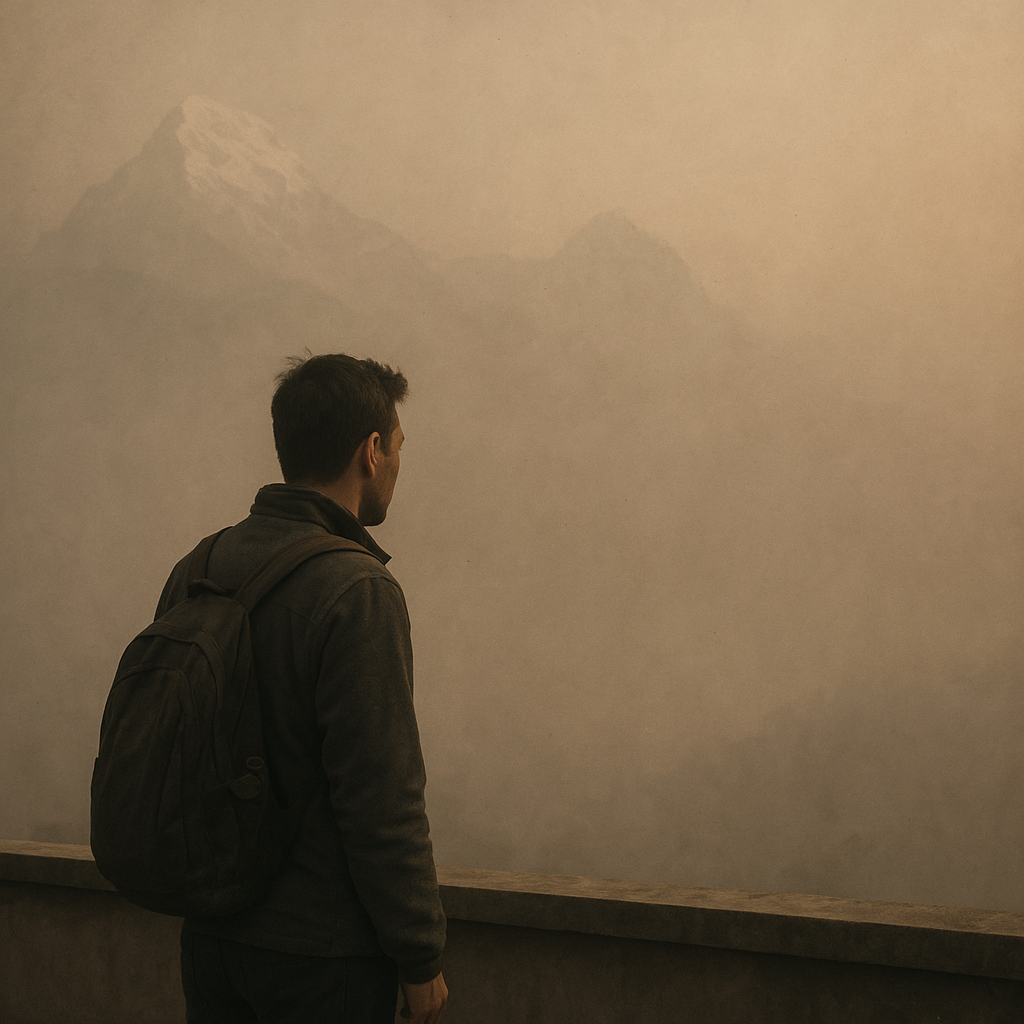
The beautiful Himalayas, famous for their stunning views, are becoming harder to see because of serious air pollution. I grew up in Kathmandu and loved looking at the tall mountains. But during my recent trips, I noticed that haze often blocked the view, even in spring and autumn when the skies are usually clear. Once, my flight had to circle around Kathmandu several times before landing because the haze made it hard to see. Even though I stayed at a hotel with a great view, I couldnβt see the mountains at all during my two-week stay.
The haze is mainly caused by pollution from dust and smoke coming from different sources. Scientists have observed that these hazy conditions are getting worse and lasting longer, which makes it harder to see the mountains. Normally, the best times to trek in the Himalayas are from March to May and October to November, when the skies are clear. However, with rising temperatures and poor air quality, these months are now often filled with thick haze, making it less likely to see the peaks.
This drop in visibility is hurting the local tourism industry. A trekking guide named Lucky Chhetri mentioned that his business has dropped by 40% because of the haze, leaving many tour operators feeling sad about their situation. Tourists, like John Carrol from Australia, have shared their disappointment about not being able to see the mountains as clearly as before. The Trekking Agents Association of Nepal has said that many trekking guides are thinking about changing jobs because of the lack of business caused by the haze.
On the Indian side of the Himalayas, tour operators are also noticing that the haze is coming back faster and is thicker than it used to be. Malika Virdi, who runs a tourism business in Uttarakhand, said that the weather patterns have changed, leading to longer periods of haze. In the western Himalayas of Pakistan, there is less haze, but locals still report that the mountains are not as visible as they once were. The ongoing haze is a big worry for both tourists and people working in the tourism industry.
Original news source: Why the mighty Himalayas are getting harder and harder to see (BBC)
π§ Listen:
Slow
Normal
Fast
π Vocabulary:
| 1 | Himalayas | A large mountain range in Asia, known for its high peaks |
| 2 | pollution | Harmful substances in the air, water, or soil |
| 3 | haze | A thin mist or smoke that makes it hard to see clearly |
| 4 | visibility | How well you can see things from a distance |
| 5 | trek | A long walk, especially in the mountains |
| 6 | temperatures | How hot or cold something is |
| 7 | tourism | The business of providing services to travelers |
| 8 | disappointment | Feeling sad because something didn’t happen as expected |
| 9 | operators | People or companies that run a business or service |
| 10 | patterns | A repeated way in which something happens or is done |
| 11 | ongoing | Continuing to happen or exist |
| 12 | industry | A group of businesses that produce similar products or services |
| 13 | sources | Places or things from which something comes |
| 14 | observed | Noticed or watched something carefully |
| 15 | periods | Lengths of time |
Group or Classroom Activities
Warm-up Activities:
– CHARADES
Instructions: Students will break into small groups. Each group will receive a list of words or phrases related to the article, such as “Himalayas,” “pollution,” “trekking,” and “tourism.” One student will act out the word or phrase without speaking while their teammates guess what it is.
– OPINION POLL
Instructions: Students will be given a series of statements related to the article, such as “Air pollution is a serious problem” and “Tourism should be prioritized over environmental concerns.” They will move to different sides of the classroom to indicate whether they agree or disagree with each statement. Afterward, they will discuss the reasons for their positions in pairs.
– MIND MAP
Instructions: In groups, students will create a mind map on a large sheet of paper. They will start with “Himalayas” in the center and branch out to include related topics from the article, such as pollution, tourism, and local guides. They will discuss how these topics connect.
– HEADLINE CREATION
Instructions: Students will work in pairs to come up with catchy headlines that summarize the main issues presented in the article. They will then share their headlines with the class and discuss why they chose those particular phrases.
– VOCABULARY PICTIONARY
Instructions: Students will divide into teams. Each team will select a word from the article that relates to the topic (e.g., “haze,” “tourism,” “pollution”) and draw a representation of that word on the board. Their teammates will try to guess the word based on the drawing, promoting vocabulary retention and understanding.
π€ Comprehension Questions:
1. What changes did the author notice about the visibility of the Himalayas during their recent trips compared to when they were growing up?
2. What are the main causes of the haze that affects the view of the mountains?
3. How has the haze impacted the trekking industry in Nepal, according to Lucky Chhetri?
4. What time of year is usually the best for trekking in the Himalayas, and how has this changed recently?
5. Why do some trekking guides in Nepal consider changing jobs?
6. How has the situation with haze in the Indian side of the Himalayas compared to that in Nepal?
7. What did John Carrol, a tourist from Australia, express about his experience with the haze?
8. Why is the ongoing haze a concern for both tourists and people working in the tourism industry?
Go to answers β©
π§βοΈ Listen and Fill in the Gaps:
The beautiful (1)______, famous for their stunning (2)______, are becoming harder to see because of serious air pollution. I grew up in Kathmandu and loved looking at the tall mountains. But during my recent (3)______, I noticed that haze often blocked the view, even in spring and autumn when the skies are usually clear. Once, my flight had to circle around Kathmandu (4)______ times before landing because the haze made it hard to see. Even though I stayed at a hotel with a great view, I couldnβt see the mountains at all during my two-week stay.
The haze is mainly caused by pollution from dust and smoke coming from different sources. Scientists have (5)______ that these hazy conditions are (6)______ worse and lasting longer, which makes it harder to see the mountains. Normally, the best times to trek in the Himalayas are from March to May and October to November, when the skies are clear. However, with rising temperatures and poor air quality, these months are now often filled with (7)______ haze, making it less (8)______ to see the peaks.
This drop in visibility is hurting the local tourism industry. A trekking guide named Lucky Chhetri mentioned that his business has (9)______ by 40% because of the haze, leaving many tour operators feeling sad about their situation. Tourists, like John Carrol from Australia, have (10)______ their (11)______ about not being able to see the mountains as clearly as before. The Trekking (12)______ Association of Nepal has said that many trekking guides are thinking about changing jobs because of the lack of business caused by the haze.
On the Indian side of the Himalayas, tour operators are also noticing that the haze is coming back faster and is thicker than it used to be. Malika Virdi, who runs a tourism (13)______ in Uttarakhand, said that the weather (14)______ have changed, leading to longer periods of haze. In the western Himalayas of Pakistan, there is less haze, but locals still (15)______ that the mountains are not as visible as they once were. The (16)______ haze is a big worry for both tourists and people working in the tourism industry.
Go to answers β©
π¬ Discussion Questions:
Students can ask a partner these questions, or discuss them as a group.
1. What is your favorite natural view or landscape that you have seen?
2. How would you feel if you traveled to a famous place but couldnβt see it because of pollution?
3. Do you think air pollution is a serious problem in your country? Why or why not?
4. What is a memorable trip youβve taken where the weather affected your experience?
5. How do you think pollution impacts local businesses, like tourism?
6. Do you like hiking or trekking in nature? Why or why not?
7. What is a place you would like to visit that is known for its natural beauty?
8. How would you feel if you were a tour guide and your business was affected by pollution?
9. Do you think people are aware of how pollution affects our environment? Why or why not?
10. What is a solution you think could help reduce air pollution in popular tourist areas?
11. How important do you think it is to protect natural landscapes like the Himalayas?
12. Do you think tourists should be more responsible about their impact on the environment? Why?
13. What is a way you personally try to reduce pollution in your daily life?
14. How would you feel if you had to change your career because of environmental issues?
15. Do you think governments should do more to combat air pollution? Why or why not?
Individual Activities
ππ Vocabulary Meanings:
Match each word to its meaning.
Words:
1. Himalayas
2. pollution
3. haze
4. visibility
5. trek
6. temperatures
7. tourism
8. disappointment
9. operators
10. patterns
11. ongoing
12. industry
13. sources
14. observed
15. periods
Meanings:
(A) Feeling sad because something didn’t happen as expected
(B) People or companies that run a business or service
(C) Places or things from which something comes
(D) Noticed or watched something carefully
(E) The business of providing services to travelers
(F) How well you can see things from a distance
(G) A thin mist or smoke that makes it hard to see clearly
(H) A group of businesses that produce similar products or services
(I) Lengths of time
(J) A repeated way in which something happens or is done
(K) Harmful substances in the air, water, or soil
(L) A large mountain range in Asia, known for its high peaks
(M) Continuing to happen or exist
(N) A long walk, especially in the mountains
(O) How hot or cold something is
Go to answers β©
π‘ Multiple Choice Questions:
1. What is causing the haze that blocks the view of the Himalayas?
(a) Heavy rainfall
(b) Snowstorms
(c) Earthquakes
(d) Pollution from dust and smoke
2. When are the best times to trek in the Himalayas?
(a) June to August and December to February
(b) January to March and September to October
(c) March to May and October to November
(d) April to June and November to December
3. How much has Lucky Chhetri’s business dropped due to the haze?
(a) 20%
(b) 40%
(c) 60%
(d) 30%
4. What has the Trekking Agents Association of Nepal reported about trekking guides?
(a) Many are considering changing jobs
(b) They are all very happy with the current situation
(c) They are planning to increase their prices
(d) They have started offering new tours
5. In which region of the Himalayas is the haze reportedly coming back faster?
(a) The Indian side
(b) The western Himalayas of Pakistan
(c) The eastern Himalayas of Nepal
(d) The southern Himalayas of Bhutan
6. What has Malika Virdi observed about the weather patterns in Uttarakhand?
(a) They have improved, allowing for clearer views
(b) They have changed, leading to longer periods of haze
(c) They remain the same as before
(d) They have become more unpredictable
7. What impact does the haze have on tourists visiting the Himalayas?
(a) They are enjoying the new weather conditions
(b) They are spending more time outdoors
(c) They are taking more photographs than ever
(d) They are disappointed by the lack of visibility
8. What is a major concern for people working in the tourism industry in the Himalayas?
(a) The increase in tourist numbers
(b) The rise in hotel prices
(c) The ongoing haze affecting visibility
(d) The availability of trekking equipment
Go to answers β©
π΅οΈ True or False Questions:
1. The haze is mainly caused by pollution from dust and smoke.
2. Some trekking guides are not considering changing jobs because their business has decreased significantly.
3. The local tourism industry is flourishing due to the reduced visibility caused by haze.
4. The Himalayas are known for their beautiful views, but air pollution is making it harder to see them.
5. Haze often blocks the view of the Himalayas, even during typically clear seasons like spring and autumn.
6. Tour operators in both India and Pakistan are not noticing increased haze affecting visibility of the mountains.
7. The author grew up in Kathmandu and didn’t enjoy looking at the mountains.
8. The best times to trek in the Himalayas are usually from March to May and October to November.
Go to answers β©
π Write a Summary:
Write a summary of this news article in two sentences.
Check your writing now with the best free AI for English writing!
Writing Questions:
Answer the following questions. Write as much as you can for each answer.
Check your answers with our free English writing assistant!
1. What are some reasons the Himalayas are becoming harder to see?
2. How has the haze affected the business of trekking guides in Nepal?
3. What did tourists like John Carrol say about their experience with the haze?
4. How has the weather changed in the Indian side of the Himalayas according to Malika Virdi?
5. Why is the ongoing haze a concern for both tourists and people working in the tourism industry?
β Answers
π€β Comprehension Question Answers:
1. What changes did the author notice about the visibility of the Himalayas during their recent trips compared to when they were growing up?
The author noticed that haze often blocked the view of the Himalayas during recent trips, even in spring and autumn when the skies used to be clear. They experienced difficulty seeing the mountains, unlike when they were growing up.
2. What are the main causes of the haze that affects the view of the mountains?
The haze is mainly caused by pollution from dust and smoke coming from various sources.
3. How has the haze impacted the trekking industry in Nepal, according to Lucky Chhetri?
According to Lucky Chhetri, the haze has caused his business to drop by 40%, which has made many tour operators feel sad about their situation.
4. What time of year is usually the best for trekking in the Himalayas, and how has this changed recently?
The best times for trekking in the Himalayas are usually from March to May and October to November. However, recently these months have often been filled with thick haze, making it less likely to see the peaks.
5. Why do some trekking guides in Nepal consider changing jobs?
Some trekking guides in Nepal are considering changing jobs due to the lack of business caused by the haze, which has affected their income.
6. How has the situation with haze in the Indian side of the Himalayas compared to that in Nepal?
On the Indian side of the Himalayas, tour operators have noticed that the haze is returning faster and is thicker than it used to be, similar to the situation in Nepal.
7. What did John Carrol, a tourist from Australia, express about his experience with the haze?
John Carrol expressed disappointment about not being able to see the mountains as clearly as before due to the haze.
8. Why is the ongoing haze a concern for both tourists and people working in the tourism industry?
The ongoing haze is a concern because it negatively impacts visibility of the mountains, which affects tourists’ experiences and leads to a decline in business for those working in the tourism industry.
Go back to questions β§
π§βοΈβ Listen and Fill in the Gaps Answers:
(1) Himalayas
(2) views
(3) trips
(4) several
(5) observed
(6) getting
(7) thick
(8) likely
(9) dropped
(10) shared
(11) disappointment
(12) Agents
(13) business
(14) patterns
(15) report
(16) ongoing
Go back to questions β§
ππβ Vocabulary Meanings Answers:
1. Himalayas
Answer: (L) A large mountain range in Asia, known for its high peaks
2. pollution
Answer: (K) Harmful substances in the air, water, or soil
3. haze
Answer: (G) A thin mist or smoke that makes it hard to see clearly
4. visibility
Answer: (F) How well you can see things from a distance
5. trek
Answer: (N) A long walk, especially in the mountains
6. temperatures
Answer: (O) How hot or cold something is
7. tourism
Answer: (E) The business of providing services to travelers
8. disappointment
Answer: (A) Feeling sad because something didn’t happen as expected
9. operators
Answer: (B) People or companies that run a business or service
10. patterns
Answer: (J) A repeated way in which something happens or is done
11. ongoing
Answer: (M) Continuing to happen or exist
12. industry
Answer: (H) A group of businesses that produce similar products or services
13. sources
Answer: (C) Places or things from which something comes
14. observed
Answer: (D) Noticed or watched something carefully
15. periods
Answer: (I) Lengths of time
Go back to questions β§
π‘β Multiple Choice Answers:
1. What is causing the haze that blocks the view of the Himalayas?
Answer: (d) Pollution from dust and smoke
2. When are the best times to trek in the Himalayas?
Answer: (c) March to May and October to November
3. How much has Lucky Chhetri’s business dropped due to the haze?
Answer: (b) 40%
4. What has the Trekking Agents Association of Nepal reported about trekking guides?
Answer: (a) Many are considering changing jobs
5. In which region of the Himalayas is the haze reportedly coming back faster?
Answer: (a) The Indian side
6. What has Malika Virdi observed about the weather patterns in Uttarakhand?
Answer: (b) They have changed, leading to longer periods of haze
7. What impact does the haze have on tourists visiting the Himalayas?
Answer: (d) They are disappointed by the lack of visibility
8. What is a major concern for people working in the tourism industry in the Himalayas?
Answer: (c) The ongoing haze affecting visibility
Go back to questions β§
π΅οΈβ True or False Answers:
1. The haze is mainly caused by pollution from dust and smoke. (Answer: True)
2. Some trekking guides are not considering changing jobs because their business has decreased significantly. (Answer: False)
3. The local tourism industry is flourishing due to the reduced visibility caused by haze. (Answer: False)
4. The Himalayas are known for their beautiful views, but air pollution is making it harder to see them. (Answer: True)
5. Haze often blocks the view of the Himalayas, even during typically clear seasons like spring and autumn. (Answer: True)
6. Tour operators in both India and Pakistan are not noticing increased haze affecting visibility of the mountains. (Answer: False)
7. The author grew up in Kathmandu and didn’t enjoy looking at the mountains. (Answer: False)
8. The best times to trek in the Himalayas are usually from March to May and October to November. (Answer: True)
Go back to questions β§