

Free Materials For ESL Teachers and Learners

English Newsroom

Learn English through news articles - complete lesson plans, including articles, listening, classroom activities, quiz questions and more!

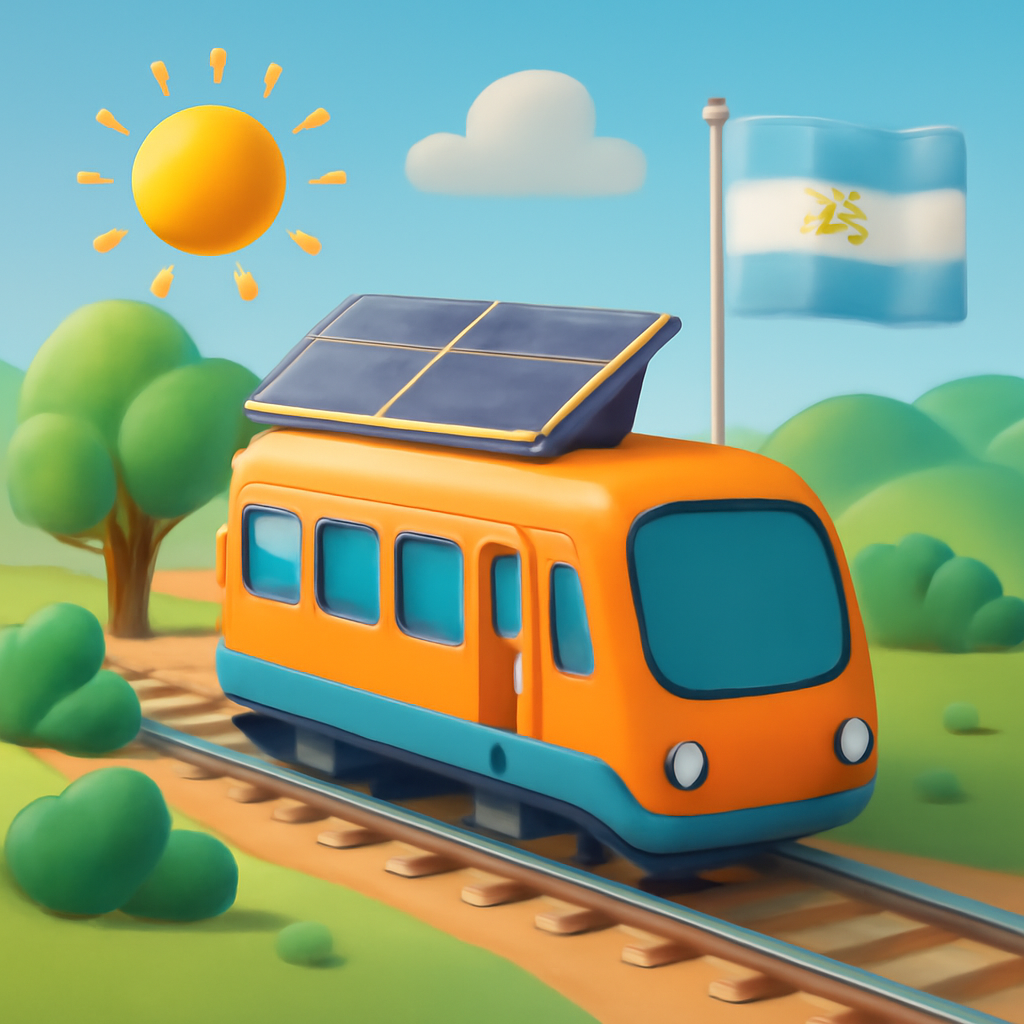
Argentina’s First Solar Train

Explore history on Argentina's first solar-powered train ride.
Try this article at a different level?

In Argentina, there is a new train that runs using the sun. This train takes people through old villages. It is special because it doesn't need gas or coal. The train moves through bright mountains. You can see red hills and green plants along the way.

The train helps people go to important places. It passes by areas where old traditions are still alive. Passengers can learn about how people lived long ago. The train stops at five different villages. People hope it will bring more tourists and help the villages grow.

Original news source: Ride Argentina's first solar train through 10,000 years of Indigenous history (BBC)

🎧 Listen:

πŸ“– Vocabulary:

1. train
2. power
3. travel
4. colorful
5. village
6. tradition
7. passenger
8. tourist
9. mountain
10. solar

Group or Classroom Activities

Warm-up Activities:

1. Show a picture of a train and ask if anyone has taken a train ride.
2. Ask students to share what they think powers different vehicles.
3. Discuss what students know about the sun.
4. Play a game identifying colors, like those found in nature.
5. Talk about what a village is and how it might be different from a city.

πŸ€” Comprehension Questions:

1. What powers the new train in Argentina?

2. Where does the train take people?

3. What can passengers see from the train?

4. How many villages does the train visit?

5. What do some people hope will happen because of the train?

6. Why is the train considered special?

7. What can passengers learn about on the train ride?

🎧✍️ Listen and Fill in the Gaps:

In Argentina, there is a new train that runs using the sun. This train through old villages. It is special because it need gas or coal. The train moves through bright mountains. You can see red and green plants along the way. The train helps people go to important places. It passes by areas where old are still . Passengers can learn about how people lived long ago. The train stops at different villages. People hope it will bring more tourists and the .

πŸ’¬ Discussion Questions:

1. Have you ever been on a train?
2. What do you think happens on a train ride?
3. Why do you think trains are important?
4. How does the sun help the Earth?
5. What is something you find interesting about villages?
6. Would you like to visit a village? Why or why not?
7. Do you think it's good that the train uses solar power? Why?
8. Why do you think tourists like to visit other places?
9. What colors do you like to see in nature?
10. How do you think old traditions are kept alive?
11. What might you see if you traveled through mountains?
12. How could more tourists help villages grow?

Individual Activities

πŸ“–πŸ’­ Vocabulary Meanings:

Click a dot next to a word, then click the dot next to its meaning to draw a line connecting them.
Words

1. train
2. power
3. travel
4. colorful
5. village
6. tradition
7. passenger
8. tourist
9. mountain
10. solar

Meanings

(A) a vehicle that moves on tracks
(B) related to the sun
(C) a person visiting a place for fun
(D) a custom or way of doing things
(E) a small town
(F) to go from one place to another
(G) a person riding in a vehicle
(H) full of colors
(I) a big natural hill
(J) energy to make something work

πŸ”‘ Multiple Choice Questions:

1. What kind of train is in Argentina?
(a) A steam train
(b) An electric train
(c) A solar train
(d) A coal train
2. What does the train use for power?
(a) Gas
(b) Coal
(c) The sun
(d) Water
3. Where does the train take people?
(a) Old villages
(b) Beaches
(c) Cities
(d) Shops
4. What can passengers see from the train?
(a) Blue oceans
(b) Tall buildings
(c) White sand
(d) Red hills
5. How many villages does the train visit?
(a) Five
(b) Six
(c) Four
(d) Three
6. What do people hope the train will bring?
(a) More ships
(b) More buses
(c) More cars
(d) More tourists
7. What color are the hills seen from the train?
(a) Yellow
(b) Red
(c) Blue
(d) Purple
8. Why is the train special?
(a) Because it can fly
(b) Because it uses only the sun for power
(c) Because it goes underwater
(d) Because it has wings

πŸ•΅οΈ True or False Questions:

1. The train visits five villages.
2. It helps people visit important places.
3. People hope tourists will harm the villages grow.
4. It takes people through modern villages.
5. The train travels through dull mountains.
6. The solar train is in Argentina.
7. The train uses the sun for power.
8. You can see blue hills from the train.

Writing Questions:

1. Write about a time you went on a trip.
2. Describe what you would like to see on a train ride.
3. Imagine you live in a village; what is your day like?
4. What do you think is exciting about trains?
5. If you could visit anywhere, where would you go?

How about these other Level 1 articles?

Online
Class
Writing
Coach
β˜• 컀피 3μž” &
무료 ν”Όλ“œλ°±! πŸŽ“
β˜• 컀피 3μž” & 무료 ν”Όλ“œλ°±! πŸŽ“

X

[100% 온라인] λž­μ»€μŠ€ν„° λŒ€ν•™κ΅ μ˜μ–΄ 연ꡬ μ°Έμ—¬μž λͺ¨μ§‘
λ³„λ„μ˜ μ°Έκ°€λΉ„ 없이 영ꡭ λŒ€ν•™ 연ꡬ에 도움도 μ£Όμ‹œκ³ , 무료 μ˜μ–΄ μ‹€μ „ μ—°μŠ΅κ³Ό ν”Όλ“œλ°±λ„ λ°›μ•„λ³΄μ„Έμš”!

영ꡭ λž­μ»€μŠ€ν„° λŒ€ν•™κ΅(Lancaster University)μ—μ„œ ν•œκ΅­μΈ μ˜μ–΄ ν•™μŠ΅μžλΆ„λ“€μ„ λŒ€μƒμœΌλ‘œ μƒˆλ‘œμš΄ 연ꡬ ν”„λ‘œμ νŠΈλ₯Ό μ§„ν–‰ν•©λ‹ˆλ‹€. μ „ κ³Όμ • 온라인으둜 μ§„ν–‰λ˜μ–΄ μ–΄λ””μ„œλ“  νŽΈν•˜κ²Œ μ°Έμ—¬ν•˜μ‹€ 수 μžˆμŠ΅λ‹ˆλ‹€. μ—¬λŸ¬λΆ„μ˜ μ†Œμ€‘ν•œ μ°Έμ—¬λ‘œ ν•œκ΅­μΈμ˜ μ˜μ–΄ μ‚¬μš© 방식을 μ•Œμ•„λ³΄λŠ” ν₯미둜운 연ꡬ가 μ™„μ„±λ©λ‹ˆλ‹€.

🎁 μ°Έμ—¬ ν˜œνƒ:
– 원어민 μ—°κ΅¬μ›κ³Όμ˜ 1:1 νšŒν™” μ—°μŠ΅
– μ‹€μ „ μ˜μž‘ μ—°μŠ΅ & λ§žμΆ€ν˜• μ˜μ–΄ ν”Όλ“œλ°± 리포트
– 컀피 κΈ°ν”„ν‹°μ½˜ 총 3μž” μ„ λ¬Ό! (첫 μ„Έμ…˜ ν›„ 1μž”, λ§ˆμ§€λ§‰ μ„Έμ…˜ μ™„λ£Œ ν›„ 2μž” 더 λ“œλ €μš”! β˜•β˜•)

πŸ“… μ°Έμ—¬ 방식: 총 2회의 온라인 μ„Έμ…˜ (Zoom 등을 이용, 각 μ„Έμ…˜λ‹Ή μ•½ 60~80λΆ„ μ†Œμš”) λ§ν•˜κΈ°μ™€ μ“°κΈ° ν™œλ™μ΄ μ„žμ—¬ μžˆμ–΄ λΆ€λ‹΄ 없이 즐겁게 μ°Έμ—¬ν•˜μ‹€ 수 μžˆμŠ΅λ‹ˆλ‹€.

βœ… λŒ€μƒ: μ˜μ–΄ μ‹€λ ₯에 상관없이 μ°Έμ—¬λ₯Ό ν¬λ§ν•˜λŠ” 18μ„Έ 이상 ν•œκ΅­μΈ λˆ„κ΅¬λ‚˜

Feedback