Free Materials For ESL Teachers and Learners

English Newsroom

Learn English through news articles - complete lesson plans, including articles, listening, classroom activities, quiz questions and more!

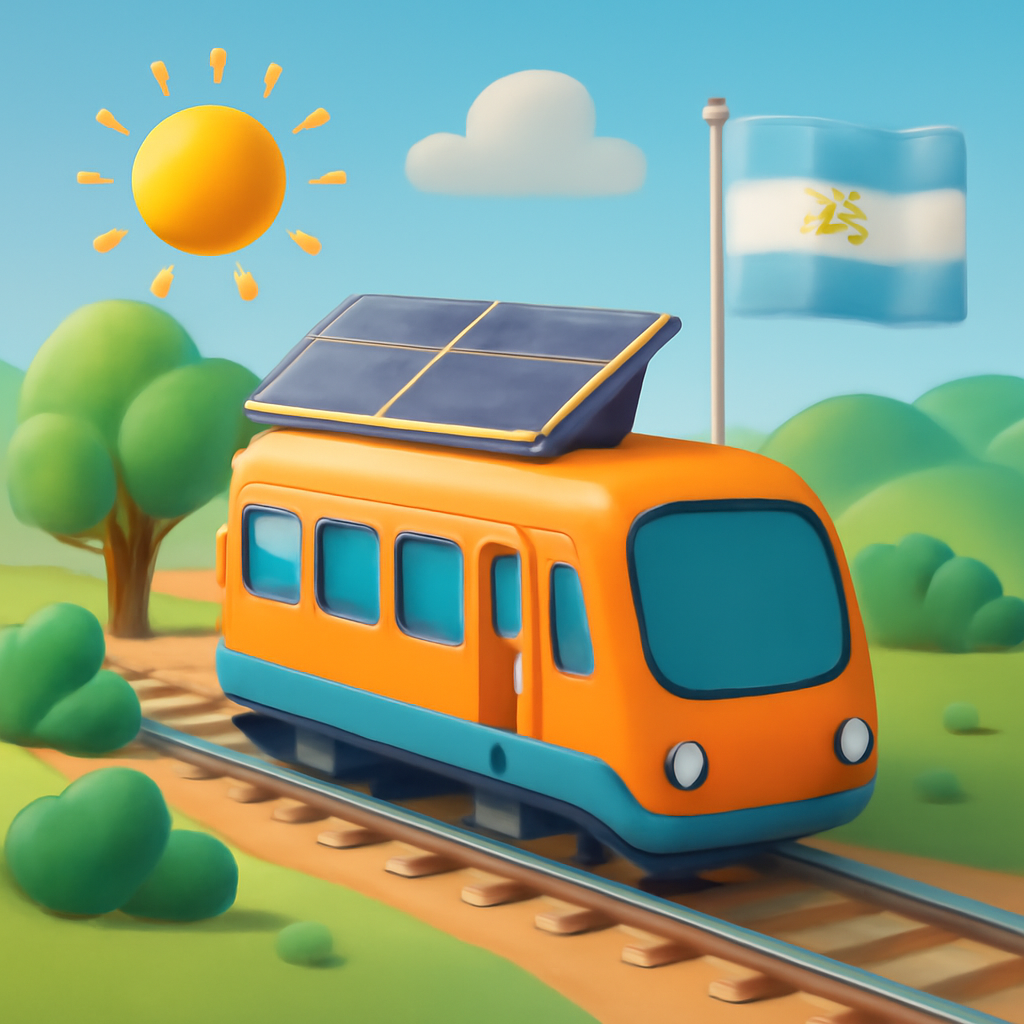
Sustainable Travel on Argentina’s Solar Train

Explore history on Argentina's first solar-powered train ride.
Try this article at a different level?

Argentina has launched its first solar-powered train. This train uses only the sun's energy, making it very eco-friendly. It travels through the beautiful Quebrada de Humahuaca valley. Passengers can enjoy stunning views of colorful mountains and learn about indigenous culture.

The train connects five historic villages in Jujuy province. These villages have deep historical roots, some dating back 10,000 years. Tourists can explore these areas and understand ancient traditions. The stops provide opportunities to see local crafts and food.

This train is more than a tourist attraction. It aims to boost local economy and preserve cultural heritage. The hope is that increased tourism will help local villagers. It also keeps traditions alive by showcasing local cultures and craftsmanship.

Original news source: Ride Argentina's first solar train through 10,000 years of Indigenous history (BBC)

🎧 Listen:

πŸ“– Vocabulary:

1. solar-powered
2. eco-friendly
3. valley
4. indigenous
5. historic
6. province
7. traditions
8. economy
9. craftsmanship
10. opportunity
11. preserve
12. heritage

Group or Classroom Activities

Warm-up Activities:

1. Describe a time you traveled by train.
2. What do you know about solar power?
3. Have you ever seen a valley? Where?
4. Can you name other eco-friendly inventions?
5. Why is it important to preserve culture?

πŸ€” Comprehension Questions:

1. What powers the train in Argentina?

2. Where does the train travel?

3. How many historic villages does the train connect?

4. What can tourists learn from the train ride?

5. What opportunities do the stops offer?

6. What is one goal of this solar-powered train?

7. How does the train help local villagers?

🎧✍️ Listen and Fill in the Gaps:

Argentina has launched its first solar-powered train. This train uses only the sun's energy, making it very eco-friendly. It travels the beautiful de Humahuaca . Passengers can enjoy stunning views of colorful mountains and about indigenous culture. The train connects five historic villages in province. These villages have deep historical roots, some dating 10,000 . Tourists can explore these areas and understand ancient traditions. The stops provide opportunities to see local and food. This train is more than a attraction. It aims to boost local economy and preserve cultural heritage. The hope is that will local villagers. It also keeps traditions alive by showcasing local cultures and craftsmanship.

πŸ’¬ Discussion Questions:

1. What are the benefits of using solar power?
2. How can tourism help local communities?
3. Why do people enjoy train rides?
4. What are some ways to learn about other cultures?
5. How does technology help preserve history?
6. What would you like to see on a train journey?
7. Is it important to protect nature when we build new things?
8. What do you think of trains powered by the sun?
9. How would you feel about visiting historic villages?
10. What do you think makes a place historically important?
11. How can we support local artists and craftsmen?
12. What are some traditions from your own culture?

Individual Activities

πŸ“–πŸ’­ Vocabulary Meanings:

Click a dot next to a word, then click the dot next to its meaning to draw a line connecting them.


Words

1. solar-powered
2. eco-friendly
3. valley
4. indigenous
5. historic
6. province
7. traditions
8. economy
9. craftsmanship
10. opportunity
11. preserve
12. heritage

Meanings

(A) customs passed down through generations
(B) good for the environment
(C) a region or area of a country
(D) financial system or money matters
(E) using the energy from the sun
(F) native or original
(G) to keep something safe
(H) traditions handed down from the past
(I) a low area between hills
(J) skill in making things
(K) related to history
(L) a chance for something to happen

πŸ”‘ Multiple Choice Questions:

1. What powers the train?
(a) Gasoline
(b) Coal
(c) Solar energy
(d) Electricity
2. What can passengers see during the train ride?
(a) Colorful mountains
(b) Oceans
(c) Deserts
(d) Skyscrapers
3. How many villages does the train connect?
(a) Three
(b) Five
(c) Two
(d) Ten
4. What can tourists learn about?
(a) Space travel
(b) Indigenous culture
(c) Modern technology
(d) Ancient Rome
5. What do stops offer?
(a) Ice cream
(b) Souvenirs
(c) Local crafts and food
(d) Fast food
6. What does the train help boost?
(a) Air pollution
(b) Traffic
(c) Weather
(d) Local economy
7. What is one goal of the train?
(a) Destroy old buildings
(b) Invent new technology
(c) Increase pollution
(d) Preserve cultural heritage
8. What does the train showcase?
(a) Local cultures and craftsmanship
(b) International celebrities
(c) New sports
(d) Outer space missions

πŸ•΅οΈ True or False Questions:

1. The train hinders the local economy.
2. Passengers cannot learn about indigenous culture.
3. Tourists can see local crafts at stops.
4. The train is powered by gasoline.
5. Some villages have roots over 10,000 years old.
6. The train travels through a valley.
7. The train connects three villages in Jujuy.
8. It showcases local craftsmanship.

Writing Questions:

1. Write about a place you would like to visit and why.
2. Explain how solar power is different from other energy sources.
3. Describe what you might see on a train trip in your country.
4. Why is it important to learn about different cultures?
5. How can we make transportation more eco-friendly?

How about these other Level 2 articles?

Online
Class
Writing
Coach
β˜• 컀피 3μž” &
무료 ν”Όλ“œλ°±! πŸŽ“
β˜• 컀피 3μž” & 무료 ν”Όλ“œλ°±! πŸŽ“

X

[100% 온라인] λž­μ»€μŠ€ν„° λŒ€ν•™κ΅ μ˜μ–΄ 연ꡬ μ°Έμ—¬μž λͺ¨μ§‘
λ³„λ„μ˜ μ°Έκ°€λΉ„ 없이 영ꡭ λŒ€ν•™ 연ꡬ에 도움도 μ£Όμ‹œκ³ , 무료 μ˜μ–΄ μ‹€μ „ μ—°μŠ΅κ³Ό ν”Όλ“œλ°±λ„ λ°›μ•„λ³΄μ„Έμš”!

영ꡭ λž­μ»€μŠ€ν„° λŒ€ν•™κ΅(Lancaster University)μ—μ„œ ν•œκ΅­μΈ μ˜μ–΄ ν•™μŠ΅μžλΆ„λ“€μ„ λŒ€μƒμœΌλ‘œ μƒˆλ‘œμš΄ 연ꡬ ν”„λ‘œμ νŠΈλ₯Ό μ§„ν–‰ν•©λ‹ˆλ‹€. μ „ κ³Όμ • 온라인으둜 μ§„ν–‰λ˜μ–΄ μ–΄λ””μ„œλ“  νŽΈν•˜κ²Œ μ°Έμ—¬ν•˜μ‹€ 수 μžˆμŠ΅λ‹ˆλ‹€. μ—¬λŸ¬λΆ„μ˜ μ†Œμ€‘ν•œ μ°Έμ—¬λ‘œ ν•œκ΅­μΈμ˜ μ˜μ–΄ μ‚¬μš© 방식을 μ•Œμ•„λ³΄λŠ” ν₯미둜운 연ꡬ가 μ™„μ„±λ©λ‹ˆλ‹€.

🎁 μ°Έμ—¬ ν˜œνƒ:
– 원어민 μ—°κ΅¬μ›κ³Όμ˜ 1:1 νšŒν™” μ—°μŠ΅
– μ‹€μ „ μ˜μž‘ μ—°μŠ΅ & λ§žμΆ€ν˜• μ˜μ–΄ ν”Όλ“œλ°± 리포트
– 컀피 κΈ°ν”„ν‹°μ½˜ 총 3μž” μ„ λ¬Ό! (첫 μ„Έμ…˜ ν›„ 1μž”, λ§ˆμ§€λ§‰ μ„Έμ…˜ μ™„λ£Œ ν›„ 2μž” 더 λ“œλ €μš”! β˜•β˜•)

πŸ“… μ°Έμ—¬ 방식: 총 2회의 온라인 μ„Έμ…˜ (Zoom 등을 이용, 각 μ„Έμ…˜λ‹Ή μ•½ 60~80λΆ„ μ†Œμš”) λ§ν•˜κΈ°μ™€ μ“°κΈ° ν™œλ™μ΄ μ„žμ—¬ μžˆμ–΄ λΆ€λ‹΄ 없이 즐겁게 μ°Έμ—¬ν•˜μ‹€ 수 μžˆμŠ΅λ‹ˆλ‹€.

βœ… λŒ€μƒ: μ˜μ–΄ μ‹€λ ₯에 상관없이 μ°Έμ—¬λ₯Ό ν¬λ§ν•˜λŠ” 18μ„Έ 이상 ν•œκ΅­μΈ λˆ„κ΅¬λ‚˜

Feedback