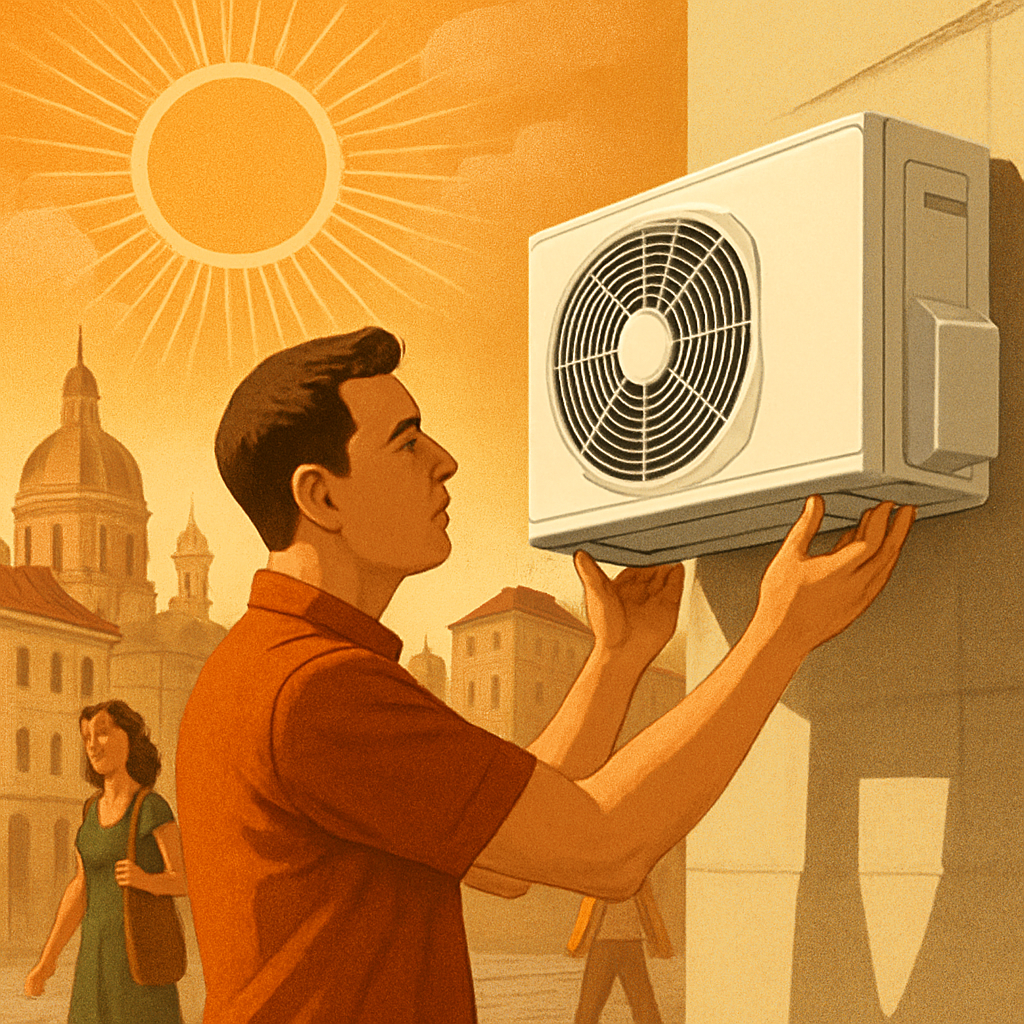
Europe is grappling with unprecedented heatwaves, prompting a surge in air-conditioner purchases, particularly units from Chinese manufacturers like Midea. Products such as the Midea PortaSplit have gained significant popularity, praised for their easy installation and compatibility with stringent European window regulations.
Midea's PortaSplit model has become emblematic of this buying trend, accounting for significant sales spikes in countries like France, Spain, Germany, and the UK. For many, the air-conditioner's ease of setup and effectiveness in blistering conditions make it an essential purchase. The increased demand for these units has outstripped supply, driving up resale market values significantly.
Steven Scholtysek, a German engineer, highlights the transformative effect of the PortaSplit AC on his attic apartment life, a relief during the hottest European June recorded. While effective in reducing discomfort indoors, such widespread adoption amplifies concerns regarding energy consumption and its broader environmental impact. Air-conditioning makes up 7% of global electricity use, contributing to carbon emissions.
Despite these drawbacks, the necessity of maintaining livable conditions during escalating heatwaves cannot be overlooked. Institutions like schools in France have begun investing in cooling systems, reflecting a broader societal acknowledgment of such appliances' role in health and comfort. The World Health Organization recommends a nuanced use of air-conditioning, advocating for sustainable practices alongside cautious application.
Furthermore, this trend signals a shift in the image of Chinese products, with consumers expressing surprise at the quality and functionality offered. This acceptance marks a move away from past stereotypes of Chinese goods, indicating growing confidence in their global market presence. Midea anticipates substantial long-term growth within Europe, driven by continuous innovations attuned to consumer needs.
Original news source: Amid heatwaves, Europeans turn to prized Chinese air-conditioner – BBC News (BBC)
🎧 Listen:
📖 Vocabulary:
Group or Classroom Activities
Warm-up Activities:
1. Discuss the impact of heatwaves in your country.
2. Share any experiences with air-conditioning installation.
3. How do different countries regulate air-conditioning usage?
4. Debate the environmental impact of increased energy consumption.
5. Describe your understanding of sustainable living practices.
🤔 Comprehension Questions:
Heatwaves prompted the increase in air-conditioner purchases.
The Midea PortaSplit has become emblematic of the buying trend.
There has been a significant spike in sales in France, Spain, Germany, and the UK.
There is concern about the increased energy consumption and environmental impact.
Air-conditioning accounts for 7% of global electricity use.
The WHO recommends a nuanced use of air-conditioning with sustainable practices.
Consumers are expressing surprise at the quality and functionality of Chinese products.
🎧✍️ Listen and Fill in the Gaps:
Europe is grappling with unprecedented heatwaves, prompting a surge in air-conditioner purchases, particularly from Chinese manufacturers like Midea. such as the Midea PortaSplit have gained significant popularity, praised for their easy installation and compatibility with stringent European regulations. Midea's PortaSplit model has become emblematic of this buying trend, accounting for significant sales in countries like France, Spain, Germany, and the UK. For many, the air-conditioner's ease of setup and effectiveness in blistering conditions make it an essential purchase. The demand for these units has outstripped supply, driving up resale values significantly. Steven Scholtysek, a engineer, highlights the transformative effect of the PortaSplit AC on his attic apartment life, a relief during the hottest European June recorded. While effective in reducing indoors, such widespread adoption amplifies concerns regarding energy consumption and its environmental impact. Air-conditioning makes up 7% of global use, contributing to carbon emissions. Despite these drawbacks, the necessity of maintaining livable during escalating cannot be overlooked. Institutions like schools in France have begun investing in cooling systems, reflecting a broader societal acknowledgment of such appliances' role in health and comfort. The World Health Organization recommends a nuanced use of air-conditioning, for sustainable practices alongside cautious application. Furthermore, this a shift in the image of Chinese products, with expressing surprise at the quality and functionality offered. This acceptance marks a move away from past stereotypes of Chinese goods, indicating growing confidence in their global market presence. Midea anticipates substantial long-term growth within Europe, driven by continuous innovations attuned to consumer needs.
💬 Discussion Questions:
1. How do you adapt to extremely hot weather?
2. Are there cultural attitudes towards air-conditioning in your country?
3. What are some innovative cooling solutions you've heard about?
4. How important is energy efficiency when purchasing appliances?
5. Discuss any changes seen in consumer perceptions of products over the years.
6. Is it important for schools to invest in cooling systems? Why?
7. How might high electricity consumption impact climate change efforts?
8. What stereotypes about products from different countries have you encountered?
9. How can global companies address environmental concerns?
10. What role do organizations like WHO play in public health regarding climate?
11. Have you noticed a shift in the quality of Chinese products?
12. What are the potential long-term impacts of evolving consumer trends?
Individual Activities
📖💭 Vocabulary Meanings:
Click a dot next to a word, then click the dot next to its meaning to draw a line connecting them.