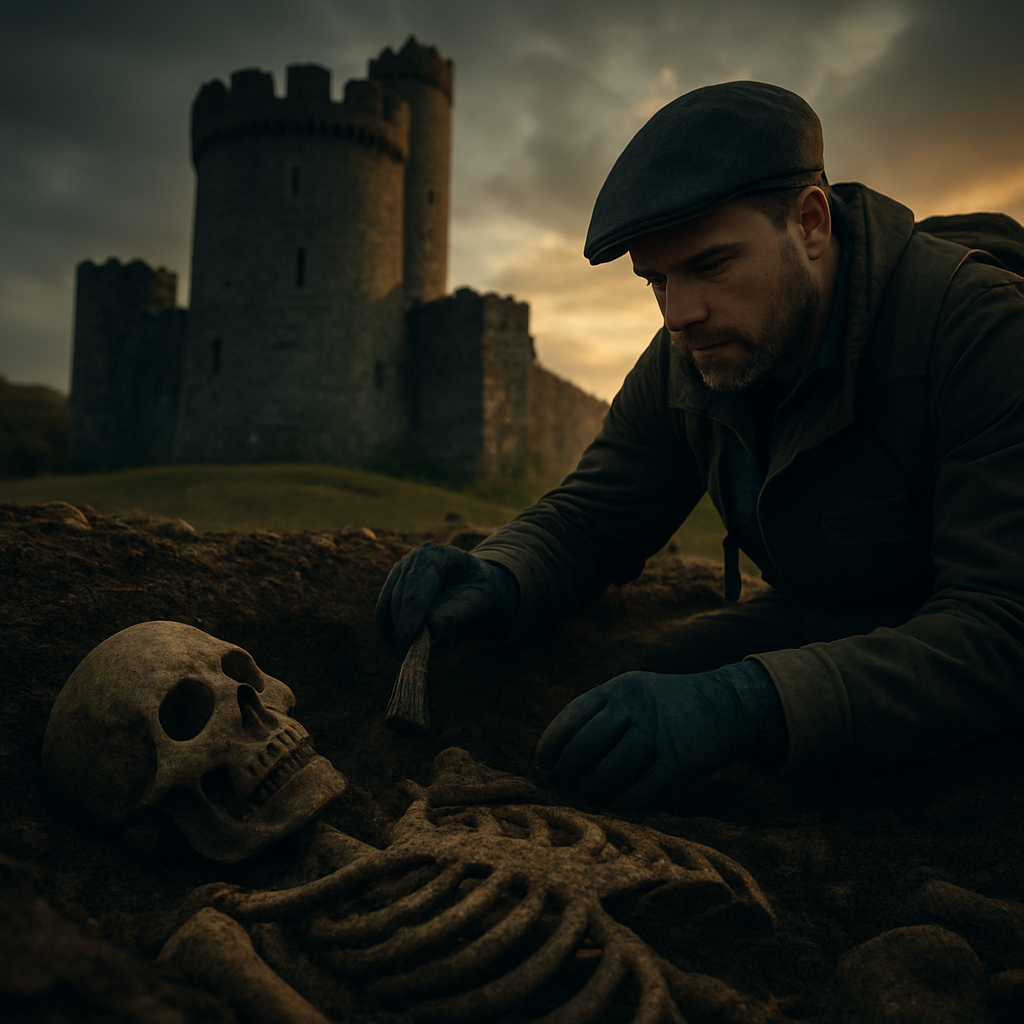
During a holiday, a family made an exciting discovery at Pembroke Castle in Wales. They found out there was an unexplored cave named Wogan Cavern underneath the castle. John Bolton, an archaeologist on vacation, convinced Dr. Rob Dinnis to investigate the cave. After initial excavation, they discovered rare bones of ancient animals and humans.
One of the surprising findings was the bones of a hippopotamus, showing it lived in Wales 120,000 years ago. The University of Aberdeen plans to conduct a large excavation project to learn more. This discovery helps scientists understand how early humans and animals lived during ancient times.
Discoveries like these are rare because many caves have been previously emptied, losing historical evidence. The findings will be kept in Pembroke to benefit future research. This chance discovery could change what people know about history in Britain.
Original news source: Family holiday unearths 'mind-blowing' ancient discovery – BBC News (BBC)
🎧 Listen:
📖 Vocabulary:
Group or Classroom Activities
Warm-up Activities:
1. What do you know about archaeology?
2. Have you ever visited a castle? What did you see?
3. Why do you think finding old bones is important?
4. Can you name any ancient animals?
5. What would you do if you found something unusual underground?
🤔 Comprehension Questions:
They found an unexplored cave called Wogan Cavern.
John Bolton was an archaeologist on vacation.
He convinced Dr. Rob Dinnis to investigate the cave.
The University of Aberdeen.
They help scientists understand how early humans and animals lived.
Many caves have been previously emptied of historical evidence.
It could change what people know about history in Britain.
🎧✍️ Listen and Fill in the Gaps:
During a holiday, a family an exciting discovery at Pembroke Castle in Wales. They found out there was an unexplored cave named Wogan underneath the castle. John , an archaeologist on vacation, convinced Dr. Rob Dinnis to investigate the cave. After initial excavation, they discovered bones of ancient animals and humans. One of the surprising findings was the bones of a , showing it in Wales 120,000 years ago. The of Aberdeen plans to conduct a large excavation project to learn more. This discovery scientists understand how early humans and animals lived ancient times. Discoveries like these are rare because many caves have been previously , losing historical evidence. The findings will be kept in Pembroke to benefit future research. This discovery could change what people about history in Britain.
💬 Discussion Questions:
1. Do you think it's exciting to discover new things? Why or why not?
2. How would you feel if you found something very old?
3. What animal would you like to find fossils of?
4. Why do people study history?
5. What do you know about Wales?
6. Should discoveries always stay where they are found?
7. How do scientists learn from ancient bones?
8. What do you think life was like 120,000 years ago?
9. Do you think more caves should be explored? Why?
10. What tools do you think archaeologists use?
11. How can we make sure important things aren't lost?
12. Have you read any stories about discoveries?
Individual Activities
📖💭 Vocabulary Meanings:
Click a dot next to a word, then click the dot next to its meaning to draw a line connecting them.