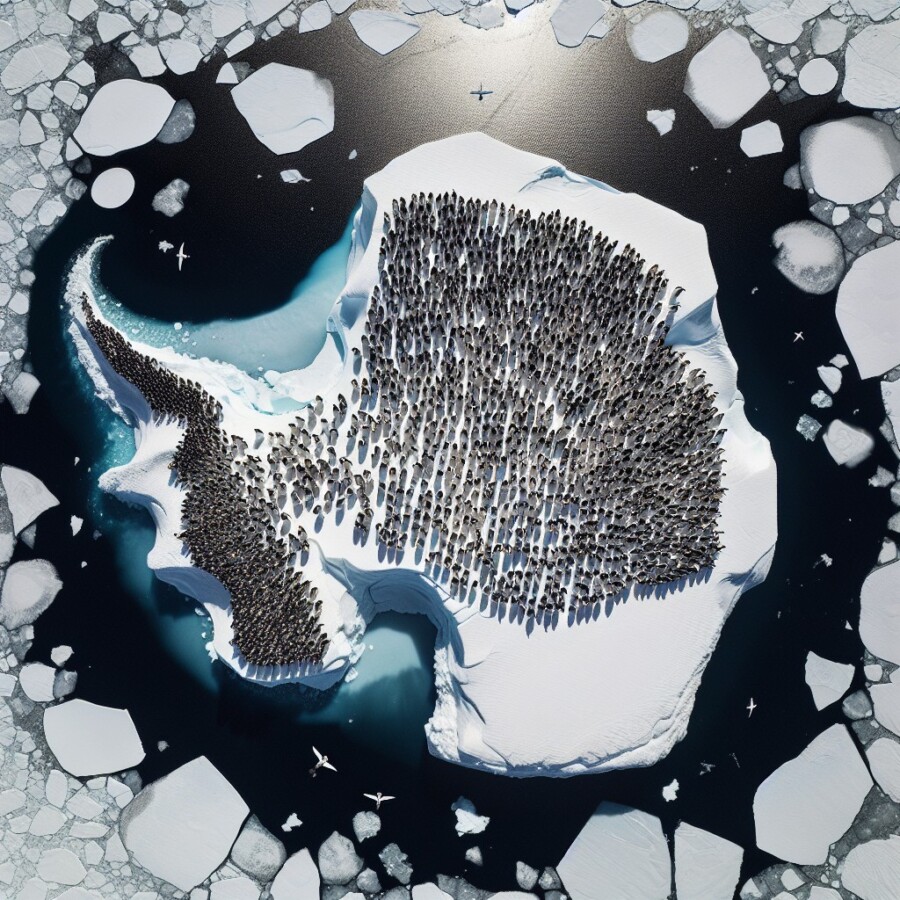
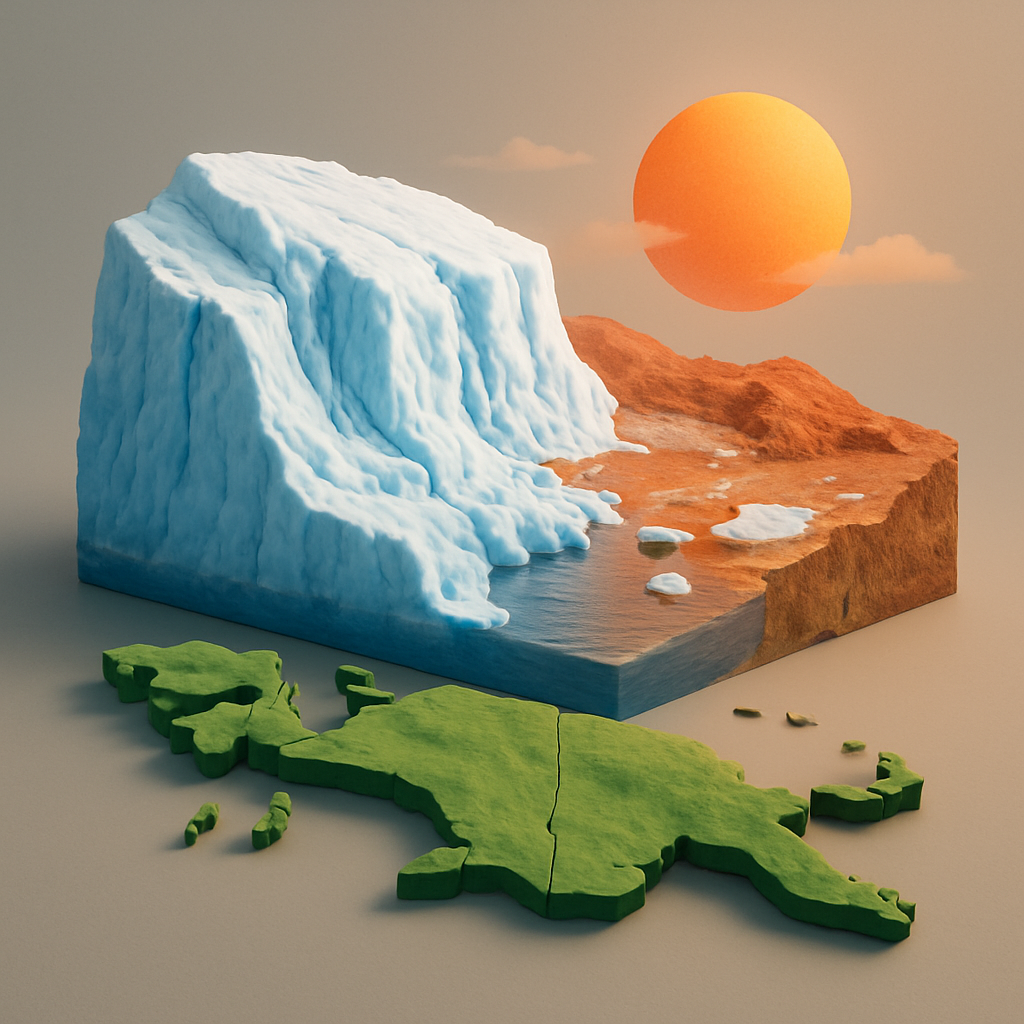
In Papua, Indonesia, the Carstensz Pyramid, also known as Puncak Jaya, is experiencing a loss of its once famous eternal snow. This iconic glacier has diminished from large expanses to just small remnants, and it is predicted to vanish entirely in the near future. The remote location of Papua's glaciers provides valuable data for understanding climate patterns.
Human-induced climate change is the primary factor causing the shrinking of these glaciers. As global temperatures rise, snow transforms into rain, making it difficult for the glaciers to survive. For the local people of Papua, these glaciers are not only environmental wonders, but also hold deep cultural and spiritual importance, linking various indigenous communities together.
Adolfina Kum, a community activist, likens the sacredness of the mountain to religious landmarks such as Mecca. The disappearance of the glaciers poses a threat to traditional cultural practices and heritage. The effects are more than just ecological; they're a challenge to the historical and cultural identity of the indigenous peoples.
In addition to the climatic changes, the region has been significantly impacted by mining operations. While these industries deliver economic advantages, they also bring about social tensions and environmental harm. People like Elfrida Natkime express a mix of hope and sorrow concerning these developments, acknowledging both the potential opportunities and the accompanying losses.
Original news source: Indonesia Carstensz Pyramid: Papua's 'eternal snow' on Puncak Jaya is about to disappear forever – BBC News (BBC)
🎧 Listen:
📖 Vocabulary:
Group or Classroom Activities
Warm-up Activities:
1. Discuss the importance of natural landmarks in your country.
2. How does climate change affect your community?
3. Share a cultural tradition from your country that holds personal significance.
4. Describe a place in the world you'd like to visit and why.
5. What are some positive and negative effects of industrial development?
🤔 Comprehension Questions:
It is located in Papua, Indonesia.
The main reason is climate change caused by human activities.
The glaciers connect various indigenous peoples spiritually and hold great cultural significance.
She compares it to religious sites like Mecca.
It threatens cultural practices and traditions, affecting heritage.
The mining industry has dramatically altered the region.
They express mixed feelings about the changes, seeing both opportunities and loss.
🎧✍️ Listen and Fill in the Gaps:
In Papua, Indonesia, the Carstensz Pyramid, also known as Jaya, is experiencing a loss of its once famous snow. This iconic has diminished from large expanses to just small remnants, and it is predicted to vanish entirely in the near future. The remote location of glaciers provides valuable data for understanding climate . climate is the primary factor causing the shrinking of these glaciers. As global temperatures rise, snow transforms into rain, making it difficult for the glaciers to . For the local people of Papua, these glaciers are not only environmental wonders, but also hold deep cultural and spiritual importance, linking various indigenous communities together. Adolfina Kum, a community activist, likens the sacredness of the mountain to religious such as Mecca. The disappearance of the glaciers poses a threat to traditional cultural practices and heritage. The are more than just ; a challenge to the historical and cultural identity of the indigenous . In addition to the climatic changes, the region has been significantly impacted by mining operations. these industries deliver economic advantages, they also bring about social tensions and environmental harm. like Elfrida Natkime express a mix of hope and sorrow concerning these developments, acknowledging both the potential and the accompanying losses.
💬 Discussion Questions:
1. How do you feel about the impact of climate change on natural landmarks?
2. What does cultural significance mean to you?
3. Have you ever felt a spiritual connection to a place or thing?
4. How should countries balance economic progress with environmental protection?
5. What is your opinion on the role of activists in society?
6. How do you think losing a natural landmark affects a community?
7. Can the loss of natural landscapes lead to the loss of cultural identity?
8. How do you feel about the role of mining in modern economies?
9. What measures can be taken to preserve important cultural sites?
10. How can indigenous communities be supported in preserving their heritage?
11. Do you see climate change impacting traditions in your area?
12. What would you do if a place you love was endangered?
Individual Activities
📖💭 Vocabulary Meanings:
Click a dot next to a word, then click the dot next to its meaning to draw a line connecting them.