

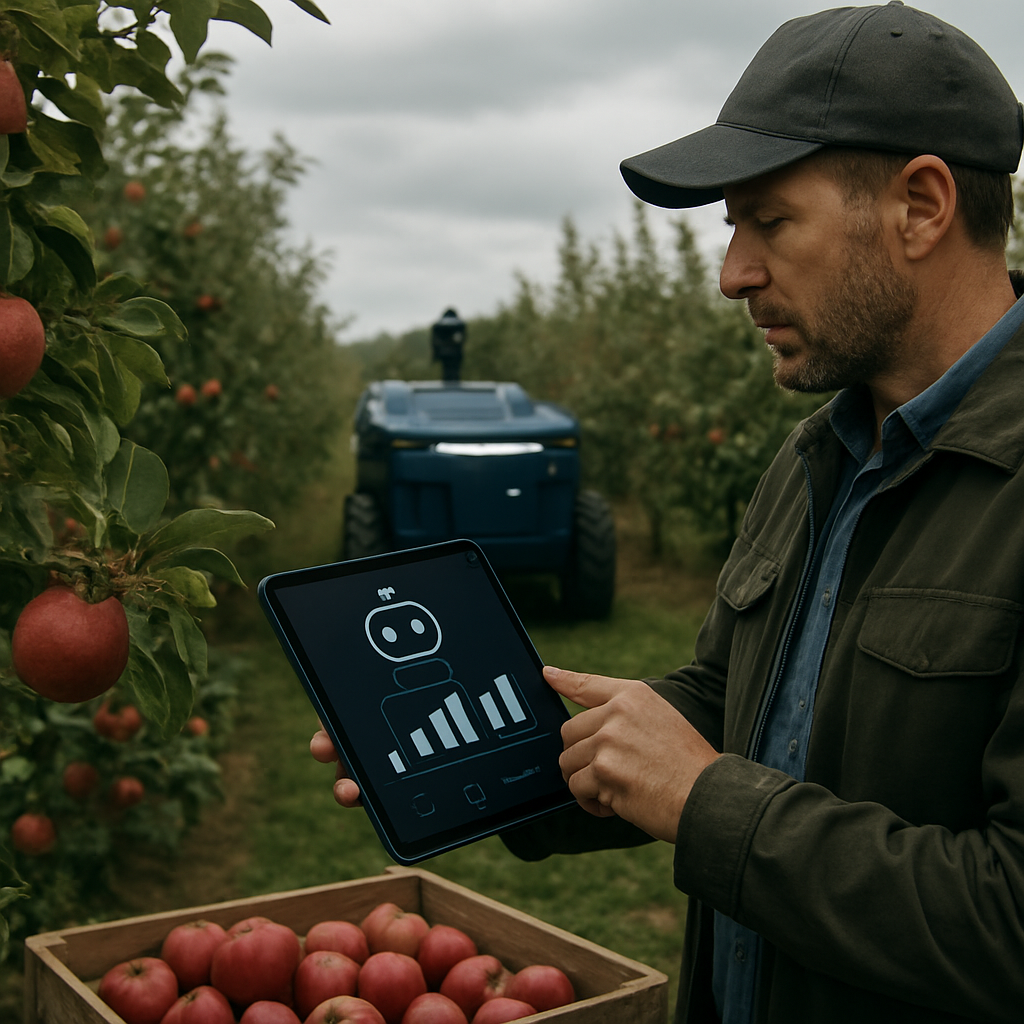
Farmers in Washington State faced an unexpected heatwave that disrupted their apple harvest. This is where AI technology steps in, offering predictions on when fruit is ripe while accounting for weather changes. Joel Carter from Okanagan Specialty Fruits emphasized the detailed insights that AI provides into their harvest. Having over 1,250 acres to manage, Carter finds these AI predictions vital.
AI tools like those from Vivid Machines provide detailed images of crops, identifying even the smallest buds on apple trees. This information helps in estimating the crop’s yield and predicting the best harvest dates. Farmers benefit by accurately scheduling labor and maximizing profit. This kind of technology is crucial for high-value crops that can't afford any ripeness mishaps.
In the UK, FruitCast uses AI to offer similar predictions for strawberries, raspberries, and other fruits. They provide various methods for capturing crop imagery, from drones to handheld devices. Despite the technological advancements, challenges like historic weather data quality can affect accuracy.
There's a growing interest in deep analysis technologies, like millimeter wave-based ripeness detectors developed by researchers. Such innovative tools could soon be tested in markets, propelling the agriculture industry forward. However, adoption depends on showing farmers the clear benefits and ease of implementing this new tech.
Original news source: The AI telling farmers when to harvest – BBC News (BBC)
🎧 Listen:
📖 Vocabulary:
Group or Classroom Activities
Warm-up Activities:
1. Have you ever experienced unusual weather changes in your area? Share your experience.
2. What technology do you use daily that you find essential? Explain why.
3. How do you think technology impacts agriculture today?
4. Can you imagine a job where technology plays a crucial role? Describe it.
5. What are some challenges people face when adopting new technology?
🤔 Comprehension Questions:
The farmers faced an unexpected heatwave.
AI technology offers predictions on when fruit is ripe, considering weather changes, to aid farmers.
Joel Carter relies on AI predictions because he manages over 1,250 acres and they provide him with detailed harvest insights.
Vivid Machines' AI tool provides detailed images of crops, identifying even the smallest buds on trees.
The quality of historic weather data can affect the accuracy of AI predictions.
Millimeter wave-based ripeness detectors are being developed for detecting fruit ripeness.
Farmers' adoption of new agricultural technologies depends on seeing clear benefits and ease of implementation.
🎧✍️ Listen and Fill in the Gaps:
Farmers in State faced an unexpected heatwave that disrupted their apple harvest. This is where AI steps in, offering predictions on when fruit is ripe accounting for changes. Joel Carter from Okanagan Specialty Fruits emphasized the detailed insights that AI provides into their harvest. Having over 1,250 acres to manage, Carter finds these AI predictions vital. AI like those from Vivid Machines detailed images of crops, identifying even the smallest buds on apple trees. This information in estimating the crop’s yield and the best harvest dates. Farmers benefit by accurately scheduling labor and maximizing . This kind of technology is crucial for high-value crops that can't any ripeness mishaps. In the UK, uses AI to similar predictions for strawberries, raspberries, and other fruits. They provide various methods for capturing crop imagery, from drones to handheld devices. Despite the technological advancements, challenges like weather data quality can affect accuracy. There's a growing in deep analysis technologies, like millimeter wave-based ripeness detectors developed by researchers. Such innovative tools could soon be tested in markets, propelling the agriculture industry . , adoption depends on showing farmers the clear benefits and ease of implementing this new tech.
💬 Discussion Questions:
1. How do you think AI can improve other areas of farming besides predicting fruit ripeness?
2. What are the advantages and disadvantages of using technology in agriculture?
3. How can farmers be persuaded to adopt new technologies?
4. In what ways can technology help manage unexpected weather changes?
5. Do you think smaller farms have the same access to technology as larger ones? Why or why not?
6. What role do you believe government should play in helping farmers use technology?
7. Are there any potential negative effects of relying too much on technology in farming?
8. How important are accurate weather data for agriculture?
9. What other industries could benefit from the technologies discussed in the article?
10. How might the development of new technology affect employment in the farming industry?
11. Would you be interested in pursuing a career in agriculture with this type of technology? Why?
12. How do you think technology in agriculture might look in 50 years?
Individual Activities
📖💭 Vocabulary Meanings:
Click a dot next to a word, then click the dot next to its meaning to draw a line connecting them.