


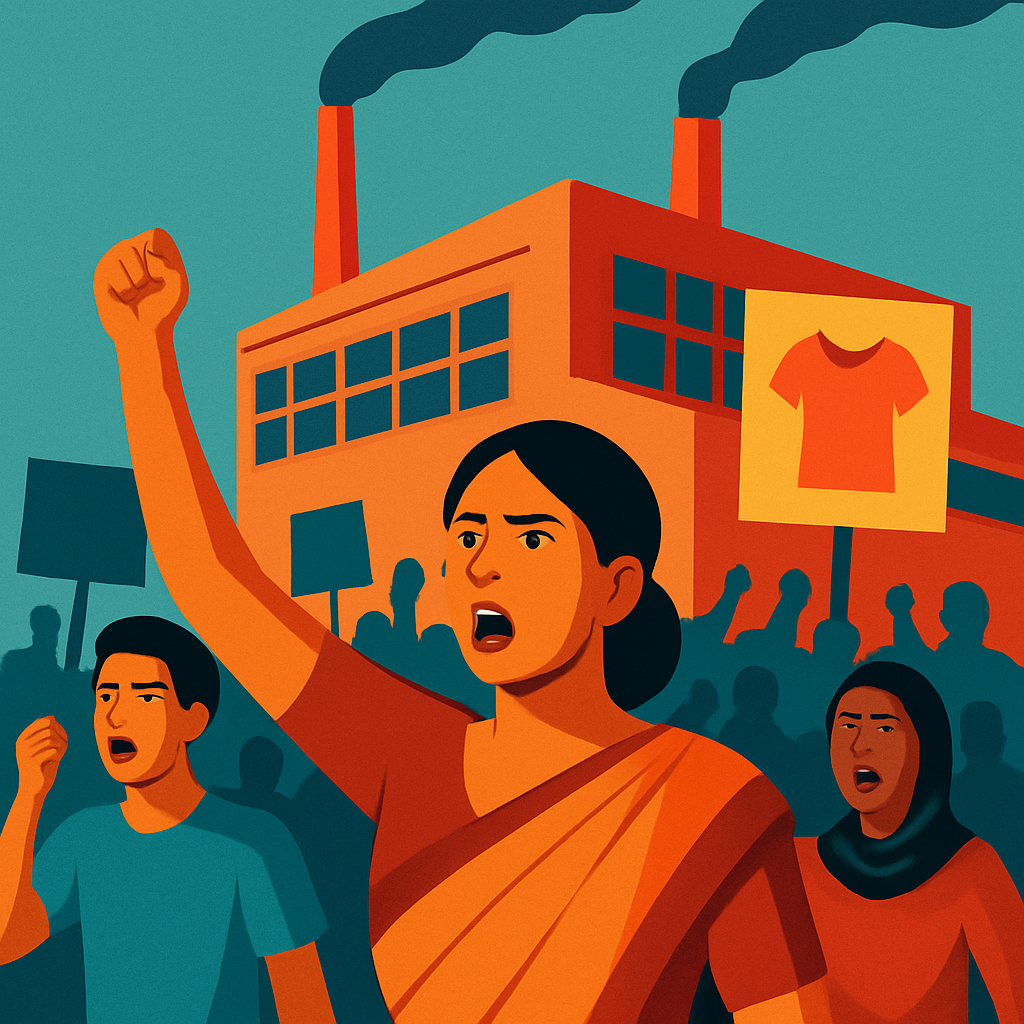
In Bangladesh, ongoing protests by garment factory workers have culminated in the closure of hundreds of production facilities. These demonstrations, which escalated into violence in Dhaka and peripheral industrial zones, reflect widespread frustration over the existing wage standards that laborers contend are insufficient amid escalating living expenses. The unrest has seen roads blocked, factories vandalized, and vehicles set on fire by agitated protestors, prompting police to intervene with tear gas and make numerous arrests.
The workers are unequivocally demanding a minimum monthly wage of 30,000 taka, more than twice the current average pay. They argue that the severe increase in the cost of living, especially rent and food prices, necessitates this wage revision. Despite Bangladesh's prominent standing as the world's second-largest garment exporter behind China, its labor force remains one of the lowest-paid worldwide, making this an acute issue for many of the country's four million garment employees.
The widespread disruption of factory operations poses significant risks to the economy, as the garment industry constitutes approximately 10% of Bangladesh's GDP and generates substantial foreign revenue. Industry stakeholders fear that continued instability could lead to a loss of international business to rival countries, consequently impacting the livelihoods of millions dependent on garment manufacturing.
Recognizing the gravity of the situation, the Bangladeshi government has initiated efforts to address the workers' grievances by establishing a wage review board. However, workers remain distrustful, insisting that more decisive action is necessary to alleviate their economic burdens while authorities monitor the protest dynamics closely.
Commentators suggest that the government's approach to resolving these labor disputes will be a critical test of its ability to manage social and economic tensions. The outcome of these efforts could reshape the trajectory of labor policies in Bangladesh, potentially setting new precedents for worker rights and industry standards on a global scale.
Original news source: Bangladesh: Wage protests force hundreds of garment factories to close – BBC News (BBC)
🎧 Listen:
📖 Vocabulary:
Group or Classroom Activities
Warm-up Activities:
1. Discuss how current events impact global markets.
2. Share your thoughts on the importance of fair wages.
3. What do you know about Bangladesh's economy?
4. How do labor disputes affect industries?
5. Explain the role of protests in achieving social change.
🤔 Comprehension Questions:
The ongoing protests by garment factory workers due to insufficient wages.
They demand a minimum monthly wage of 30,000 taka.
Because of the severe increase in costs of living, especially rent and food prices.
It constitutes about 10% of the GDP and generates substantial foreign revenue.
They fear that continued instability could lead to the loss of international business to rival countries.
The government has established a wage review board.
It could potentially reshape labor policies in Bangladesh, setting new precedents globally.
🎧✍️ Listen and Fill in the Gaps:
In , ongoing protests by garment factory workers have culminated in the closure of hundreds of production . These demonstrations, which escalated into violence in Dhaka and peripheral industrial zones, reflect widespread frustration over the existing wage standards that laborers contend are insufficient amid escalating living . The unrest has seen roads blocked, factories vandalized, and vehicles set on fire by agitated , prompting police to intervene with tear gas and make numerous arrests. The workers are demanding a minimum monthly wage of 30,000 taka, more than twice the current average pay. They argue that the severe increase in the cost of living, rent and food prices, necessitates this wage . Despite Bangladesh's prominent standing as the world's second-largest garment exporter behind China, its labor force remains one of the lowest-paid worldwide, making this an issue for many of the country's four million garment employees. The widespread disruption of factory operations poses significant risks to the economy, as the garment industry constitutes 10% of Bangladesh's GDP and generates substantial foreign revenue. Industry stakeholders fear that instability could lead to a loss of international business to rival countries, consequently impacting the livelihoods of dependent on garment . Recognizing the gravity of the situation, the Bangladeshi government has initiated efforts to address the workers' grievances by establishing a wage review board. However, workers remain , insisting that more decisive is necessary to alleviate their economic burdens while authorities monitor the protest closely. Commentators suggest that the government's approach to resolving these labor disputes will be a critical test of its to manage social and economic tensions. The outcome of these efforts could reshape the trajectory of labor policies in Bangladesh, potentially setting new precedents for worker rights and industry standards on a global scale.
💬 Discussion Questions:
1. What are your thoughts on workers demanding higher wages?
2. How do you think the cost of living impacts wage demands?
3. In your opinion, what is a fair wage for garment workers?
4. How do protests influence governmental policies?
5. Have you ever participated in a protest? What was it about?
6. What role should governments play in resolving labor disputes?
7. How do you think international buyers can influence wages in Bangladesh?
8. Why do you think labor costs are so low in some countries?
9. What are the potential risks of not addressing worker grievances?
10. How do economic factors influence global industries?
11. Should international community intervene in country-specific labor disputes?
12. In what ways can companies ensure fair treatment of their workers?
Individual Activities
📖💭 Vocabulary Meanings:
Click a dot next to a word, then click the dot next to its meaning to draw a line connecting them.