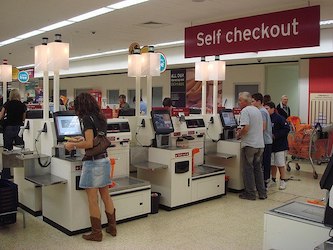
The managing director of Booths, Nigel Murray, explained that customers have expressed dissatisfaction with the self-scan machines, citing issues with speed, reliability, and impersonal interactions. Additionally, the need for visual verification of loose items and age checks for alcohol purchases has caused inconvenience for customers. The company aims to prioritize warm, personal care by having human beings serve customers instead of relying on artificial intelligence.
Booths, often referred to as a northern Waitrose, has a long-standing philosophy of providing the best goods in attractive stores staffed with first-class assistants. The company prides itself on delivering a warm northern welcome and is committed to investing in its people to maintain high standards of service. While self-checkouts will be retained in two stores in the Lake District to accommodate busy periods, the majority of stores will transition to staffed checkouts.
The origin of self-service checkouts can be traced back to the 1990s, and their numbers have continued to grow over the years. Despite their popularity, some shoppers remain unconvinced about the benefits of self-service tills, with concerns about the lack of human interaction. However, others appreciate the convenience and efficiency of self-service checkouts. Booths' decision has received mixed reactions from customers, with some expressing disappointment at the removal of self-service tills, while others welcome the return of human interaction during their shopping experience.
Original news source: Self-service: Booths supermarket puts staff back behind its tills (BBC)
📖 Vocabulary:
Group or Classroom Activities
Warm-up Activities:
– Opinion Poll
Instructions: Students are to be divided into small groups. Each group conducts an opinion poll among their peers about their preferences between self-service and staffed checkouts. They must prepare at least five questions related to customer service experiences and then present their findings to the class, focusing on the language used to express preferences and opinions.
– News Reporter Role-play
Instructions: Students pair up and take on the roles of a news reporter and the managing director of Booths, Nigel Murray. The reporter interviews the director about the decision to remove self-service tills. Students should focus on using reported speech to relay their partner’s answers to the class afterward.
– Vocabulary Pictionary
Instructions: Write down key vocabulary from the article (e.g., self-service tills, customer feedback, reliability, impersonal interactions, visual verification) on separate pieces of paper. Students take turns drawing the words for their team to guess, without speaking or writing letters or numbers. This activity focuses on the students' ability to express and guess vocabulary through drawings.
– Future Predictions
Instructions: In groups, students discuss and make predictions about the future of supermarkets and shopping experiences, based on the article about Booths. They must use future tense structures to present their ideas to the class and provide reasons for their predictions.
– Headline Creation
Instructions: Students work in small groups to create a catchy newspaper headline that summarizes the article's main point. They must consider the impact of word choice and connotation to grab the reader's attention. Afterward, each group presents their headline, and the class discusses which one is most effective and why.
🤔 Comprehension Questions:
Booths has decided to remove self-service tills from almost all of its stores in response to customer feedback, opting for staffed checkouts to provide a better customer experience.
Nigel Murray mentioned customer dissatisfaction with self-scan machines due to issues with speed, reliability, and impersonal interactions. Inconveniences such as the need for visual verification of loose items and age checks for alcohol purchases were also factors.
Booths aims to prioritize warm, personal care by having human beings serve customers instead of relying on artificial intelligence, to enhance the customer experience.
Booths' philosophy is to provide the best goods in attractive stores staffed with first-class assistants, delivering a warm northern welcome and investing in its people to maintain high standards of service.
Booths will retain self-checkouts in two stores in the Lake District to accommodate busy periods, while the majority of stores will transition to staffed checkouts.
Self-service checkouts first appeared in supermarkets in the 1990s.
Some concerns include the lack of human interaction, issues with the speed and reliability of the machines, and the inconvenience of needing assistance for certain items and age verification.
Customers have had mixed reactions to Booths' decision. Some are disappointed at the removal of self-service tills, while others welcome the return of human interaction during their shopping experience.
🎧✍️ Listen and Fill in the Gaps:
Booths, a supermarket in northern England, has decided to remove self-service tills from almost all of its stores in response to feedback. The company believes that having staffed checkouts will provide a better customer experience. This decision makes Booths the first UK supermarket to move away from using self-service tills, which have become increasingly common in recent years. The director of Booths, Nigel , explained that customers have expressed dissatisfaction with the self-scan machines, citing with speed, , and impersonal interactions. Additionally, the need for visual verification of loose items and age for alcohol purchases has caused inconvenience for . The company aims to prioritize warm, personal care by having human beings serve customers instead of relying on artificial intelligence. Booths, often referred to as a northern Waitrose, has a long-standing philosophy of providing the best goods in attractive stores staffed with first-class assistants. The company itself on delivering a warm welcome and is committed to investing in its people to maintain high standards of service. While self-checkouts will be retained in two stores in the Lake to accommodate busy periods, the majority of stores will transition to staffed checkouts. The of self-service checkouts can be traced back to the 1990s, and their numbers have continued to grow over the years. Despite their popularity, some shoppers remain unconvinced about the benefits of self-service tills, with concerns about the lack of human interaction. However, others appreciate the convenience and of self-service checkouts. Booths' decision has received reactions from customers, with some expressing disappointment at the removal of self-service tills, while others welcome the of human interaction during their experience.
💬 Discussion Questions:
1. What is your personal preference when it comes to checkouts at a supermarket, self-service or staffed tills, and why?
2. How would you feel if your local supermarket removed self-service checkouts in favor of staffed ones?
3. Do you think the presence of staffed checkouts impacts the overall shopping experience? Why or why not?
4. Have you ever had a frustrating experience with a self-service till? Can you describe what happened?
5. What is one aspect of human interaction at a checkout that you believe cannot be replicated by a machine?
6. Do you like the idea of supermarkets prioritizing personal care over technological convenience? Why or why not?
7. How do you think the removal of self-service tills might affect the employment landscape in the retail sector?
8. Do you think artificial intelligence can fully replace human beings in customer service roles? Why or why not?
9. What is your opinion on the balance between technology and human employment in the retail industry?
10. Have you ever chosen a store specifically because of the type of checkout options they offer? What influenced your decision?
11. How would you feel if a store you frequently shop at made a significant change like Booths did, based on customer feedback?
12. Do you think other supermarkets should follow Booths' example and remove self-service tills? Why or why not?
13. What is the importance of a "warm northern welcome" or similar cultural touches in a shopping experience for you?
14. In your experience, do self-service checkouts generally speed up or slow down your shopping process?
15. Do you think there are any particular types of stores where self-service checkouts are more appropriate than in others? Why or why not?
Individual Activities
📖💭 Vocabulary Meanings:
Click a dot next to a word, then click the dot next to its meaning to draw a line connecting them.
Words
Meanings
🔡 Multiple Choice Questions:
🕵️ True or False Questions:
📝 Write a Summary:
Write a summary of this news article in two sentences.
Check your writing now with the best free AI for English writing!