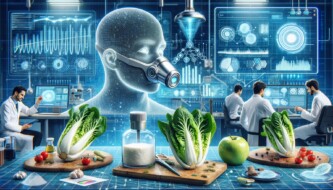
One Israeli company, Sensifi, has developed e-noses that can be used on-site by food producers, providing results in less than one hour. This is a significant improvement compared to the current method of sending samples to a laboratory and waiting for days for the results. Sensifi aims to make its machines affordable and generate revenue through subscription fees.
Food poisoning is a serious problem worldwide, with millions of people getting sick and thousands dying each year. Romaine lettuce has been identified as a major culprit in recent years. As the food market becomes more industrialized, it becomes more susceptible to pathogens. German firm NTT Data Business Solutions is using coffee to train the AI that powers its e-nose. By exposing the sensors to different types of coffee, the AI learns to identify the unique combination of gases that make up the odor of fresh and good-quality coffee.
While the latest e-noses show promising results, some experts believe that the cost may deter food firms from adopting this technology on a large scale. Deploying a worldwide network of e-nose detectors would require significant investment and may not be financially viable for many businesses. Additionally, fine-tuning the e-noses for each facility would be a complex task. However, entrepreneurs like Scentian Bio in New Zealand are undeterred and have developed biosensors that are thousands of times more sensitive than a dog's nose. These biosensors have a wide range of applications, including food quality control, disease diagnosis, and environmental monitoring.
Original news source: The electronic noses designed to prevent food poisoning (BBC)
📖 Vocabulary:
Group or Classroom Activities
Warm-up Activities:
– Charades
Instructions: Divide the class into two teams. Give each team a piece of paper with a specific smell related to the article (e.g. coffee, salmonella, fresh lettuce) written on it. One student from each team will come to the front and act out the smell without speaking. The team members must guess the smell within a certain time limit. The team with the most correct guesses wins.
– News Summary
Instructions: In pairs, students will take turns summarizing the main points of the article to their partner. After each summary, the partner will give feedback and ask follow-up questions. Then, they will switch roles. Encourage students to use their own words and focus on the key information.
– Vocabulary Pictionary
Instructions: Write a list of vocabulary words from the article on the board (e.g. AI, electronic noses, volatile organic compound). Divide the class into small groups and give each group a set of blank paper and markers. One student from each group will choose a word from the list and draw a picture to represent it. The other group members must guess the word based on the drawing. The group with the most correct guesses wins.
– Opinion Poll
Instructions: Divide the class into small groups. Each group will discuss and debate the following question: "Do you think electronic noses will revolutionize food safety? Why or why not?" After the discussion, each group will present their opinions to the class and provide reasons to support their stance. Encourage students to use vocabulary and concepts from the article in their discussions.
– Keyword Taboo
Instructions: Write a list of keywords from the article on separate pieces of paper and distribute them to the students. Each student will take turns describing the keyword on their paper without using the word itself or any derivatives. The other students must guess the keyword based on the description. The student with the most correct guesses at the end wins.
🤔 Comprehension Questions:
Electronic noses detect and identify specific smells by recording the electric signals produced by volatile organic compounds (VOCs) released by the smell. Each strain of bacteria produces a unique VOC fingerprint, which creates a different electric signal in the electronic nose.
The potential impact of electronic noses on food safety is significant. They have the ability to detect and identify potentially deadly foodborne bacteria such as salmonella and E. Coli. This can help prevent outbreaks of food poisoning and ensure the safety of food products.
Sensifi's e-nose technology improves upon the current method of testing for foodborne bacteria by providing results in less than one hour, compared to the current method of sending samples to a laboratory and waiting for days for the results. This allows for faster detection and response to potential contamination.
The role of AI in analyzing the signals recorded by electronic noses is to compare the recorded signal to a database and identify any potential contamination. AI software systems analyze the signals and use machine learning algorithms to recognize patterns and identify specific smells associated with different strains of bacteria.
Food poisoning is a significant problem worldwide because it affects millions of people and causes thousands of deaths each year. As the food market becomes more industrialized, the risk of contamination and the spread of foodborne bacteria increases. This poses a serious threat to public health and safety.
NTT Data Business Solutions is training the AI for their e-nose technology by exposing the sensors to different types of coffee. The AI learns to identify the unique combination of gases that make up the odor of fresh and good-quality coffee. This training helps the AI recognize and identify specific smells associated with different substances.
Some potential barriers to widespread adoption of electronic noses in the food industry include the cost of deploying a worldwide network of e-nose detectors, which may be financially unviable for many businesses. Additionally, fine-tuning the e-noses for each facility would be a complex task. There may also be resistance to adopting new technology and changing established testing methods.
Some other applications of biosensors like those developed by Scentian Bio include food quality control, disease diagnosis, and environmental monitoring. Biosensors can be used to detect and identify various substances and compounds, making them valuable tools in a wide range of industries and fields.
🎧✍️ Listen and Fill in the Gaps:
Recent advancements in artificial intelligence (AI) have led to the development of electronic noses, high-tech sensors that can detect and identify specific smells. These electronic noses have the to transform food safety by detecting potentially deadly foodborne bacteria such as salmonella and E. Coli. Each strain of bacteria produces a unique volatile organic compound (VOC) fingerprint, which a different electric signal in the electronic nose. This signal is then recorded and by an AI software system, which it to a database and notifies the user of any potential contamination. One Israeli company, Sensifi, has developed e-noses that can be used on-site by food producers, providing in less than one hour. This is a significant improvement compared to the method of sending samples to a laboratory and waiting for days for the results. Sensifi aims to make its machines and revenue through subscription fees. Food poisoning is a serious problem worldwide, with millions of people getting sick and thousands dying each year. Romaine lettuce has been as a major culprit in recent years. As the food market becomes more industrialized, it becomes more susceptible to . firm NTT Data Business Solutions is using coffee to train the AI that powers its e-nose. By exposing the sensors to different types of coffee, the AI learns to identify the unique combination of gases that make up the odor of and good-quality coffee. While the latest e-noses show promising results, some experts believe that the cost may deter food firms from adopting this technology on a scale. Deploying a worldwide of e-nose detectors would require investment and may not be financially viable for many businesses. Additionally, fine-tuning the e-noses for each facility would be a complex task. However, like Scentian Bio in New Zealand are undeterred and have developed biosensors that are thousands of times more sensitive than a dog's nose. These biosensors have a wide range of applications, including food quality control, disease diagnosis, and environmental monitoring.
💬 Discussion Questions:
1. What is an electronic nose and how does it work?
2. How would you feel if you found out that the food you ate was contaminated with bacteria?
3. Do you think electronic noses will be effective in preventing food poisoning? Why or why not?
4. What is your opinion on using AI technology to detect foodborne bacteria? Do you think it is a good idea? Why or why not?
5. Do you like the idea of using electronic noses in the food industry? Why or why not?
6. How do you think the development of electronic noses will impact food safety regulations?
7. What is your experience with food poisoning? Have you ever gotten sick from contaminated food?
8. Do you think the cost of implementing electronic noses will be a barrier for food firms? Why or why not?
9. How do you think the use of electronic noses will affect the job market in the food industry?
10. How would you feel if you found out that the coffee you were drinking was contaminated?
11. Do you think the use of electronic noses will make people more cautious about the food they consume? Why or why not?
12. What other applications do you think electronic noses could have, besides food safety?
13. How do you think the development of electronic noses will impact the agriculture industry?
14. Do you think electronic noses will eventually replace traditional food safety testing methods? Why or why not?
15. How do you think the use of electronic noses will affect consumer trust in the food industry?
Individual Activities
📖💭 Vocabulary Meanings:
Click a dot next to a word, then click the dot next to its meaning to draw a line connecting them.
Words
Meanings
🔡 Multiple Choice Questions:
🕵️ True or False Questions:
📝 Write a Summary:
Write a summary of this news article in two sentences.
Check your writing now with the best free AI for English writing!