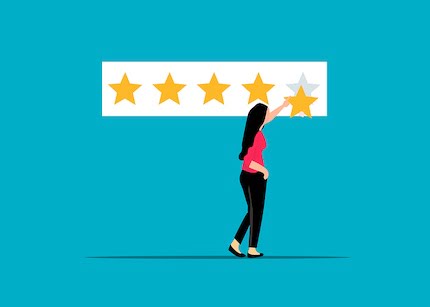
Major online companies, including Amazon, Expedia, and Trustpilot, have joined forces to combat fake reviews. The group, known as the Coalition for Trusted Reviews, aims to share information and best practices to deter fraudsters. Fake reviews can harm a company's reputation and mislead consumers into purchasing low-quality products or services. A recent government report estimated that fake product reviews alone could cost UK consumers £312 million annually. The government plans to address this issue through the Digital Markets, Competition, and Consumer Bill, while the US Federal Trade Commission is proposing similar action. As AI technology advances, there is a growing concern about an arms race between fraudsters and retailers, with AI potentially making it easier and cheaper to generate convincing fake reviews. The Coalition for Trusted Reviews will combat this by establishing industry-wide standards, sharing best practices, and exchanging intelligence on companies involved in selling or using fake reviews. Amazon's vice president, Dharmesh Mehta, emphasized the need for collaboration to effectively shut down fraudulent review activity and protect consumers. Travel booking site Tripadvisor, which identified 1.3 million fake reviews on its platform in 2022, also stressed the importance of cooperation in combating this issue.
Original news source: Amazon, Expedia and Trustpilot unite to fight fake reviews (BBC)
🎧 Listen:
📖 Vocabulary:
Group or Classroom Activities
Warm-up Activities:
– News Summary
Instructions: Divide the class into small groups. Give each group a few minutes to read the article. Then, ask each group to work together to write a summary of the article in their own words. Afterward, have each group share their summaries with the class.
– Opinion Poll
Instructions: Ask the class to form pairs or small groups. Assign each group a role (e.g., consumer, retailer, government representative) and have them discuss their opinions on the issue of fake reviews. After they have had time to discuss, ask each group to present their opinions to the class. Facilitate a class discussion by asking follow-up questions and encouraging students to respond to each other's opinions.
– Vocabulary Pictionary
Instructions: Write down a list of vocabulary words from the article on small pieces of paper. Put the papers in a hat or bowl. Divide the class into two teams and have one person from each team take a turn drawing a word from the hat. They must then attempt to draw the word on the board while their team tries to guess what it is. The team that guesses correctly gets a point. Continue until all the words have been drawn or the time limit is reached.
– Pros and Cons
Instructions: Divide the class into pairs or small groups. Assign one student in each group to argue in favor of fake reviews, and another student to argue against them. Give them a few minutes to brainstorm their arguments and then have a debate within their group. Afterward, ask each group to share their main points with the class, taking turns to present the pros and cons of fake reviews.
– Speed Summarizing
Instructions: Give each student a copy of the article. Set a timer for 5 minutes and ask the students to read the article silently and underline the most important points. After the 5 minutes are up, reset the timer for 2 minutes and ask the students to write a brief summary of the article using their underlined points. When the 2 minutes are up, have the students share their summaries with a partner. Finally, ask a few students to share their partner's summary with the class.
🤔 Comprehension Questions:
🎧✍️ Listen and Fill in the Gaps:
Major online companies, including Amazon, Expedia, and Trustpilot, have joined forces to combat fake reviews. The group, known as the for Trusted Reviews, aims to share information and best practices to deter . Fake reviews can harm a company's reputation and mislead into low-quality products or services. A government report estimated that fake reviews alone could cost UK consumers £312 million annually. The government plans to address this issue through the Digital Markets, Competition, and Consumer Bill, while the US Federal Commission is proposing action. As AI technology advances, there is a growing concern about an arms race between fraudsters and retailers, with AI potentially making it and to convincing fake reviews. The Coalition for Reviews will combat this by establishing industry-wide standards, sharing best practices, and exchanging intelligence on companies involved in selling or using fake . Amazon's vice president, Dharmesh , emphasized the need for to effectively shut down fraudulent review activity and protect consumers. Travel booking site Tripadvisor, which identified 1.3 million fake reviews on its platform in 2022, also stressed the importance of cooperation in this issue.
💬 Discussion Questions:
1. What are some potential consequences of fake reviews for consumers?
2. How do you think fake reviews impact a company's reputation?
3. Have you ever been misled by a fake review? Can you share your experience?
4. Do you think the government should have a role in regulating fake reviews? Why or why not?
5. How would you feel if you purchased a low-quality product or service based on a fake review?
6. What steps do you think online companies should take to combat fake reviews?
7. Have you ever written a review for a product or service? How important do you think reviews are for consumers?
8. Do you trust online reviews when making purchasing decisions? Why or why not?
9. What measures do you think AI technology companies should take to prevent the creation of convincing fake reviews?
10. How do you think the establishment of industry-wide standards can help combat fake reviews?
11. Do you think the Coalition for Trusted Reviews will be successful in deterring fraudsters? Why or why not?
12. How do you think the prevalence of fake reviews impacts small businesses?
13. What other methods do you think fraudsters might use to deceive consumers, aside from fake reviews?
14. How do you think the Digital Markets, Competition, and Consumer Bill will address the issue of fake reviews?
15. Do you think online companies should be held legally responsible for allowing fake reviews on their platforms? Why or why not?
Individual Activities
📖💭 Vocabulary Meanings:
Click a dot next to a word, then click the dot next to its meaning to draw a line connecting them.
Words
Meanings
🔡 Multiple Choice Questions:
🕵️ True or False Questions:
📝 Write a Summary:
Write a summary of this news article in two sentences.
Check your writing now with the best free AI for English writing!