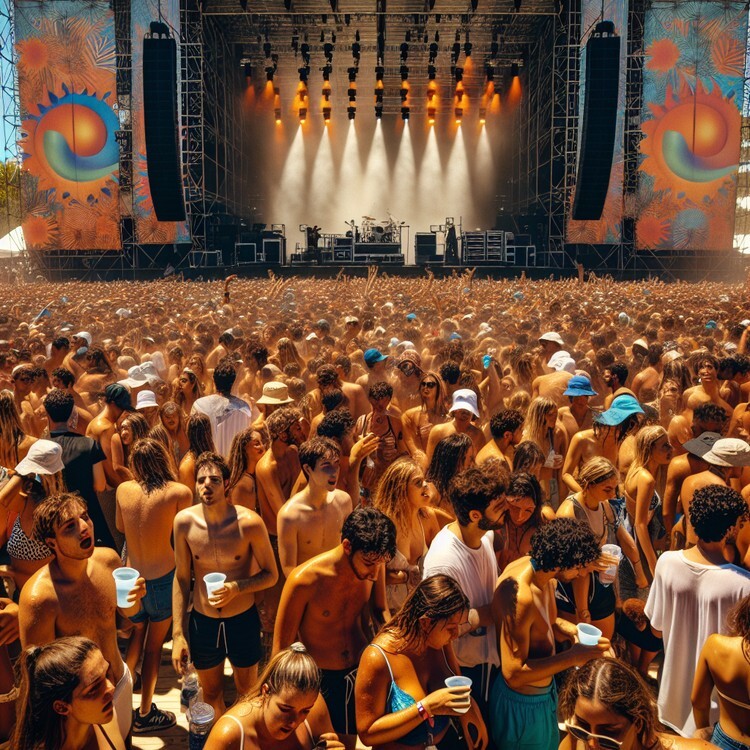
Extreme temperatures are posing a threat to live music events, as highlighted by a recent incident at a Taylor Swift concert in Rio de Janeiro. During a record-breaking heatwave, temperatures soared past 40C, causing concert-goers to suffer from heat exhaustion and dehydration. Tragically, one fan, Ana Clara Benevides Machado, lost her life due to a cardiac arrest. This incident has sparked a discussion about the responsibility of concert promoters to ensure the safety of fans in extreme weather conditions.
Attendees of the concert criticized the company that promoted the event, Tickets for Fun (T4F), for their lack of preparation and negligence. Fans were not allowed to bring water bottles into the venue, and only those near the front of the stage were given small cups of water. In response to the backlash, a campaign has been launched demanding that authorities and promoters provide free bottles of water to prevent similar incidents in the future.
The mayor of Rio de Janeiro, Eduardo Paes, also expressed his disapproval of T4F's management of the event and pledged to take action against the company. T4F released a statement attributing the incident to climate change and acknowledging the need for improvement in their practices. However, fans, including those who experienced the concert firsthand, were dissatisfied with this response, arguing that climate change is not an excuse for negligence.
This is not the first time that extreme weather conditions have disrupted music events in South America. In Chile, high temperatures at the Lollapalooza music festival caused fans to faint, while storms led to the cancellation of the second day of the Tomorrowland festival in Brazil. Concert organizers and authorities need to adapt to the challenges posed by climate change by implementing measures such as providing shaded areas, hydration points, and allowing fans to bring water into the venue.
The tragic incident at the Taylor Swift concert has had a lasting impact on fans like Nathalia Barbieri, who experienced the ordeal firsthand. She no longer feels comfortable attending live music events and has changed her plans to attend future concerts. Concert promoters and authorities must take heatwaves seriously and establish regulatory bodies to ensure the safety and well-being of fans during extreme weather conditions.
Original news source: Are extreme temperatures threatening live music events? (BBC)
🎧 Listen:
Group or Classroom Activities
Warm-up Activities:
– News Summary
Instructions: Divide the students into pairs or small groups. Give each group a few minutes to read the article. Then, ask each group to summarize the main points of the article in a news summary format. They should include the key details and events, as well as any relevant quotes or opinions mentioned in the article. Afterward, have each group present their summary to the class.
– Opinion Poll
Instructions: Divide the students into pairs or small groups. Give each group a few minutes to read the article. Then, ask each group to come up with a question related to the article that they can ask the other groups. The question should be open-ended and elicit opinions. For example, "Do you think concert promoters should be held responsible for the safety of fans in extreme weather conditions?" After each group has prepared their question, have them take turns asking their question to the other groups and recording their responses. Finally, have a class discussion where groups share their findings and discuss the different opinions.
– Vocabulary Pictionary
Instructions: Select a few key vocabulary words from the article and write them on separate slips of paper. Divide the students into pairs or small groups. Give each group a word and ask them to draw a picture that represents the word. They should not write any letters or numbers. Once all the groups have finished, have them take turns showing their picture to the class. The other students must guess the word based on the drawing. After each word is guessed, discuss the meaning and usage of the word in the context of the article.
– Speed Summarizing
Instructions: Divide the students into pairs or small groups. Give each group a few minutes to read the article. Then, ask each group to choose one person to be the "speed summarizer." The speed summarizer will have one minute to summarize the article to their partner or group. They should focus on the main points and key details. After each round, have the partners or groups switch roles, so everyone has a chance to be the speed summarizer. Finally, have a class discussion where students share their summaries and discuss any differences in their understanding of the article.
– Future Predictions
Instructions: Divide the students into pairs or small groups. Give each group a few minutes to read the article. Then, ask each group to discuss and make predictions about the future of live music events in extreme weather conditions. They should consider factors such as climate change, safety measures, and public opinion. Afterward, have each group present their predictions to the class and engage in a discussion about the potential challenges and solutions for live music events in the future.
🤔 Comprehension Questions:
The cause of the extreme temperatures at the Taylor Swift concert in Rio de Janeiro was a record-breaking heatwave.
The extreme temperatures caused concert-goers to suffer from heat exhaustion and dehydration.
The company that promoted the event, Tickets for Fun (T4F), was criticized for their lack of preparation and negligence. Fans were not allowed to bring water bottles into the venue, and only those near the front of the stage were given small cups of water.
The mayor of Rio de Janeiro, Eduardo Paes, plans to take action against the company.
The company, T4F, released a statement attributing the incident to climate change and acknowledging the need for improvement in their practices.
Fans were dissatisfied with the company's response because they argued that climate change is not an excuse for negligence.
Other music events in South America that have been affected by extreme weather conditions include the Lollapalooza music festival in Chile, where high temperatures caused fans to faint, and the Tomorrowland festival in Brazil, where storms led to the cancellation of the second day.
The incident at the Taylor Swift concert has impacted one fan's future plans as she no longer feels comfortable attending live music events and has changed her plans to attend future concerts.
🎧✍️ Listen and Fill in the Gaps:
Extreme temperatures are posing a threat to live music s, as by a recent incident at a Taylor Swift concert in Rio de Janeiro. During a record-breaking heatwave, temperatures soared past 40C, causing concert-goers to suffer from heat exhaustion and dehydration. Tragically, one fan, Ana Clara Machado, lost her life due to a cardiac arrest. This incident has sparked a discussion about the of concert promoters to ensure the safety of fans in extreme weather conditions. Attendees of the concert criticized the company that promoted the event, Tickets for Fun (T4F), for their lack of preparation and negligence. Fans were not allowed to bring water into the venue, and only those near the of the stage were given small cups of water. In response to the backlash, a campaign has been launched demanding that authorities and promoters provide free bottles of water to prevent similar incidents in the future. The mayor of Rio de Janeiro, Paes, also expressed his disapproval of T4F's management of the event and pledged to take action against the company. T4F released a attributing the incident to climate change and acknowledging the need for improvement in their practices. However, fans, including those who experienced the concert hand, were dissatisfied with this response, that climate change is not an excuse for negligence. This is not the first time that extreme weather conditions have disrupted music events in South America. In Chile, high temperatures at the Lollapalooza music festival caused fans to faint, while storms led to the cancellation of the second day of the Tomorrowland festival in . organizers and authorities need to adapt to the challenges posed by climate change by implementing measures such as providing shaded areas, hydration points, and fans to bring water into the venue. The tragic incident at the Taylor Swift concert has had a lasting on fans like Nathalia Barbieri, who the ordeal firsthand. She no longer feels comfortable attending live events and has changed her plans to attend future concerts. Concert promoters and authorities must take heatwaves seriously and establish regulatory bodies to ensure the safety and well-being of fans during extreme weather conditions.
💬 Discussion Questions:
1. What is your opinion on the responsibility of concert promoters to ensure the safety of fans in extreme weather conditions?
2. How would you feel if you attended a concert and were not allowed to bring water bottles into the venue?
3. Do you think concert organizers should provide free bottles of water to prevent incidents like the one at the Taylor Swift concert? Why or why not?
4. What measures do you think concert organizers should implement to adapt to the challenges posed by climate change?
5. How do you think extreme weather conditions can impact the overall experience of attending a live music event?
6. Do you think climate change is a valid excuse for negligence in event management? Why or why not?
7. Have you ever attended a concert or event where extreme weather conditions affected your experience? Can you describe what happened?
8. How do you think the tragic incident at the Taylor Swift concert could have been prevented?
9. What steps do you think regulatory bodies should take to ensure the safety and well-being of fans during extreme weather conditions at live music events?
10. Do you feel that concert promoters and authorities take heatwaves seriously enough? Why or why not?
11. Have you ever changed your plans to attend a live music event due to concerns about extreme weather conditions? Can you explain why?
12. How do you think extreme temperatures can affect the health and well-being of concert-goers?
13. Do you think concert-goers should be allowed to bring their own water into the venue? Why or why not?
14. What actions do you think concert promoters should take to better prepare for extreme weather conditions?
15. How do you think the incident at the Taylor Swift concert could impact future live music events in terms of safety measures and fan expectations?
Individual Activities
🔡 Multiple Choice Questions:
🕵️ True or False Questions:
📝 Write a Summary:
Write a summary of this news article in two sentences.
Check your writing now with the best free AI for English writing!