A remarkable discovery has been made on the Jurassic Coast in Dorset, England. The skull of a massive sea monster, known as a pliosaur, has been unearthed from the cliffs. This pliosaur lived approximately 150 million years ago and was a fearsome predator of the oceans. The fossil is one of the most complete specimens of its kind ever found, providing valuable insights into the ancient creature. The skull will be featured in a special documentary hosted by Sir David Attenborough on New Year's Day.
The pliosaur skull is an impressive sight, measuring longer than the height of an average human. It is incredibly well-preserved, with every bone intact. This level of completeness is extremely rare in fossil finds. The skull features 130 teeth, which were long and razor-sharp, capable of delivering a deadly bite. The back of each tooth is marked with fine ridges, which aided the pliosaur in piercing flesh and quickly extracting its fangs for a second attack.
The pliosaur was a formidable predator, reaching lengths of 10-12 meters and propelled by powerful flipper-like limbs. It was the apex predator of the ocean, capable of preying on other large marine reptiles such as plesiosaurs and ichthyosaurs. The fossil evidence suggests that pliosaurs even fed on other pliosaurs. The discovery of this skull provides scientists with valuable information about how these ancient reptiles lived and dominated their ecosystem.
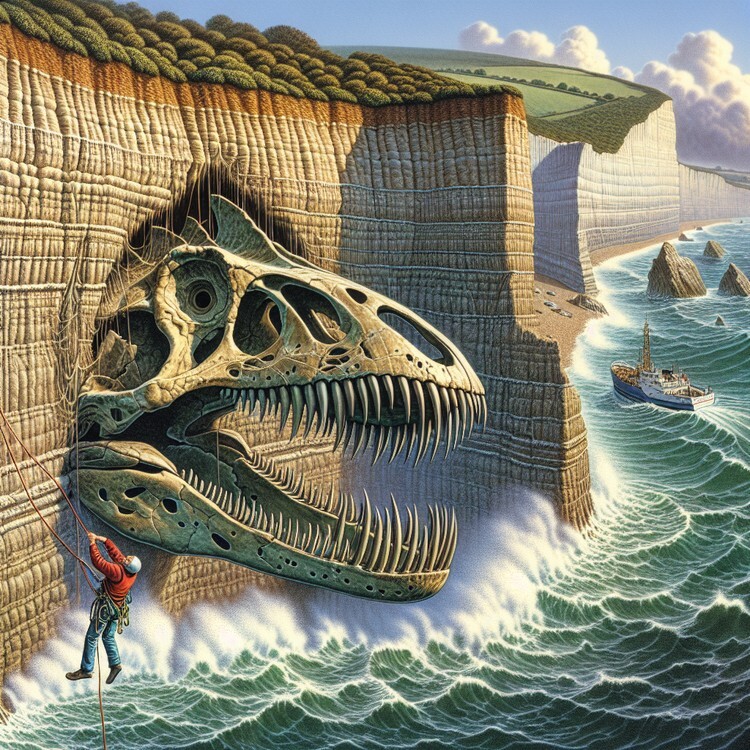
The recovery of the fossil skull was an extraordinary feat. It began with a chance find by a fossil enthusiast who stumbled upon the tip of the pliosaur's snout on a beach. The rest of the animal was located on the cliff face, requiring a daring abseil descent to excavate it. The months spent cleaning and preparing the skull for study have been well worth it, as scientists from around the world are eager to examine this remarkable specimen.
The pliosaur skull also reveals interesting features that suggest the creature had acute senses. Small pits on its snout may have housed glands that helped it detect changes in water pressure made by potential prey. Additionally, the pliosaur had a hole on its head that would have housed a third eye, similar to those found in lizards and some fish today. This light-sensitive eye may have aided the pliosaur in locating other animals, especially when surfacing from deep, murky waters.
The skull will be displayed at a museum in Kimmeridge, Dorset, allowing visitors to marvel at this incredible fossil. However, there is still hope that more of the pliosaur's remains are hidden within the cliffs. The rapidly eroding environment makes it crucial to recover the rest of the animal before it is lost forever. This discovery is a once-in-a-lifetime opportunity to learn more about these ancient sea monsters and their place in Earth's history.
Original news source: Pliosaur discovery: Huge sea monster emerges from Dorset cliffs (BBC)
🎧 Listen:
📖 Vocabulary:
Group or Classroom Activities
Warm-up Activities:
– Charades
Instructions: Divide the class into two teams. Give each team a list of words related to the article, such as "skull," "fossil," "ocean," "predator," etc. One person from each team will act out the word without speaking, and their team has to guess what word they are acting out. The team with the most correct guesses wins.
– News Summary
Instructions: Have the students read the article individually and then write a summary of the most important points. After a few minutes, have them pair up and share their summaries with their partner. Then, as a class, discuss the main points of the article and compare their summaries.
– Opinion Poll
Instructions: Divide the class into small groups and give each group a set of discussion questions related to the article. For example, "What do you think is the most interesting aspect of this discovery?" or "Do you think it's important to study ancient sea creatures? Why or why not?" Each group should discuss the questions and then share their opinions with the class.
– Vocabulary Pictionary
Instructions: Write a list of vocabulary words from the article on the board, such as "pliosaur," "fossil," "predator," etc. Divide the class into small groups and give each group a whiteboard or piece of paper. One person from each group will choose a word from the list and draw a picture that represents that word. The rest of the group has to guess what word they are drawing. Rotate until all the words have been guessed.
– Pros and Cons
Instructions: Divide the class into two groups, one representing the pros and one representing the cons. Have a class discussion about the article, focusing on the pros and cons of studying ancient sea creatures and the impact of fossil discoveries on our understanding of Earth's history. Each group should present their arguments and try to convince the other group to see their point of view.
🤔 Comprehension Questions:
🎧✍️ Listen and Fill in the Gaps:
A remarkable discovery has been made on the Coast in Dorset, England. The skull of a massive sea monster, known as a pliosaur, has been unearthed from the cliffs. This pliosaur lived approximately 150 million years ago and was a fearsome predator of the oceans. The fossil is one of the most complete of its kind ever found, providing valuable insights into the creature. The skull will be featured in a special documentary hosted by Sir David on New Year's Day. The pliosaur skull is an impressive sight, measuring longer than the height of an average human. It is incredibly well-preserved, with every bone intact. This level of completeness is extremely rare in fossil finds. The skull features 130 teeth, which were long and razor-sharp, capable of delivering a deadly bite. The back of each is marked with fine ridges, which aided the pliosaur in piercing flesh and quickly extracting its fangs for a second attack. The pliosaur was a formidable predator, reaching lengths of 10-12 meters and propelled by powerful flipper-like . It was the apex predator of the ocean, capable of preying on large marine reptiles such as plesiosaurs and ichthyosaurs. The fossil evidence that pliosaurs even fed on other pliosaurs. The discovery of this skull provides scientists with valuable information about how these ancient reptiles lived and dominated their ecosystem. The recovery of the fossil skull was an extraordinary feat. It began with a chance find by a fossil enthusiast who stumbled upon the tip of the pliosaur's snout on a beach. The rest of the animal was located on the cliff face, requiring a daring abseil descent to excavate it. The months spent and preparing the skull for have been well worth it, as scientists from around the world are to examine this remarkable specimen. The pliosaur skull also interesting features that suggest the creature had acute senses. Small pits on its snout may have housed glands that helped it detect changes in water pressure made by potential prey. Additionally, the pliosaur had a hole on its head that would have a third eye, similar to those found in lizards and some fish . This light-sensitive eye may have aided the pliosaur in locating other animals, especially when surfacing from deep, murky waters. The skull will be displayed at a museum in Kimmeridge, , allowing visitors to marvel at this incredible fossil. However, there is still hope that more of the pliosaur's remains are hidden within the cliffs. The rapidly eroding environment it crucial to recover the rest of the animal before it is lost forever. This discovery is a once-in-a-lifetime opportunity to learn more about these ancient sea monsters and their place in Earth's history.
💬 Discussion Questions:
1. What is a pliosaur and what makes it a fearsome predator?
2. How would you feel if you stumbled upon a fossil of a massive sea monster like the pliosaur?
3. Do you think it is important to study ancient creatures like the pliosaur? Why or why not?
4. What do you think the discovery of the pliosaur skull can tell us about how these ancient reptiles lived?
5. Do you like watching documentaries about prehistoric creatures? Why or why not?
6. How do you think the pliosaur's acute senses, such as its ability to detect changes in water pressure, helped it survive in its environment?
7. What other types of animals do you think the pliosaur may have preyed upon?
8. How do you think the pliosaur's size and physical features helped it dominate its ecosystem?
9. Have you ever visited a museum to see fossils or other ancient artifacts? What was your experience like?
10. Do you think it is important to preserve and protect fossil sites like the Jurassic Coast? Why or why not?
11. How do you think the discovery of the pliosaur skull contributes to our understanding of Earth's history?
12. What other types of ancient creatures would you like to learn more about?
13. How do you think the pliosaur's third eye, similar to those found in lizards and some fish today, helped it survive in its environment?
14. Have you ever found something interesting or valuable by chance? What was it and how did you feel?
15. How do you think the rapidly eroding environment of the cliffs affects the recovery of the pliosaur's remains?
Individual Activities
📖💭 Vocabulary Meanings:
Click a dot next to a word, then click the dot next to its meaning to draw a line connecting them.
Words
Meanings
🔡 Multiple Choice Questions:
🕵️ True or False Questions:
📝 Write a Summary:
Write a summary of this news article in two sentences.
Check your writing now with the best free AI for English writing!