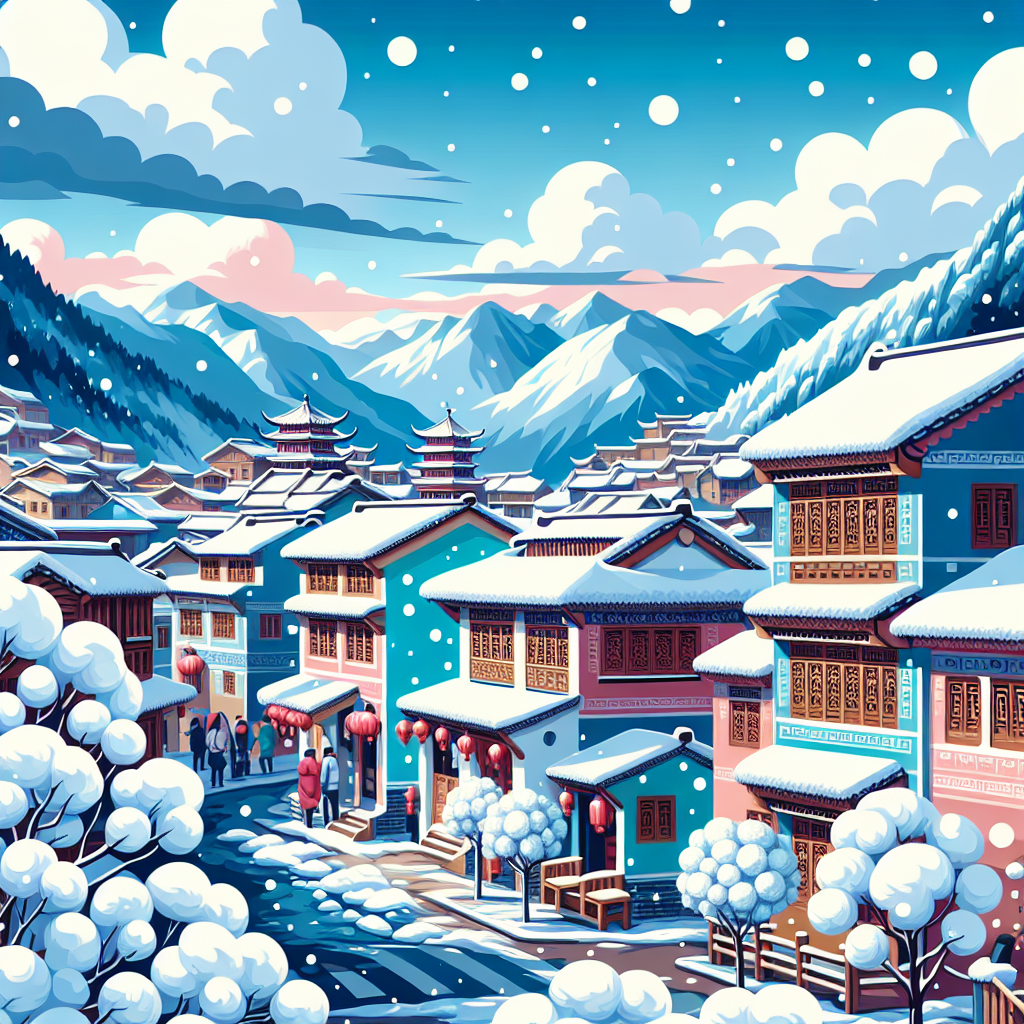
A tourist village in China, renowned for its picturesque snowy landscapes, has recently issued an apology for using artificial materials to create the illusion of snow during an unseasonably warm period. This incident occurred in Chengdu, the capital of Sichuan province, during the Lunar New Year holiday at the end of January. Due to the unexpected warm weather, the village was unable to provide the natural snow that many visitors anticipated.
In an effort to maintain the winter atmosphere, the Chengdu Snow Village project resorted to using cotton wool and soapy water to simulate snow. They shared images on social media that depicted large sheets of cotton scattered across the village grounds and rooftops. However, these images were criticized by tourists who felt misled, as the village did not clarify that the snow was not real. Many social media users pointed out the discrepancy, with one comment highlighting the irony of a "snow village without snow."
Following the backlash, the village took to the Chinese social media platform WeChat to express its regret. In their statement, they acknowledged the disappointment caused by their attempts to create a snowy environment and offered refunds to visitors who felt deceived. The village admitted that their efforts to replicate a winter wonderland had not met expectations and had ultimately left a negative impression on tourists.
The incident has drawn attention to the broader implications of climate change in China, where the weather patterns have become increasingly erratic. The country's weather bureau has reported that China is experiencing longer and more intense heat waves, as well as unpredictable heavy rainfall. These changes are impacting traditional seasonal activities and tourism, prompting businesses to seek alternative methods to attract visitors.
In light of this situation, the Chengdu Snow Village has reportedly removed the synthetic snow from its premises. This incident serves as a reminder of the challenges that tourist destinations may face in adapting to changing climate conditions while still meeting the expectations of their visitors. As the effects of climate change continue to unfold, it will be crucial for such areas to find sustainable and honest ways to promote their attractions.
Original news source: Snow village in China apologises for using fake snow during unusually warm weather (Sky News)
🎧 Listen:
📖 Vocabulary:
Group or Classroom Activities
Warm-up Activities:
– CHARADES
Instructions: Students will take turns acting out key concepts from the article without speaking, such as "snow," "apology," "tourism," or "climate change." The rest of the class will guess the word or phrase being acted out. This will help reinforce vocabulary and comprehension of the article's themes.
– OPINION POLL
Instructions: Ask students to express their opinions on the use of artificial materials to create snow in tourist attractions. Students can walk around the classroom and ask their peers for their thoughts, compiling a tally of different opinions. Afterward, facilitate a class discussion on the topic.
– MIND MAP
Instructions: In groups, students will create a mind map based on the article. They should write "Chengdu Snow Village Incident" in the center and branch out to themes such as "climate change," "tourism," "public reaction," and "sustainability." This activity encourages critical thinking and helps students visualize the connections between concepts.
– HEADLINE CREATION
Instructions: Students will work in pairs to come up with catchy and informative headlines for the article. They should consider the main ideas and emotional impact of the incident. Afterward, each pair will present their headline to the class, and together they can vote on the most effective one.
– SYNONYM CHALLENGE
Instructions: Provide students with a list of key vocabulary words from the article, such as "apology," "landscapes," "simulate," and "disappointment." Students will work in pairs to come up with synonyms for each word. After a set amount of time, pairs will share their synonyms with the class, enhancing their vocabulary skills.
🤔 Comprehension Questions:
The Chengdu Snow Village used cotton wool and soapy water to simulate snow.
Tourists felt misled and criticized the village for not clarifying that the snow was not real, with some commenting on the irony of a "snow village without snow."
The village expressed regret on WeChat, acknowledged the disappointment caused, and offered refunds to visitors who felt deceived.
Climate change has led to longer and more intense heat waves, as well as unpredictable heavy rainfall in China.
The changing climate has impacted traditional seasonal activities and tourism, prompting businesses to seek alternative methods to attract visitors.
The Chengdu Snow Village admitted that their efforts had not met expectations and left a negative impression on tourists.
The incident highlights the challenges that tourist destinations may face in adapting to changing climate conditions while still meeting visitor expectations.
The incident suggests that transparency is crucial in promoting tourist attractions, as misleading representations can lead to disappointment and backlash from visitors.
🎧✍️ Listen and Fill in the Gaps:
A tourist village in China, renowned for its picturesque landscapes, has recently issued an apology for using artificial materials to create the illusion of snow during an unseasonably warm . This incident occurred in Chengdu, the capital of Sichuan province, during the Lunar New Year holiday at the end of January. Due to the unexpected warm weather, the village was unable to provide the snow that many visitors anticipated. In an effort to maintain the winter atmosphere, the Chengdu Snow project resorted to using cotton wool and soapy water to simulate snow. They images on social media that depicted large sheets of scattered across the village grounds and rooftops. However, these images were criticized by tourists who felt misled, as the village did not clarify that the snow was not real. Many social media users pointed out the discrepancy, with one comment the irony of a "snow village without snow." Following the backlash, the village took to the Chinese social media platform WeChat to its regret. In their statement, they acknowledged the disappointment caused by their attempts to create a snowy environment and offered refunds to visitors who felt deceived. The village admitted that their to replicate a wonderland had not met expectations and had ultimately left a negative impression on tourists. The incident has drawn attention to the broader implications of climate in , where the weather patterns have become increasingly erratic. The country's weather bureau has reported that China is experiencing longer and more intense heat waves, as well as unpredictable heavy rainfall. These changes are impacting traditional seasonal activities and tourism, prompting businesses to seek alternative to attract visitors. In light of this situation, the Chengdu Snow Village has reportedly the synthetic snow from its premises. This incident as a reminder of the challenges that tourist destinations may face in adapting to changing climate conditions while still meeting the expectations of their visitors. As the effects of climate change continue to unfold, it will be for such areas to find sustainable and honest ways to promote their attractions.
💬 Discussion Questions:
1. What is your opinion on using artificial materials to create a winter atmosphere in tourist destinations?
2. How would you feel if you traveled to a snowy destination and found out the snow was fake?
3. Do you think it is acceptable for tourist attractions to mislead visitors about their experiences? Why or why not?
4. What is a memorable travel experience you had that did not meet your expectations?
5. How do you think climate change is affecting tourism in your country?
6. Do you like visiting places that rely on seasonal weather, such as ski resorts? Why or why not?
7. How would you respond if a business offered you a refund after you felt deceived by their advertising?
8. What is a creative solution you can think of to attract tourists during unusual weather conditions?
9. Do you think tourists should be more understanding of the challenges that businesses face due to climate change? Why or why not?
10. How would you feel if a popular tourist destination had to close due to extreme weather conditions?
11. What is a way that businesses can promote sustainability while still attracting visitors?
12. Do you think social media plays a positive or negative role in how tourist experiences are shared? Why?
13. How important is honesty in marketing for tourist attractions?
14. What is a destination you would recommend for someone seeking a true winter experience?
15. How do you think the travel industry can adapt to the ongoing effects of climate change in the future?
Individual Activities
📖💭 Vocabulary Meanings:
Click a dot next to a word, then click the dot next to its meaning to draw a line connecting them.
Words
Meanings
🔡 Multiple Choice Questions:
🕵️ True or False Questions:
📝 Write a Summary:
Write a summary of this news article in two sentences.
Check your writing now with the best free AI for English writing!