


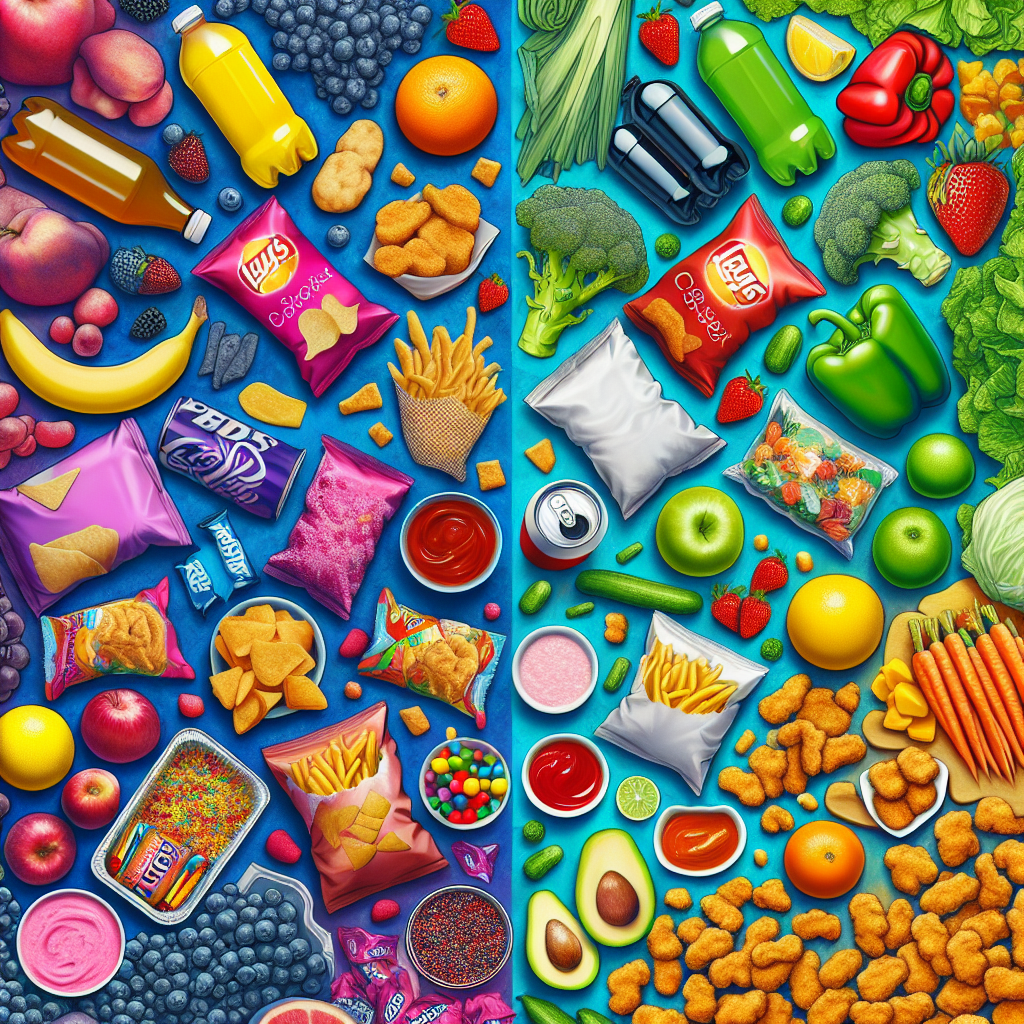
Ultra-processed foods (UPFs) have become a significant concern among nutritionists due to their prevalence and potential health risks. These foods, which include items like chicken nuggets, packaged snacks, and sugary drinks, account for over half of the calories consumed in the UK, particularly among children and those in lower-income areas. Defined by their extensive industrial processing and the presence of numerous unrecognizable ingredients, UPFs are often high in fat, sugar, and salt. Their synthetic appearance and taste have made them a focal point for advocates of healthier eating, yet the scientific community remains divided on the exact health implications of these foods.
Recent research has indicated a correlation between UPF consumption and various health issues, such as obesity, heart disease, and even certain cancers. For instance, a large observational study in the United States found that individuals who consumed the most UPFs had a 10% higher risk of early death, even when accounting for body mass index and overall diet quality. However, establishing a direct causal relationship between UPFs and these health problems is challenging. While many studies suggest a link, they do not definitively prove that the processing of food is the root cause of health issues.
To truly understand the impact of UPFs on health, researchers propose conducting complex studies that compare individuals on high-UPF diets with those on low-UPF diets, ensuring both groups have similar calorie and nutrient intake. Such studies would require meticulous control over participants' food consumption and lifestyle habits, making them logistically difficult and expensive. Additionally, funding for this type of research may be hard to secure due to potential conflicts of interest, as researchers may have preconceived notions about the outcomes they wish to demonstrate.
Another point of contention in the discussion about UPFs is the classification and understanding of what constitutes these foods. UPFs typically contain more than five ingredients, many of which are not found in a typical kitchen. This broad classification raises questions about whether all UPFs should be viewed equally, as some may have different effects on health than others. For example, while sugary cereals and low-fat yogurts are both categorized as UPFs, their nutritional profiles and health impacts may vary significantly.
The debate surrounding UPFs also highlights the broader issue of food accessibility and affordability. Many experts argue that vilifying UPFs can lead to feelings of guilt and confusion among consumers, particularly when healthier options can be significantly more expensive. For those on a tight budget, maintaining a diet free of UPFs may not be feasible. Ultimately, while the current evidence does not conclusively prove that UPFs are harmful, nutritionists generally advocate for a balanced diet rich in whole foods, fruits, and vegetables, regardless of the ongoing research into UPFs.
Original news source: Why we might never know the truth about ultra-processed foods (BBC)
🎧 Listen:
📖 Vocabulary:
Group or Classroom Activities
Warm-up Activities:
– CHARADES
Instructions: Divide the class into small groups. Each group will take turns acting out different ultra-processed foods (e.g., chicken nuggets, sugary drinks) without speaking, while the other groups guess what they are. This will help students familiarize themselves with vocabulary and concepts related to UPFs in a fun way.
– OPINION SPECTRUM
Instructions: Create a line in the classroom labeled "Strongly Agree" to "Strongly Disagree." Read various statements related to ultra-processed foods (e.g., "Ultra-processed foods should be banned," "Healthier options should be more affordable"). Students will position themselves along the line based on their opinions and discuss their reasoning with their peers.
– MIND MAP
Instructions: In small groups, students will create a mind map on the topic of ultra-processed foods. They should include branches for definitions, examples, health implications, and societal impacts. This visual representation will help them organize their thoughts and deepen their understanding of the topic.
– HEADLINE CREATION
Instructions: Ask students to create catchy headlines for a news article about ultra-processed foods based on the information in the article. They should aim to capture the main issue and make it engaging for readers. Afterward, groups can share their headlines with the class.
– SPEED SUMMARIZING
Instructions: In pairs, students will take turns summarizing different sections of the article within one minute. One student will summarize while the other listens, then they will switch roles. This fast-paced activity will enhance their summarization skills and ensure they grasp the key points of the article.
🤔 Comprehension Questions:
Ultra-processed foods (UPFs) include items like chicken nuggets, packaged snacks, and sugary drinks. They are a concern among nutritionists due to their prevalence and potential health risks, as they account for over half of the calories consumed in the UK, particularly among children and those in lower-income areas.
Recent research has indicated a correlation between UPF consumption and various health issues, such as obesity, heart disease, and even certain cancers.
Establishing a direct causal relationship is challenging because while many studies suggest a link between UPFs and health problems, they do not definitively prove that the processing of food is the root cause of these issues.
Researchers propose conducting complex studies that compare individuals on high-UPF diets with those on low-UPF diets, ensuring both groups have similar calorie and nutrient intake.
UPFs typically contain more than five ingredients, many of which are not found in a typical kitchen, making them less recognizable and more industrially processed.
Experts argue that vilifying UPFs can lead to feelings of guilt and confusion among consumers, especially when healthier options can be significantly more expensive, making it difficult for those on a tight budget to maintain a diet free of UPFs.
While both sugary cereals and low-fat yogurts are categorized as UPFs, their nutritional profiles and health impacts may vary significantly, indicating that not all UPFs should be viewed equally.
Nutritionists generally advocate for a balanced diet rich in whole foods, fruits, and vegetables, regardless of the ongoing research into UPFs.
🎧✍️ Listen and Fill in the Gaps:
Ultra-processed foods (UPFs) have a significant concern among nutritionists due to their prevalence and potential health risks. These foods, which include items like chicken nuggets, packaged snacks, and sugary drinks, account for over half of the calories consumed in the UK, particularly among and those in lower-income areas. Defined by their extensive industrial processing and the presence of numerous unrecognizable ingredients, UPFs are often high in fat, sugar, and salt. Their appearance and taste have made them a focal point for advocates of healthier eating, yet the community remains divided on the exact health implications of these foods. Recent research has indicated a correlation between UPF consumption and various health , such as obesity, heart disease, and even certain cancers. For instance, a large observational study in the United found that individuals who consumed the most UPFs had a 10% higher risk of early death, even when accounting for body mass index and overall diet quality. However, establishing a direct causal relationship between UPFs and these health problems is challenging. While many studies suggest a link, they do not definitively prove that the processing of food is the root cause of health issues. To truly understand the impact of UPFs on health, researchers propose conducting complex studies that compare individuals on high-UPF with those on low-UPF diets, ensuring both have similar calorie and intake. Such studies would require meticulous control over participants' food consumption and lifestyle habits, making them logistically difficult and expensive. Additionally, funding for this type of research may be hard to secure due to conflicts of interest, as researchers may have preconceived notions about the outcomes they wish to demonstrate. Another point of contention in the discussion about UPFs is the classification and understanding of what constitutes these foods. UPFs typically contain more than five , many of which are not found in a typical kitchen. This classification raises questions about whether all UPFs should be viewed equally, as some may have different effects on health than others. For example, while sugary cereals and low-fat yogurts are both categorized as UPFs, their nutritional profiles and health impacts may vary significantly. The surrounding UPFs also highlights the issue of food accessibility and affordability. Many experts argue that vilifying UPFs can lead to feelings of guilt and confusion among consumers, particularly when healthier options can be significantly more expensive. For those on a tight budget, maintaining a diet free of UPFs may not be feasible. Ultimately, while the current does not conclusively prove that UPFs are harmful, nutritionists generally advocate for a balanced diet rich in whole foods, fruits, and vegetables, regardless of the research into UPFs.
💬 Discussion Questions:
1. What is your opinion on the impact of ultra-processed foods on society's health?
2. How would you feel if you had to eliminate all ultra-processed foods from your diet?
3. Do you think it is possible to maintain a healthy diet without consuming any ultra-processed foods? Why or why not?
4. What is a common ultra-processed food in your country, and how do you think it affects people's eating habits?
5. How do you feel about the marketing of ultra-processed foods, especially towards children?
6. Do you think that the convenience of ultra-processed foods outweighs their potential health risks? Why or why not?
7. What is your personal experience with cooking and eating whole foods versus ultra-processed foods?
8. How would you feel if a new study definitively proved that ultra-processed foods are harmful to health?
9. Do you think that the government should regulate the production and sale of ultra-processed foods? Why or why not?
10. What is a healthy alternative to an ultra-processed food that you enjoy?
11. How do you think socio-economic status impacts people's choices between ultra-processed and whole foods?
12. Do you believe that education about nutrition can change people's eating habits regarding ultra-processed foods? Why or why not?
13. What is your perspective on the role of food companies in promoting healthier eating habits?
14. How would you feel if you were in a situation where you could only afford ultra-processed foods?
15. Do you think that the classification of foods into categories like "ultra-processed" is helpful or misleading? Why?
Individual Activities
📖💭 Vocabulary Meanings:
Click a dot next to a word, then click the dot next to its meaning to draw a line connecting them.
Words
Meanings
🔡 Multiple Choice Questions:
🕵️ True or False Questions:
📝 Write a Summary:
Write a summary of this news article in two sentences.
Check your writing now with the best free AI for English writing!