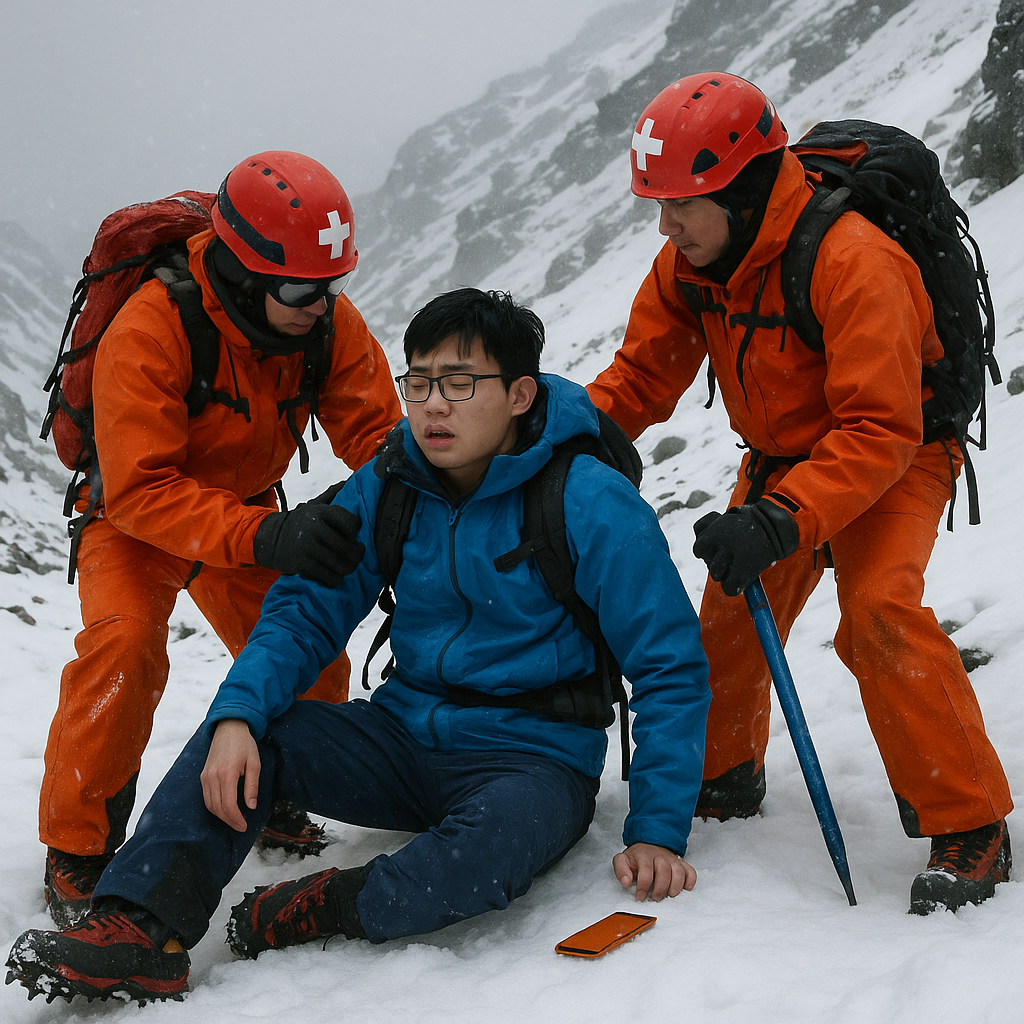
A 27-year-old Chinese student recently made headlines after being rescued from Japan's Mount Fuji twice within a span of four days. The first incident occurred on April 22, when the student, who remains unnamed, called for help after suffering from altitude sickness while climbing the Fujinomiya trail, which reaches an elevation of approximately 3,000 meters (nearly 10,000 feet). This incident took place during the mountain's off-season, a time when climbers are warned about the severe weather conditions that can arise.
Despite the dangers associated with climbing Mount Fuji during this time, the student returned to the mountain just four days later in search of his phone and other belongings that he had left behind. Unfortunately, he encountered altitude sickness once again and was found unable to move by another climber. This prompted a second emergency call to the authorities, who quickly dispatched a rescue team to assist him.
The situation has sparked significant outrage on social media, with many people calling for the student to face consequences for his actions, particularly regarding his second rescue. While there are no penalties for climbers who require assistance, the public's reaction highlights the concern over safety and responsibility in outdoor activities. The Shizuoka police have emphasized the importance of caution for all climbers, especially given the low temperatures and snow coverage that can persist even in spring.
Mount Fuji's hiking trails are officially open only from July to early September, but there is no outright ban on climbing during the off-season. Local authorities have implemented entry fees and limits on the number of climbers on the most popular trail, with plans to extend similar regulations to other main trails later this year. However, climbing off-season and off-trail remains free of charge, which raises questions about the safety measures in place for those who choose to hike outside of the designated season.
This incident serves as a reminder of the potential dangers associated with mountain climbing, particularly in challenging conditions. It underscores the need for climbers to be well-prepared and to heed warnings about the risks involved in their adventures. As authorities continue to address safety concerns, it is crucial for individuals to take personal responsibility for their well-being while enjoying the beauty of nature.
Original news source: Student rescued from mountain twice in four days – after going back to find his phone (Sky News)
🎧 Listen:
📖 Vocabulary:
Group or Classroom Activities
Warm-up Activities:
– CHARADES
Instructions: Divide the class into small groups. Each group will take turns acting out terms related to mountain climbing (e.g., altitude sickness, rescue team, Mount Fuji) without speaking, while the other groups guess the term. This will help enhance vocabulary and improve non-verbal communication skills.
– OPINION POLL
Instructions: Pose the question, "Should climbers face penalties for requiring rescue during off-season climbs?" Students will walk around the classroom and ask their classmates for their opinions. They will then summarize the results in small groups and present them to the class, encouraging critical thinking and discussion.
– HEADLINE CREATION
Instructions: After reading the article, students will work in pairs to come up with compelling headlines that could capture the essence of the story. They should aim for creativity and clarity, and then share their headlines with the class, discussing the choices they made.
– PASS THE STORY
Instructions: In a circle, one student starts telling the story of the Chinese student and his experience on Mount Fuji. After a minute, they pass the story to the next student, who must continue from where the last left off. This activity encourages creative storytelling and reinforces narrative skills in English.
– FUTURE PREDICTIONS
Instructions: Students will discuss and write down predictions about the future of climbing regulations on Mount Fuji. They should consider factors like safety measures, the impact of social media outrage, and the behavior of climbers. Afterward, students will share their predictions in small groups, fostering speaking and critical thinking skills.
🤔 Comprehension Questions:
The student suffered from altitude sickness while climbing the Fujinomiya trail, which reaches an elevation of approximately 3,000 meters, and called for help during the mountain's off-season.
Many people expressed outrage on social media, calling for consequences for the student, particularly regarding his second rescue, as it raised concerns about safety and responsibility in outdoor activities.
The dangers include severe weather conditions, low temperatures, and snow coverage that can persist even in spring, making climbing particularly hazardous.
During the official hiking season, local authorities implement entry fees and limits on the number of climbers on the most popular trails, while off-season climbing remains free of charge and without specific regulations.
Concerns have been raised about the lack of safety measures in place for climbers who hike off-season, as there are no regulations or fees that could help manage safety risks during this time.
The article underscores the need for climbers to be well-prepared and to heed warnings about the risks involved in mountain climbing, highlighting the importance of taking personal responsibility for their well-being.
The Shizuoka police have emphasized the importance of caution for all climbers and have addressed safety concerns following the incidents.
The incident highlights the ongoing concerns about the safety and responsibility of individuals engaging in outdoor activities, particularly in challenging conditions, and the need for climbers to be aware of the risks involved.
🎧✍️ Listen and Fill in the Gaps:
A 27-year-old student recently made headlines after being rescued from Japan's Mount Fuji twice within a span of four days. The incident occurred on April 22, when the student, who remains unnamed, called for help after suffering from altitude while the Fujinomiya trail, which reaches an elevation of approximately 3,000 meters (nearly 10,000 feet). This incident took place during the mountain's off-season, a time when climbers are warned about the severe weather conditions that can arise. Despite the dangers associated with climbing Mount Fuji during this time, the returned to the just four days later in search of his phone and other belongings that he had left behind. Unfortunately, he encountered altitude sickness once again and was found unable to move by another climber. This prompted a second emergency call to the authorities, who quickly dispatched a rescue team to him. The situation has sparked significant outrage on social media, with many people calling for the student to face consequences for his actions, particularly regarding his second rescue. While there are no for climbers who require assistance, the public's reaction highlights the concern over safety and responsibility in outdoor . The Shizuoka have emphasized the importance of for all , especially given the low temperatures and snow coverage that can persist even in spring. Mount Fuji's hiking trails are officially open only from July to early September, but there is no outright ban on climbing during the off-season. Local authorities have implemented entry fees and limits on the number of climbers on the most popular trail, with plans to extend similar regulations to other main trails later this year. However, climbing off-season and off-trail remains free of charge, which raises questions about the safety measures in place for those who choose to hike outside of the designated season. This incident serves as a of the potential dangers associated with mountain climbing, particularly in challenging conditions. It the need for climbers to be well-prepared and to heed warnings about the risks involved in their adventures. As authorities continue to safety , it is crucial for individuals to take personal responsibility for their well-being while enjoying the beauty of nature.
💬 Discussion Questions:
1. What is your opinion on the risks associated with climbing mountains like Mount Fuji during off-seasons?
2. How would you feel if you found yourself in a similar situation as the student, needing to be rescued from a dangerous location?
3. Do you think people should face consequences for requiring rescue in risky situations? Why or why not?
4. What is a memorable outdoor adventure you have experienced, and what challenges did you face?
5. How do you prepare for outdoor activities to ensure your safety?
6. Do you like the idea of climbing mountains, or do you prefer other types of outdoor activities? Why?
7. What is your perspective on the responsibility of individuals when participating in potentially dangerous activities?
8. How would you react if you saw someone in distress while hiking?
9. Do you think there should be stricter regulations for climbing during off-seasons? Why or why not?
10. What is a lesson you think can be learned from this student's experience?
11. How do you feel about the balance between adventure and safety in outdoor activities?
12. Do you think social media plays a positive or negative role in shaping public opinion about incidents like this? Why?
13. What is your opinion on the importance of following safety guidelines when engaging in outdoor sports?
14. How would you feel if you were a local resident witnessing repeated rescues on a popular mountain?
15. Do you think the beauty of nature justifies the risks involved in climbing? Why or why not?
Individual Activities
📖💭 Vocabulary Meanings:
Click a dot next to a word, then click the dot next to its meaning to draw a line connecting them.
Words
Meanings
🔡 Multiple Choice Questions:
🕵️ True or False Questions:
📝 Write a Summary:
Write a summary of this news article in two sentences.
Check your writing now with the best free AI for English writing!