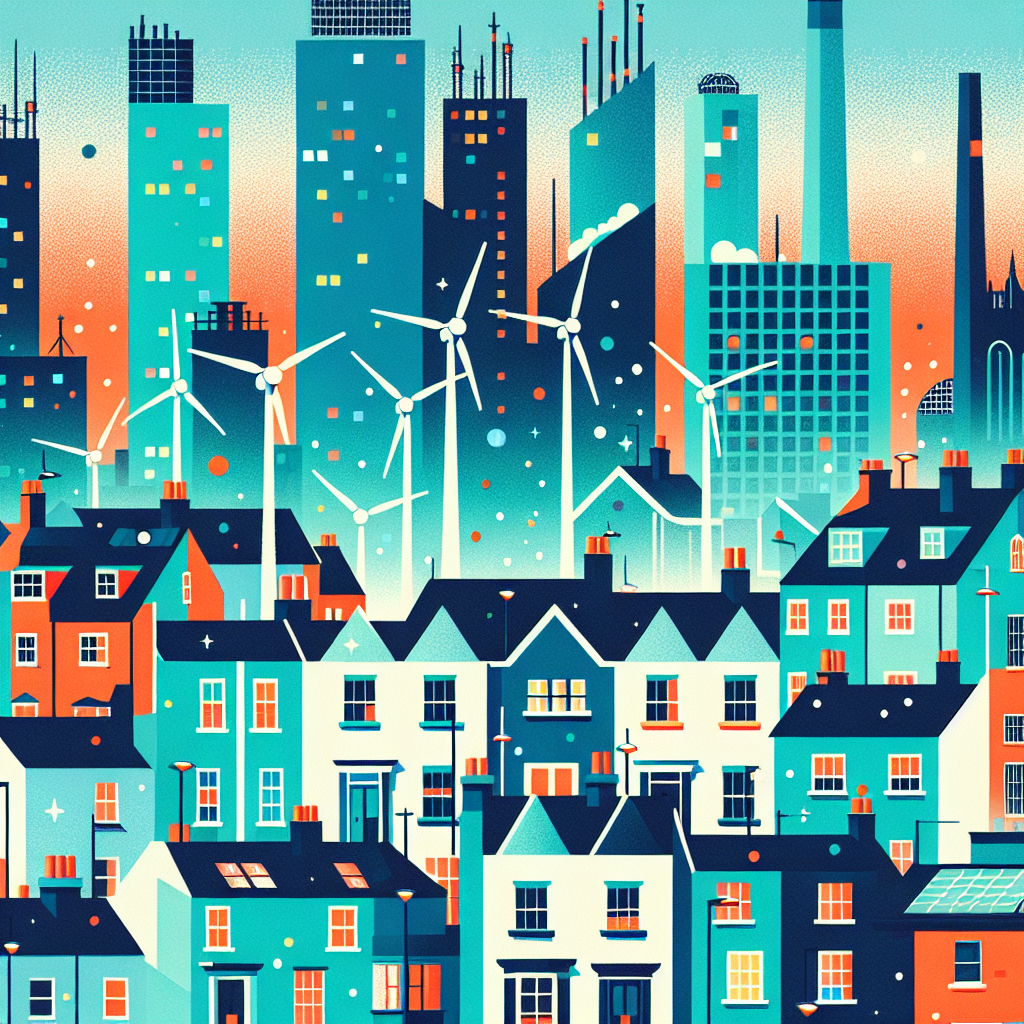
The United Kingdom is set to make history by ending its 142-year reliance on coal power. The country's last coal power station, Ratcliffe-on-Soar Power Station near Nottingham, will cease operations on Monday. This significant milestone aligns with the UK's commitment to reducing its contribution to climate change, as coal is known for being the dirtiest fossil fuel, emitting high levels of greenhouse gases when burned.
The UK has a long history with coal power, being the birthplace of this form of energy. From the first coal-fired power station in the world built in London in 1882 to coal's predominant role in providing electricity throughout the twentieth century, coal has played a crucial part in powering the nation. However, as the understanding of climate change grew, the need to transition to cleaner energy sources became apparent.
In the early 1990s, coal began to be replaced by gas in the UK's electricity mix, but it remained a significant component for the following decades. The UK took steps towards phasing out coal power by setting legally binding climate targets in 2008 and announcing the end of coal power usage by 2015. This decision not only demonstrated leadership in combating climate change but also paved the way for other countries to follow suit.
The growth of renewable energy sources in the UK has been remarkable, with renewables accounting for over 50% of the country's power generation by the first half of 2024. This success in transitioning to green power allowed for coal-free days as early as 2017. The closure of Ratcliffe-on-Soar Power Station marks a significant shift towards a more sustainable and environmentally friendly energy landscape in the UK.
While challenges lie ahead in ensuring grid stability without coal power, innovations such as battery technology offer promising solutions. The UK aims to enhance its battery production capabilities and attract skilled workers to support the transition to cleaner energy sources. As the UK bids farewell to coal power, it sets an example for other nations to accelerate their efforts towards a greener and more sustainable future.
Original news source: UK to finish with coal power after 142 years (BBC)
🎧 Listen:
📖 Vocabulary:
Group or Classroom Activities
Warm-up Activities:
– Vocabulary Pictionary
Instructions: Divide the students into teams. Provide each team with a list of vocabulary words related to the article (e.g., coal power, renewable energy, greenhouse gases). One student from each team will choose a word from the list and have to draw it on the board while their team tries to guess the word. Set a time limit for each round and award points to teams for correct guesses.
– News Summary
Instructions: Ask students to work in pairs and summarize the key points of the article. Encourage them to focus on the main ideas and important details. After they have discussed and written their summaries, have a few pairs share their summaries with the class. This activity helps students practice paraphrasing and summarizing skills.
– Pros and Cons
Instructions: Divide the class into two groups. Assign one group to list the pros of the UK ending its reliance on coal power, and the other group to list the cons. Give the groups time to brainstorm and write down their points. Afterward, have each group present their lists to the class. Encourage discussions on the different perspectives and reasons behind each point.
– Future Predictions
Instructions: In pairs or small groups, have students discuss and make predictions about the future of energy production in the UK and globally. They can consider factors such as advancements in technology, government policies, and public awareness of climate change. Each group should come up with at least three predictions. After the discussion, ask a few groups to share their predictions with the class.
– Think-Pair-Share
Instructions: Choose key points from the article (e.g., the closure of Ratcliffe-on-Soar Power Station, the growth of renewable energy sources) and write them on separate pieces of paper. Distribute the papers randomly to students. Ask students to think about the point they received, then pair up with a classmate to discuss it in more detail. Finally, have pairs share their thoughts with the rest of the class. This activity encourages students to engage in critical thinking and collaborative discussion.
🤔 Comprehension Questions:
The closure of Ratcliffe-on-Soar Power Station marks the end of the UK's 142-year reliance on coal power, aligning with the country's commitment to reducing its contribution to climate change.
Coal has been a significant component in the UK's electricity mix, with the country being the birthplace of coal power and relying on it for providing electricity throughout the twentieth century.
The UK set legally binding climate targets in 2008 and announced the end of coal power usage by 2015, demonstrating leadership in combating climate change and paving the way for other countries to follow suit.
Renewables accounted for over 50% of the UK's power generation by the first half of 2024.
The closure of Ratcliffe-on-Soar Power Station marked a significant shift towards a more sustainable and environmentally friendly energy landscape in the UK.
The UK faces challenges in ensuring grid stability without coal power, but innovations such as battery technology offer promising solutions.
The UK aims to enhance its battery production capabilities and attract skilled workers to support the transition to cleaner energy sources.
The UK's move away from coal power sets an example for other nations to accelerate their efforts towards a greener and more sustainable future.
🎧✍️ Listen and Fill in the Gaps:
The United Kingdom is set to make by ending its 142-year reliance on coal power. The country's last coal power station, Ratcliffe-on-Soar Power Station near Nottingham, will operations on Monday. This significant milestone aligns with the UK's commitment to reducing its contribution to climate change, as coal is known for being the dirtiest fuel, emitting high levels of greenhouse when burned. The UK has a long history with coal power, being the birthplace of this form of energy. From the first coal-fired power station in the world built in in 1882 to coal's predominant role in providing electricity throughout the twentieth century, coal has a crucial part in powering the nation. However, as the understanding of climate change grew, the need to transition to cleaner energy sources became apparent. In the early , coal began to be replaced by gas in the UK's electricity mix, but it a significant component for the following decades. The UK took steps towards phasing out coal power by setting legally binding climate targets in 2008 and announcing the end of coal power usage by 2015. This decision not only demonstrated leadership in combating climate but also paved the way for other countries to follow suit. The growth of renewable energy sources in the UK has been remarkable, with renewables accounting for over 50% of the country's power generation by the half of 2024. This success in transitioning to power for coal-free days as early as 2017. The closure of Ratcliffe-on-Soar Power Station marks a significant shift towards a more sustainable and environmentally friendly energy landscape in the UK. While challenges lie ahead in ensuring grid stability without coal power, innovations such as technology offer promising solutions. The UK aims to enhance its battery production and skilled workers to support the transition to cleaner energy sources. As the UK bids to coal power, it sets an example for other nations to accelerate their efforts towards a greener and more sustainable future.
💬 Discussion Questions:
1. What is the significance of the UK ending its reliance on coal power after 142 years?
2. How would you feel if your country made a similar commitment to phase out coal power?
3. Do you think other countries should follow the UK's example and end their reliance on coal power? Why or why not?
4. What challenges do you think countries might face in transitioning to cleaner energy sources like the UK?
5. How do you think the closure of coal power stations will impact the job market in the energy sector?
6. Do you believe that renewable energy sources are the future of energy production? Why or why not?
7. What role do you think government policies play in encouraging the transition to cleaner energy sources?
8. How important do you think it is for countries to take action against climate change by reducing their use of fossil fuels?
9. Do you think the closure of coal power stations will have a positive impact on the environment in the UK? Why or why not?
10. What do you think are the main benefits of using renewable energy sources over fossil fuels like coal?
11. How do you think advancements in battery technology can help countries transition to cleaner energy sources?
12. Do you believe that individuals have a role to play in reducing their carbon footprint to combat climate change?
13. What do you think are some of the key factors that have contributed to the UK's success in transitioning away from coal power?
14. How do you think the closure of coal power stations will impact the UK's energy independence and security?
15. What do you predict will be the next steps for the UK in its journey towards a more sustainable energy landscape?
Individual Activities
📖💭 Vocabulary Meanings:
Click a dot next to a word, then click the dot next to its meaning to draw a line connecting them.
Words
Meanings
🔡 Multiple Choice Questions:
🕵️ True or False Questions:
📝 Write a Summary:
Write a summary of this news article in two sentences.
Check your writing now with the best free AI for English writing!