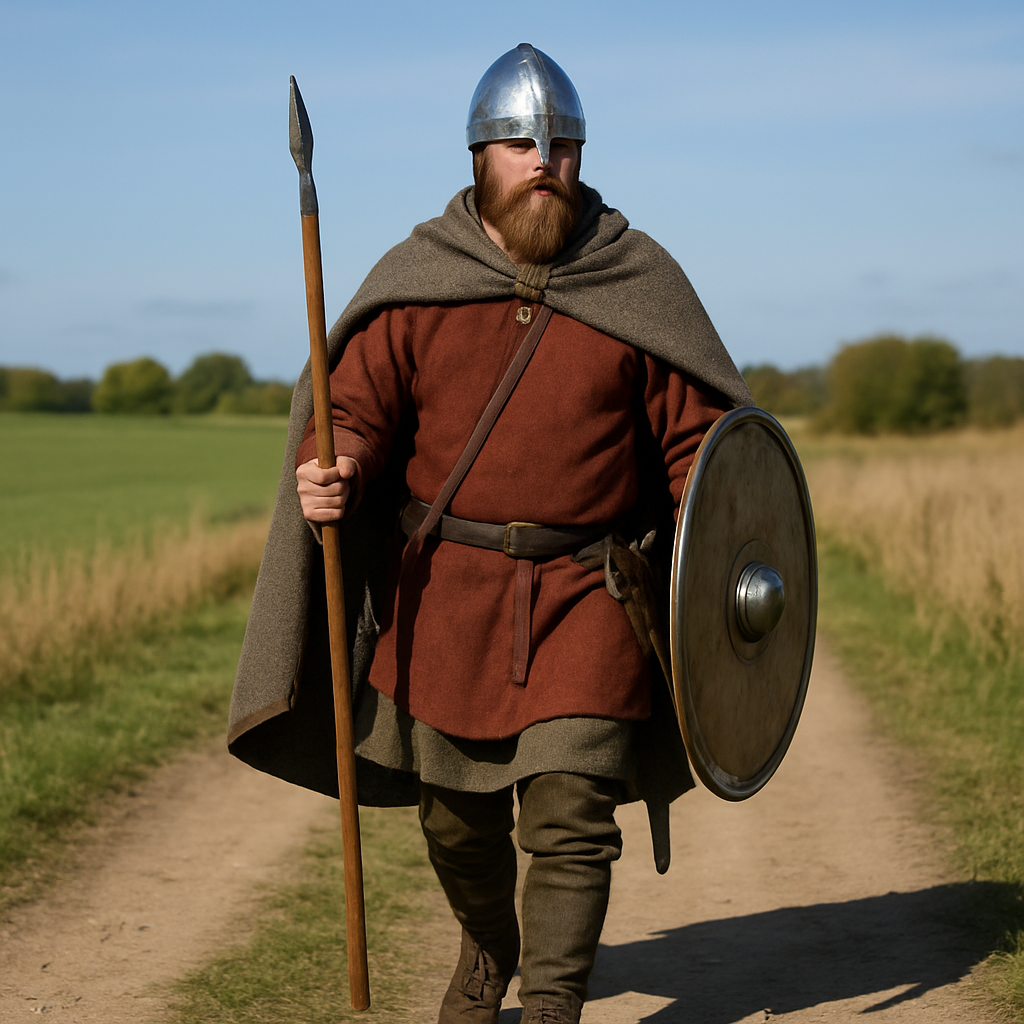
A passionate Viking re-enactor has announced an ambitious 100-mile trek, fully clad in traditional Viking attire. This endeavor is not just a test of endurance but also a tribute to the historical resilience and lifestyle of Viking ancestors. His journey aims to recreate the experience of Viking travels, showcasing their ability to traverse vast distances under challenging conditions. This involves wearing meticulously crafted Viking garments and gear, enhancing the authenticity of the experience. The re-enactor is motivated by his admiration for Viking history and culture. By undertaking this journey, he seeks to educate the public about the strength and resourcefulness of Viking communities. Historical re-enactments offer a vivid glimpse into the past, and he hopes to demonstrate the formidable endurance of ancient Norse peoples. Overcoming diverse terrains, the trek will require considerable physical preparation. Such ventures provide a unique method to engage audiences, blending historical education with personal challenge. The re-enactor is confident that this adventure will captivate and inform those interested in Viking history. The walk is scheduled over several days, ensuring adherence to historical realism while stressing modern considerations for safety and well-being. If successful, this trek could inspire renewed interest in Viking history and invigorate public passion for historical re-enactment.
Original news source: Re-enactor prepares to walk 100 miles in Viking clothing – BBC News (BBC)
🎧 Listen:
📖 Vocabulary:
Group or Classroom Activities
Warm-up Activities:
1. Discuss what you know about Viking history and culture.
2. Have you ever participated in or seen a historical re-enactment? Share your experience.
3. What do you think are the challenges of embarking on a 100-mile trek?
4. Why do you think people are fascinated by historical re-enactments?
5. If you could re-enact any historical period, what would it be and why?
🤔 Comprehension Questions:
To recreate the experience of Viking travels and showcase their endurance.
By wearing meticulously crafted Viking garments and gear.
He is motivated by admiration for Viking history and seeks to educate the public.
They offer a vivid glimpse into the past and demonstrate historical endurance.
Diverse terrains that require considerable physical preparation.
By blending historical education with a personal challenge.
To inspire renewed interest in Viking history and invigorate public passion.
🎧✍️ Listen and Fill in the Gaps:
A passionate re-enactor has announced an ambitious 100-mile trek, fully clad in traditional Viking . This endeavor is not just a test of endurance but also a tribute to the historical resilience and lifestyle of Viking ancestors. His journey aims to the of Viking travels, showcasing their ability to traverse vast distances challenging conditions. This involves wearing crafted Viking garments and gear, enhancing the authenticity of the experience. The re-enactor is by his admiration for Viking history and culture. By undertaking this journey, he to educate the public about the strength and resourcefulness of Viking communities. Historical re-enactments offer a glimpse into the past, and he hopes to demonstrate the formidable endurance of ancient Norse peoples. Overcoming diverse terrains, the trek will require considerable . Such ventures provide a unique method to engage , blending historical education with personal challenge. The re-enactor is confident that this adventure will and inform those interested in Viking history. The walk is scheduled over several days, adherence to historical while stressing modern considerations for safety and well-being. If successful, this trek could inspire interest in Viking history and invigorate public passion for historical re-enactment.
💬 Discussion Questions:
1. What do you think motivates people to participate in historical re-enactments?
2. In your opinion, what is the significance of maintaining historical accuracy in re-enactments?
3. How do you feel about the balance between historical authenticity and modern safety considerations?
4. What other cultures or historical periods do you find fascinating and why?
5. Do you think re-enactments can effectively educate people about history? How?
6. How does experiencing history firsthand differ from learning about it in a classroom?
7. Share your thoughts on the importance of cultural heritage preservation.
8. What modern activities do you think are similar to historical pilgrimages or journeys?
9. How do personal challenges, like the re-enactor's trek, inspire others?
10. Can historical re-enactments influence popular media or literature? How?
11. What are the potential downsides of participating in historical re-enactments?
12. Have advancements in technology affected historical education? Discuss.
Individual Activities
📖💭 Vocabulary Meanings:
Click a dot next to a word, then click the dot next to its meaning to draw a line connecting them.