


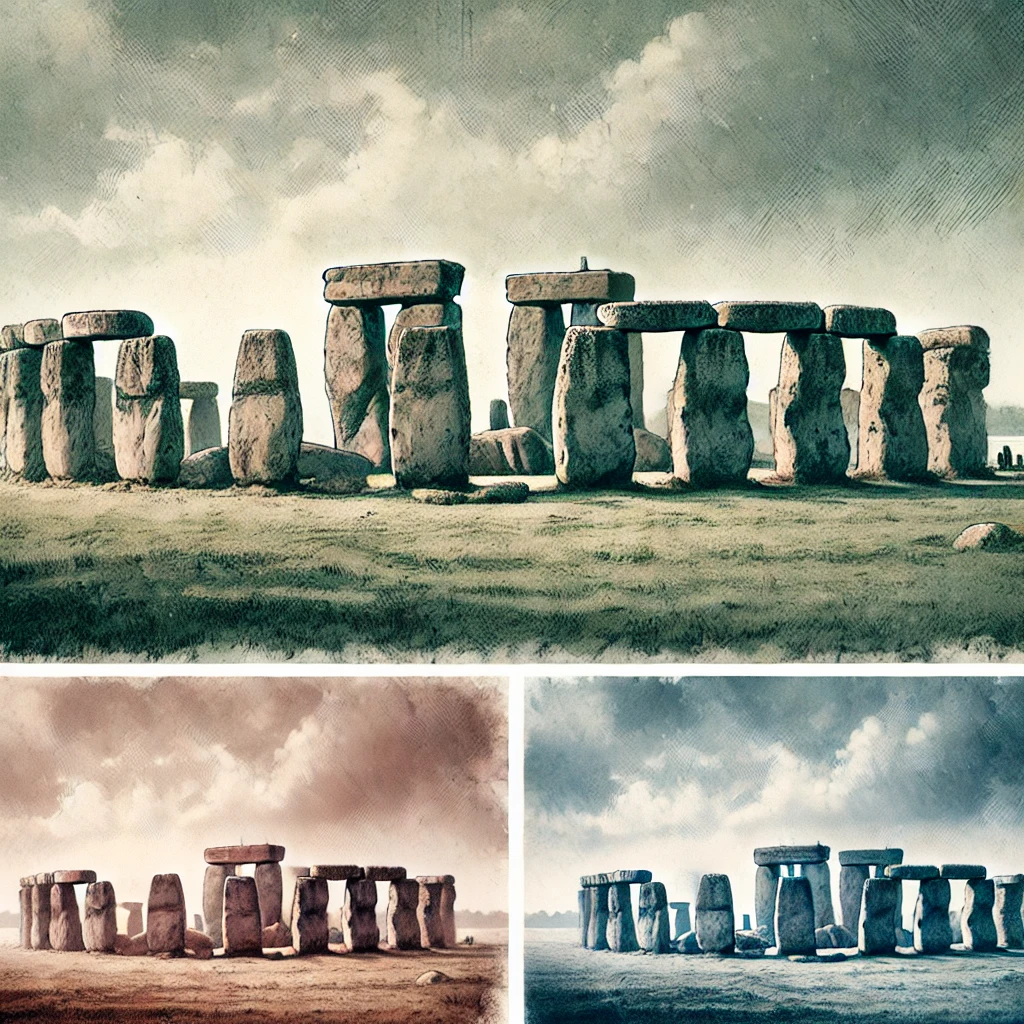
Scientists found out that a big stone at Stonehenge came from Scotland. Before, people thought it came from Wales. This shows that people from different places worked together to build Stonehenge. It means they were very smart and connected a long time ago. A student named Anthony Clarke helped find this out.
The stone's journey from Scotland surprised many researchers. They studied tiny pieces of the stone to learn where it came from. This makes us wonder how people moved such big stones so far. It also makes us think about why they built Stonehenge. This discovery helps us learn more about the people who lived long ago.
Original news source: Famous Stonehenge stone came from Scotland not Wales (BBC)
🎧 Listen:
📖 Vocabulary:
Group or Classroom Activities
Warm-up Activities:
– Keyword Taboo
Instructions: Write down a list of keywords related to the article such as Stonehenge, Scotland, Wales, Anthony Clarke, etc. Choose one student to sit with their back to the board. The rest of the class must describe the keyword to the student without using the word itself. The student at the board must guess the keyword based on the descriptions given.
– Vocabulary Pictionary
Instructions: Select a few key vocabulary words from the article such as "Stonehenge" or "Scotland" and write them on separate pieces of paper. Have students take turns choosing a word and drawing it on the board while their classmates try to guess which word it is. This will help reinforce vocabulary and spelling.
– Headline Creation
Instructions: Divide the class into small groups and ask them to create a catchy headline for the article about the Stonehenge discovery. Encourage them to use key information from the article in their headlines. After a few minutes, have each group present their headline to the class.
– Opinion Spectrum
Instructions: Create a line on the board with "Strongly Disagree" at one end and "Strongly Agree" at the other. Read out statements related to the article such as "I think it's important to study ancient civilizations" or "I believe teamwork is essential in achieving great things." Have students physically place themselves along the line based on how much they agree or disagree with each statement, then discuss their opinions.
– Charades
Instructions: Write down actions or keywords related to the article on separate pieces of paper. Have students take turns choosing a paper and acting out the word or phrase without speaking while their classmates try to guess what it is. This activity will help reinforce vocabulary and encourage creativity.
🤔 Comprehension Questions:
Scotland
A student named Anthony Clarke
Because they didn't know where it really came from.
Tiny pieces of the stone
Because it's far from Stonehenge.
The people who lived long ago
Because it's a mystery how they did it.
🎧✍️ Listen and Fill in the Gaps:
Scientists out that a big stone at Stonehenge came from . Before, people thought it came from Wales. This shows that people from different places worked together to build Stonehenge. It means they were very and connected a long ago. A student named Anthony Clarke helped find this out. The stone's journey from Scotland researchers. They studied tiny pieces of the stone to learn where it came from. This makes us wonder how people moved such big stones so far. It also makes us think about why they built Stonehenge. This discovery us learn more about the people who long ago.
💬 Discussion Questions:
1. Do you think it's cool that the big stone at Stonehenge came from Scotland?
2. How would you feel if you helped find out where the stone came from?
3. What do you think it means when people from different places work together?
4. Do you like learning about ancient buildings like Stonehenge?
5. Why do you think it's important to study where the stone came from?
6. What is a researcher?
7. How do you think people moved the big stones to build Stonehenge?
8. Why do you think it's interesting to learn about the people who lived long ago?
9. Do you think it's amazing that the stone traveled from Scotland to Stonehenge?
10. What do you think the people who built Stonehenge were like?
11. Do you like studying about history and ancient times?
12. Why do you think it's good to learn new things about the past?
Individual Activities
📖💭 Vocabulary Meanings:
Click a dot next to a word, then click the dot next to its meaning to draw a line connecting them.
Words
Meanings
🔡 Multiple Choice Questions:
🕵️ True or False Questions:
📝 Write a Summary:
Write a summary of this news article in two sentences.
Check your writing now with the best free AI for English writing!