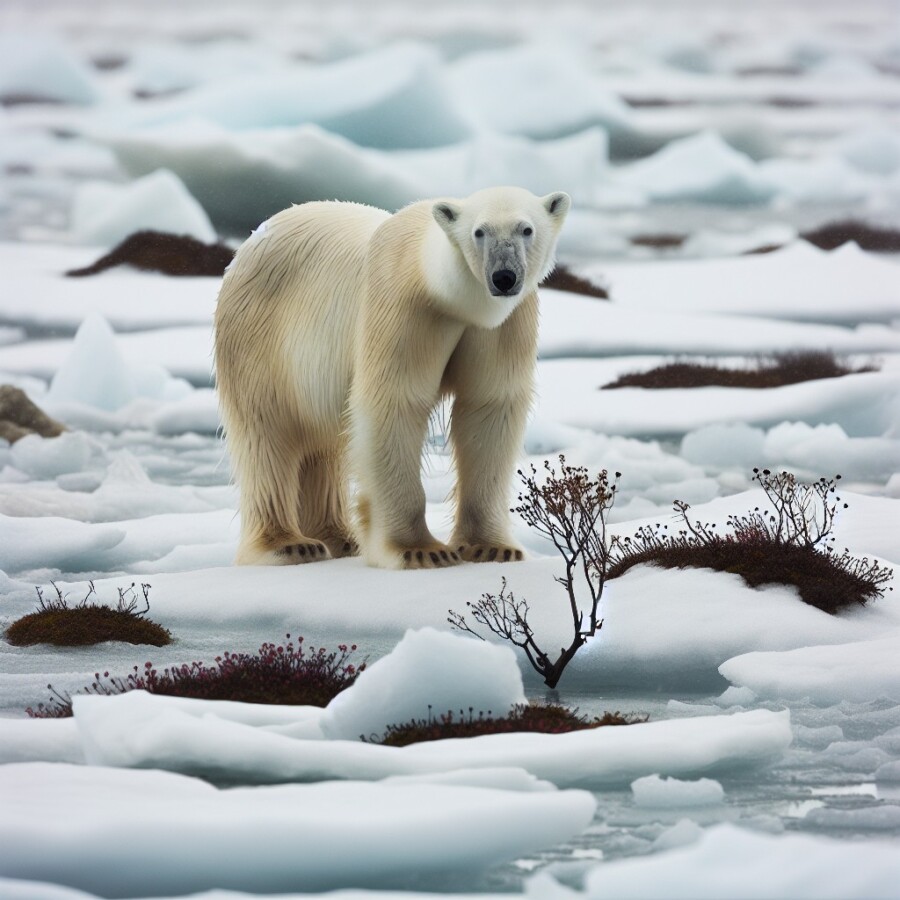
Polar bears are big white bears that live in the very cold part of the world called the Arctic. They like to eat seals that they catch on the ice. But the ice is melting because the Earth is getting warmer. This means the bears can't find as many seals to eat. So, they have to eat things like bird eggs and berries, but these foods don't help them stay healthy and strong.
Scientists are studying polar bears and found out that they are having a hard time finding enough food. A long time ago, there were not many polar bears because people hunted them too much. But then, people made rules to protect the bears, and there were more bears again. However, now the big problem for the bears is that it's getting too warm, and there is not enough ice for hunting. Scientists watched 20 bears and noticed that almost all of them lost weight because they couldn't find their usual food.
Original news source: Polar bears face starvation threat as ice melts (BBC)
🎧 Listen:
📖 Vocabulary:
Group or Classroom Activities
Warm-up Activities:
– Charades
Instructions: Divide the class into small groups. Each group will take turns acting out different animals, including a polar bear. The other group members must guess the animal being acted out. This will help reinforce vocabulary related to animals and encourage active communication in English.
– News Summary
Instructions: Give each student a copy of the article. In pairs, students will take turns summarizing the main points of the article to their partner. This will practice their reading comprehension and speaking skills, as well as help them practice summarizing information in English.
– Opinion Poll
Instructions: Divide the class into pairs or small groups. Have them discuss the issue presented in the article: the melting ice and its impact on polar bears. Then, have each group create a poll with questions related to the issue. Each group will then take turns asking the other groups their poll questions and recording their answers. This will encourage students to express their opinions and practice asking and answering questions in English.
– Vocabulary Pictionary
Instructions: Write down a list of vocabulary words from the article on the board. Divide the class into pairs or small groups. Each group will take turns choosing a word and drawing it on the board without using any letters or numbers. The other group members must guess the word being drawn. This will help reinforce vocabulary and encourage creativity in using English.
– Future Predictions
Instructions: In pairs or small groups, have students discuss and make predictions about the future of polar bears. They can discuss what might happen if the ice continues to melt, how it will affect the polar bear population, and what can be done to help them. Each group will then share their predictions with the class. This activity will encourage critical thinking and discussion in English.
🤔 Comprehension Questions:
Polar bears are big white bears.
Polar bears live in the Arctic, which is a very cold part of the world.
Polar bears like to eat seals.
Polar bears are having a hard time finding food because the ice is melting and there are not as many seals to catch.
There used to be not many polar bears because people hunted them too much.
The big problem for polar bears now is that it's getting too warm and there is not enough ice for hunting.
The bears that the scientists were watching lost weight because they couldn't find enough food.
🎧✍️ Listen and Fill in the Gaps:
Polar bears are big white bears that live in the very cold part of the world called the Arctic. They like to eat that they catch on the ice. But the ice is melting because the Earth is warmer. This means the bears can't find as many seals to eat. So, they have to eat things like bird eggs and berries, but these foods don't help them stay healthy and strong. Scientists are bears and found out that they are having a time enough food. A long time ago, there were not many polar bears because people hunted them too much. But then, people made rules to protect the bears, and there were more bears again. However, now the big problem for the is that it's getting too warm, and there is not enough ice for hunting. watched 20 bears and noticed that almost all of them lost weight because they couldn't find their usual food.
💬 Discussion Questions:
1. What is a polar bear?
2. How do polar bears find food?
3. How do you think the polar bears feel when they can't find enough food?
4. Do you like eating bird eggs and berries? Why or why not?
5. What do scientists study about polar bears?
6. Why were there not many polar bears a long time ago?
7. How did people help protect the polar bears?
8. Do you think it's good to protect animals? Why or why not?
9. How do you think the polar bears feel when they are losing weight?
10. What do you think will happen to the polar bears if the ice keeps melting?
11. How can we help the polar bears find more food?
12. Do you think it's important to take care of the Earth? Why or why not?
Individual Activities
📖💭 Vocabulary Meanings:
Click a dot next to a word, then click the dot next to its meaning to draw a line connecting them.
Words
Meanings
🔡 Multiple Choice Questions:
🕵️ True or False Questions:
📝 Write a Summary:
Write a summary of this news article in two sentences.
Check your writing now with the best free AI for English writing!