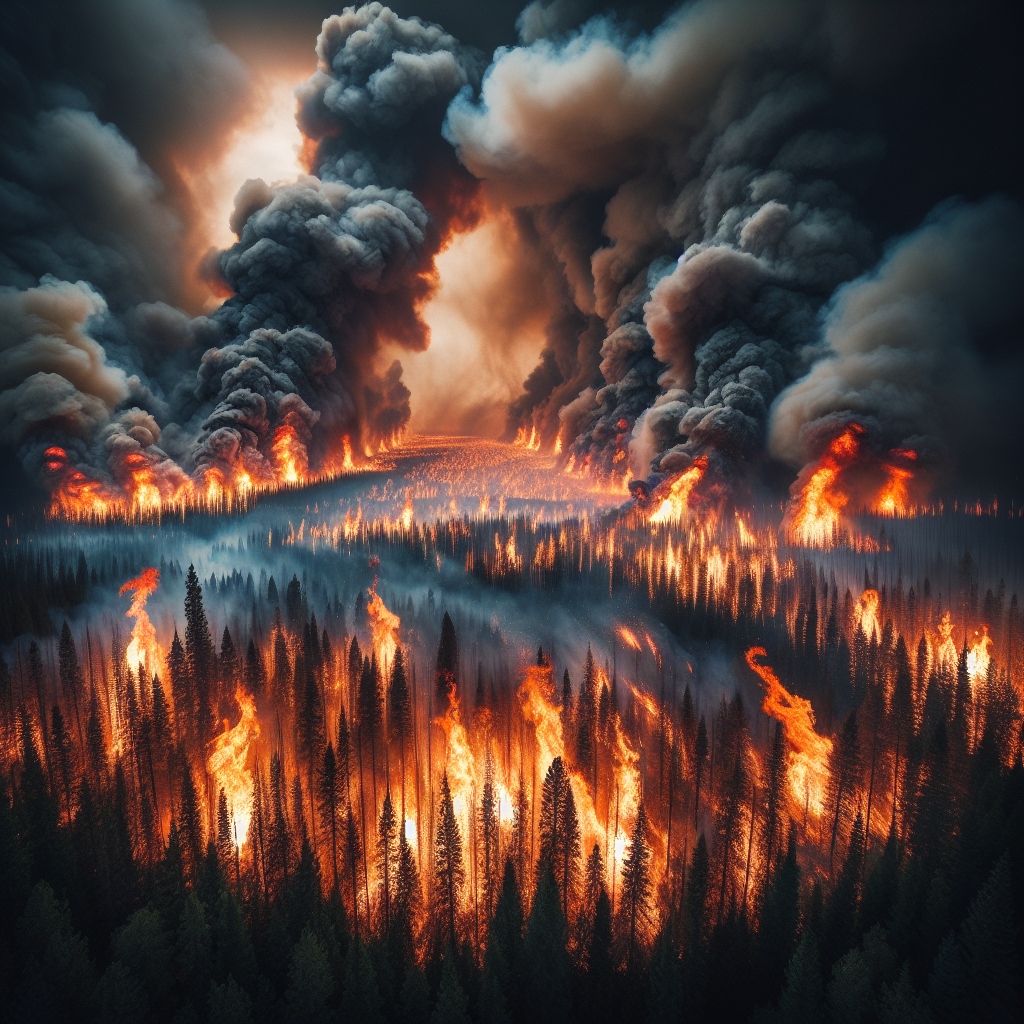
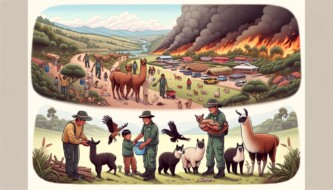
The leader of Bolivia, Luis Arce, is asking people from other places to help. The fires are very bad for the country and the big forest called the Amazon. Pictures show people in San Buenaventura taking care of a small animal that looks like a raccoon. They are giving water and fruit to the animals. A man who takes care of a park is looking for animals that are hurt or stuck because of the fires.
Original news source: Bolivia wildfires: Locals care for animals affected by blazes (BBC)
📖 Vocabulary:
Group or Classroom Activities
Warm-up Activities:
– Charades
Instructions: Divide the class into small groups. Write down a list of animal names on small pieces of paper and put them in a hat. One student from each group will pick a piece of paper from the hat and act out the animal without speaking. The other group members have to guess the animal. The group that guesses correctly gets a point. Repeat with different animals.
– News Summary
Instructions: Read the article aloud to the class. Then, divide the class into pairs. Each pair will take turns summarizing the main points of the article to their partner. Encourage them to use their own words and keep the summary brief. After both partners have had a turn, ask a few pairs to share their summaries with the whole class.
– Opinion Poll
Instructions: Write the following question on the board: "Do you think it is important to help animals affected by the fires in Bolivia? Why or why not?" Have the students discuss their opinions in small groups. After a few minutes, ask each group to share their opinions with the class. Encourage the students to listen to each other's opinions and ask follow-up questions.
– Vocabulary Pictionary
Instructions: Write down a list of vocabulary words from the article on separate pieces of paper. Divide the class into small groups. One student from each group will pick a word and draw a picture to represent it, while the rest of the group tries to guess the word. The group that guesses the word gets a point. Repeat with different vocabulary words.
– Think-Pair-Share
Instructions: Ask the students to think about the following question: "What can individuals do to help animals affected by natural disasters?" Give the students a few minutes to think about their answers individually. Then, have them pair up with a partner and share their ideas. After a few minutes, ask a few pairs to share their ideas with the whole class. Encourage the students to listen to each other's ideas and add to their own.
🤔 Comprehension Questions:
There were big fires in Bolivia that hurt the land and animals.
The animals need help because their homes are burned and they have no food or water.
The farmers are having a hard time because it's very hot and their plants and animals are not doing well.
The people are giving water and food like fruit to the animals to help them.
The leader of Bolivia, Luis Arce, is asking for help from other places.
The fires are bad because they hurt the land and animals, and they also harm the big forest called the Amazon.
The people in San Buenaventura are giving water and fruit to the animals to take care of them.
🎧✍️ Listen and Fill in the Gaps:
Big fires in Bolivia have hurt a lot of land and animals. Many animals help because their homes are burned. Farmers are having a time because it's very hot and their plants and animals are not well. People who live there are helping the animals. They give them and food like fruit. The leader of Bolivia, Luis Arce, is asking people from other to help. The fires are very bad for the country and the big called the Amazon. Pictures show people in San Buenaventura taking care of a small animal that looks like a raccoon. They are giving water and fruit to the . A man who takes of a park is looking for animals that are hurt or stuck because of the fires.
💬 Discussion Questions:
1. What is happening in Bolivia right now?
2. How do you think the animals feel when their homes are burned?
3. Do you think it's important to help the animals? Why or why not?
4. How do you think the farmers feel when their plants and animals are not doing well?
5. What do the people in San Buenaventura do to help the animals?
6. How do you think the leader of Bolivia feels about the fires?
7. Do you think it's good to ask people from other places to help? Why or why not?
8. What do the pictures show people doing in San Buenaventura?
9. How do you think the man who takes care of the park feels when he finds hurt or stuck animals?
10. Have you ever seen a raccoon before? What do you think they look like?
11. What do you think the animals eat when people give them food?
12. Do you think it's important to take care of the land and animals? Why or why not?
Individual Activities
📖💭 Vocabulary Meanings:
Click a dot next to a word, then click the dot next to its meaning to draw a line connecting them.
Words
Meanings
🔡 Multiple Choice Questions:
🕵️ True or False Questions:
📝 Write a Summary:
Write a summary of this news article in two sentences.
Check your writing now with the best free AI for English writing!