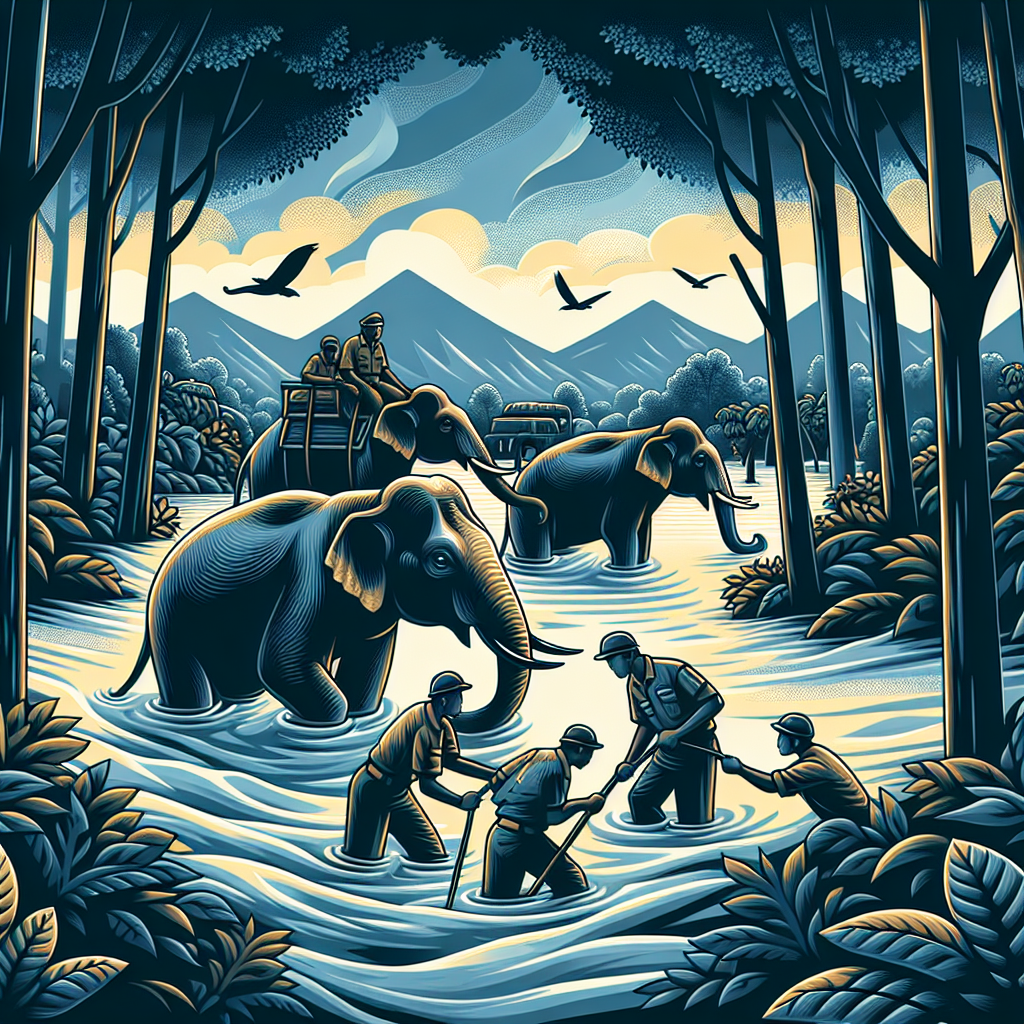
In Thailand, there was a big flood, and the water was very high. Four elephants had to walk through the water to get to a safe place. One elephant was blind, so it moved slower than the others. The flood happened because of a big storm called Typhoon Yagi. The storm made the river rise and water came into the elephant park.
The people who take care of the elephants worked hard to keep them safe. They moved all 126 elephants to a safe place. Nine elephants were stuck at first, but they were saved too. The video of the elephants shows how strong and brave they are. It also shows how much the people care for the elephants, even when things are hard.
Original news source: Watch: Elephants escape floodwaters in Thailand (BBC)
🎧 Listen:
📖 Vocabulary:
Group or Classroom Activities
Warm-up Activities:
– Charades
Instructions: Write down key words related to the article (flood, elephants, water, storm, park, care, safe) on separate cards. Have students take turns picking a card and acting out the word without speaking while the others guess what it is.
– Vocabulary Pictionary
Instructions: Choose 5-7 key vocabulary words from the article and write them on the board. Divide the class into teams and have one student from each team come up to the board to draw the word while their team tries to guess. Encourage the use of English to describe the drawing.
– Headline Creation
Instructions: In pairs or small groups, have students come up with a catchy headline for the article about the elephants in Thailand. Encourage them to use vocabulary and key points from the article. Each group can share their headline with the class.
– Opinion Poll
Instructions: Divide the class into two groups, one representing the elephants and the other representing the people taking care of them. Have students come up with opinions or feelings these two groups might have about the flood situation. Then, conduct a poll within each group to see which opinions are most popular.
– Sketch It
Instructions: Provide each student with a piece of paper and ask them to draw a scene from the article, such as the elephants walking through the water or the people helping them. After a few minutes, have students share their drawings with a partner and describe what they drew using English.
🤔 Comprehension Questions:
The elephants had to walk through the water because there was a big flood in Thailand.
There were 126 elephants in the park.
The flood happened because of a big storm called Typhoon Yagi.
Nine elephants were stuck at first.
The people moved all the elephants to a safe place to keep them safe.
One elephant was blind, so it moved slower than the others.
The video shows how strong and brave the elephants are, and how much the people care for them even in difficult times.
🎧✍️ Listen and Fill in the Gaps:
In Thailand, there was a big , and the water was very high. Four elephants had to walk through the water to get to a safe . One elephant was blind, so it moved slower than the others. The flood happened because of a big storm called Yagi. The storm made the river rise and water came into the elephant . The people who take of the elephants worked hard to keep them safe. They all 126 elephants to a safe place. Nine elephants were stuck at first, but they were saved too. The video of the elephants how strong and brave they are. It also shows how much the care for the elephants, even when things are hard.
💬 Discussion Questions:
1. What is a flood?
2. How would you feel if you had to walk through high water like the elephants?
3. Do you like elephants?
4. Do you think the people who take care of the elephants are kind?
5. Why do you think the elephants had to move to a safe place?
6. What is a storm?
7. How do you think the elephants felt when they were stuck at first?
8. Why do you think the people worked hard to keep the elephants safe?
9. What does it mean to be strong and brave?
10. How would you help someone if they were stuck in a flood?
11. Do you think it's important to take care of animals like elephants?
12. Why do you think it's important to help others, even when things are hard?
Individual Activities
📖💭 Vocabulary Meanings:
Click a dot next to a word, then click the dot next to its meaning to draw a line connecting them.
Words
Meanings
🔡 Multiple Choice Questions:
🕵️ True or False Questions:
📝 Write a Summary:
Write a summary of this news article in two sentences.
Check your writing now with the best free AI for English writing!