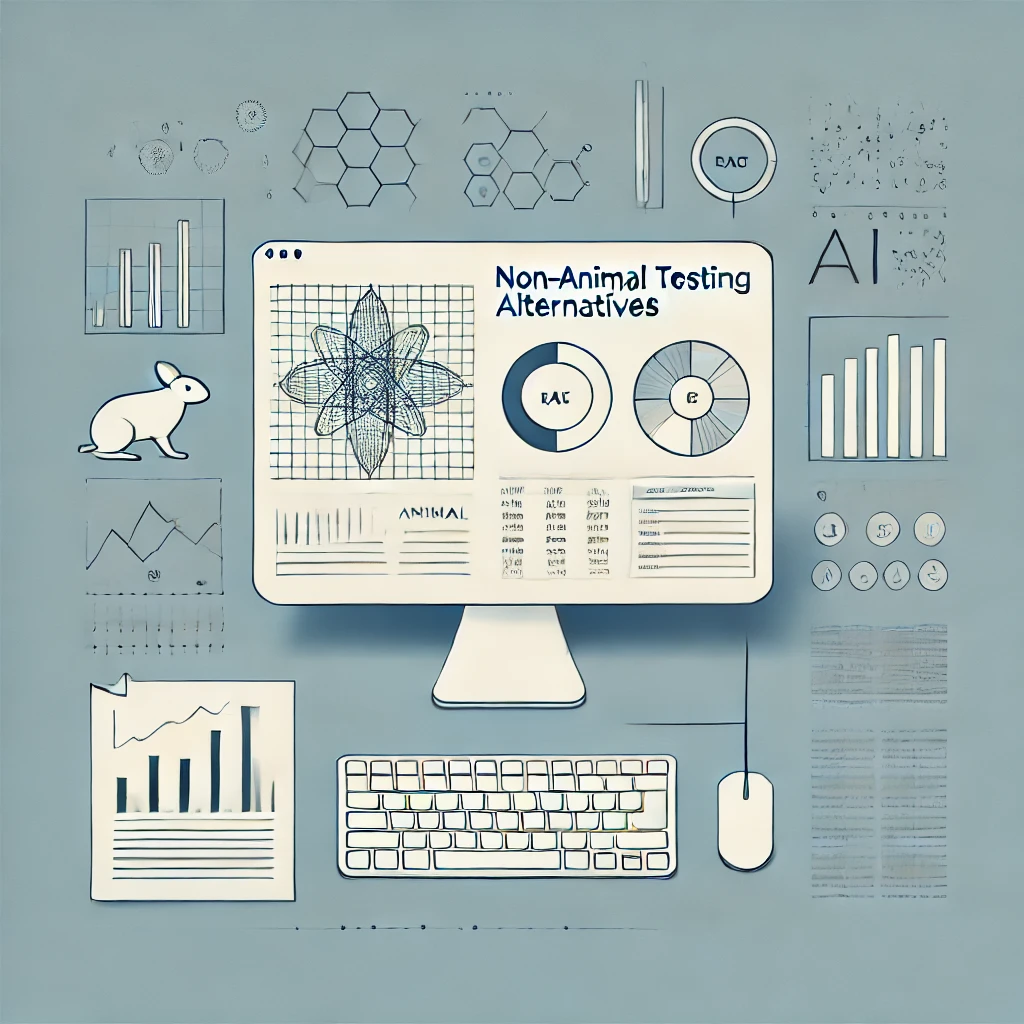
Scientists are using smart computers called AI to help stop using animals for testing. These AI systems look at old animal test results to avoid doing new tests. They help scientists find and understand important information quickly. AI can also check if new chemicals are safe, which helps catch problems early. These smart computers are even helping to make new medicines.
AI is sometimes better than animal tests, but it can still make mistakes. One problem is that AI might not work well for everyone if it only learns from one group of people. Sometimes, animal tests are wrong too, like with a medicine called Vioxx that was safe for animals but not for people. New AI projects are being made to guess how animals would react, so we don't need to test on them. Groups like Cruelty Free International want to stop animal testing and use AI instead.
Original news source: Could AI put an end to animal testing? (BBC)
🎧 Listen:
📖 Vocabulary:
Group or Classroom Activities
Warm-up Activities:
– Charades
Instructions: Divide the class into small groups. Give each group a set of vocabulary words related to the article. One student from each group will act out the word using gestures and body language, while the other students in the group try to guess the word. The group that guesses the most words correctly wins.
– News Summary
Instructions: Have the students read the article individually or in pairs. Then, ask each student to write a short summary of the article in their own words. After they have finished writing, have them share their summaries with a partner and discuss any differences or similarities. Finally, have a few students share their summaries with the whole class.
– Opinion Poll
Instructions: Divide the class into pairs. One student in each pair will take on the role of a scientist who supports using AI instead of animal testing, and the other student will take on the role of a scientist who opposes using AI. Give each pair a list of discussion questions related to the article, such as "Do you think AI can completely replace animal testing? Why or why not?" Each student should take turns asking and answering the questions, and they should try to convince their partner of their opinion.
– Vocabulary Pictionary
Instructions: Write a list of vocabulary words from the article on the board. Divide the class into two teams. Have one student from each team come to the front of the class. Show them a vocabulary word from the list, and they must draw a picture of the word on the board. Their team members must guess what the word is based on the drawing. The team that guesses the most words correctly wins.
– Speed Summarizing
Instructions: Divide the class into small groups. Give each group a set of discussion questions related to the article. Each student will take turns answering one of the questions within a time limit of one minute. After one minute, the next student in the group must continue summarizing their thoughts on the same question. The goal is to see how much information each student can summarize in one minute.
🤔 Comprehension Questions:
Scientists are using smart computers called AI.
The smart computers look at old animal test results to find important information quickly.
AI can check if new chemicals are safe.
Yes, AI can make mistakes sometimes.
AI might not work well for everyone if it only learns from one group of people.
Yes, animal tests can be wrong sometimes.
Groups like Cruelty Free International want to use AI instead of animal testing.
🎧✍️ Listen and Fill in the Gaps:
Scientists are using smart computers called AI to help stop using for testing. These AI systems look at old animal test results to avoid doing new tests. They help scientists and understand important information quickly. AI can also check if new chemicals are safe, which catch problems early. These smart computers are even helping to make new medicines. AI is sometimes better than animal , but it can still make mistakes. One problem is that AI might not work well for everyone if it only learns from one group of . Sometimes, tests are wrong too, like with a medicine called Vioxx that was safe for animals but not for people. New AI projects are being made to guess how animals would react, so we don't to test on them. Groups like Cruelty Free International want to animal testing and use AI instead.
💬 Discussion Questions:
1. What is AI and how does it help scientists?
2. How would you feel if you found out that AI can help make new medicines?
3. Do you think AI is better than animal tests? Why or why not?
4. Why do you think AI might not work well for everyone?
5. How would you feel if you were told that AI can sometimes make mistakes?
6. Do you like the idea of using AI to guess how animals would react? Why or why not?
7. What do you think about the idea of using AI instead of testing on animals?
8. How would you feel if you knew that some groups want to stop animal testing?
9. Do you think it's important to find alternatives to animal testing? Why or why not?
10. How would you feel if you were told that AI can check if new chemicals are safe?
11. What is one problem with animal tests that the article mentions?
12. How would you feel if you were told that AI is helping scientists find and understand important information quickly?
Individual Activities
📖💭 Vocabulary Meanings:
Click a dot next to a word, then click the dot next to its meaning to draw a line connecting them.
Words
Meanings
🔡 Multiple Choice Questions:
🕵️ True or False Questions:
📝 Write a Summary:
Write a summary of this news article in two sentences.
Check your writing now with the best free AI for English writing!