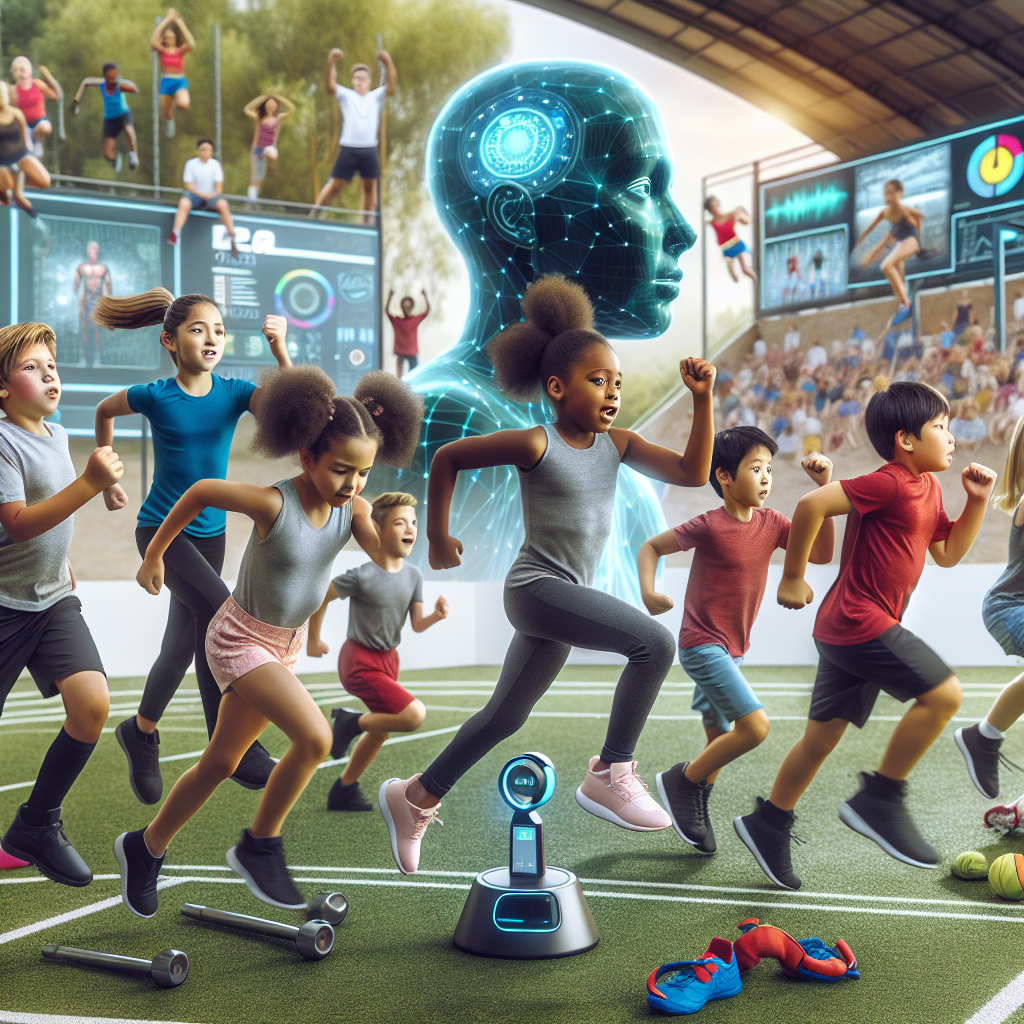
At the Paris Olympics, there is a new computer system that helps find kids who might win gold medals in the future. This smart technology helps kids in faraway places see if they are good at sports. Kids like Tacto and Tomo from Japan tried running and jumping to see how fast and strong they are. The computer looks at their results and compares them to famous athletes to see which sport they might be good at.
The system is easy to use because it works on a phone or tablet, so it can go anywhere. It was used in Senegal to test over 1,000 kids, and some were really good at sports. This helps kids in places without big sports centers find out if they can be athletes. Experts say this is a good way to find young talent, but it might not show everything a sport needs. Kids like Tacto had fun trying it, and it helps them learn what sports they might like.
Original news source: The AI tech aiming to identify future Olympians (BBC)
🎧 Listen:
📖 Vocabulary:
Group or Classroom Activities
Warm-up Activities:
– CHARADES
Instructions: Divide the class into small groups. Each group will take turns acting out sports without speaking while the other groups guess the sport. Use simple sports vocabulary and encourage gestures to help convey the meaning.
– OPINION POLL
Instructions: Ask students to walk around the classroom and ask their classmates which sport they like the most. They can use simple questions like, "Do you like soccer?" or "What is your favorite sport?" After a few minutes, gather the class and discuss the most popular answers.
– VOCABULARY PICTIONARY
Instructions: Write sports-related words on slips of paper (e.g., running, jumping, swimming). One student will pick a slip and draw the word on the board while the others guess what it is. This will help them learn and remember new sports vocabulary.
– THINK-PAIR-SHARE
Instructions: Pose the question, "What sport would you like to try and why?" Give students a minute to think, then have them pair up to share their thoughts. Finally, ask a few pairs to share their ideas with the whole class.
– FUTURE PREDICTIONS
Instructions: Have students think about which sport they might be good at based on their interests or skills. They can write or share with a partner what sport they would like to excel in and why they think they could be good at it. This encourages them to use future predictions in their speaking and writing.
🤔 Comprehension Questions:
It helps find kids who might win gold medals in the future.
They are kids from Japan who tried running and jumping.
They run and jump to see how fast and strong they are.
It looks at their results and compares them to famous athletes.
It can be used on a phone or tablet, so it can go anywhere.
Over 1,000 kids were tested in Senegal.
They have fun trying new sports and learning what they might like.
🎧✍️ Listen and Fill in the Gaps:
At the , there is a new computer system that helps find kids who might win gold medals in the future. This smart technology helps kids in faraway places see if they are good at sports. Kids like Tacto and Tomo from Japan tried running and jumping to see how fast and strong they are. The computer at their and compares them to famous athletes to see which sport they might be good at. The system is easy to use because it works on a phone or tablet, so it can go anywhere. It was used in Senegal to test over 1,000 , and some were really good at sports. This helps kids in without big sports centers find out if they can be athletes. Experts say this is a good way to find young talent, but it might not show everything a sport needs. Kids like had fun trying it, and it helps them what sports they might like.
💬 Discussion Questions:
1. What is your favorite sport?
2. Do you like to run or jump? Why?
3. How would you feel if you won a gold medal?
4. Do you think kids should try many sports? Why or why not?
5. What is a sport you want to try?
6. How do you feel when you play sports with friends?
7. Do you think technology helps kids in sports? Why?
8. Have you ever tried a new sport? What was it?
9. What is a fun game you like to play?
10. Do you think it is important to be strong for sports? Why?
11. How would you feel if you were really good at a sport?
12. Do you like to watch sports on TV? Why or why not?
Individual Activities
📖💭 Vocabulary Meanings:
Click a dot next to a word, then click the dot next to its meaning to draw a line connecting them.
Words
Meanings
🔡 Multiple Choice Questions:
🕵️ True or False Questions:
📝 Write a Summary:
Write a summary of this news article in two sentences.
Check your writing now with the best free AI for English writing!