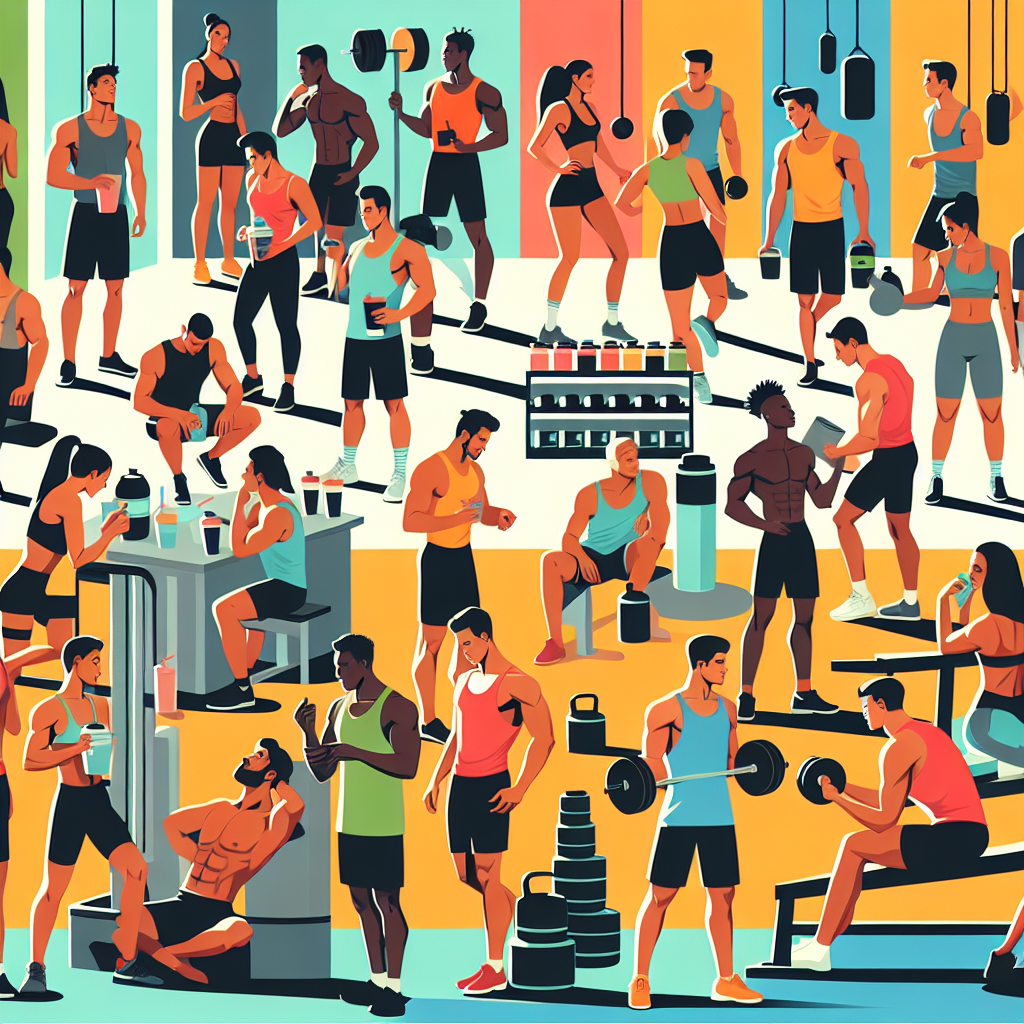
A study found that young people using protein shakes and other supplements might worry too much about their muscles. This worry is called muscle dysmorphia. It makes them feel like their muscles are never big enough. Many young people want to look like the pictures they see online. But using too many supplements can make them feel worse.
People with muscle dysmorphia might exercise too much or eat in a strict way. They might also feel sad or worried about how they look. Even if they get big muscles, they still feel unhappy. The study says we need to be careful with supplements because they can be unsafe. It's important to help young people feel good about their bodies without using too many supplements.
Original news source: Muscle-building supplements may put teens at risk for a body image disorder, study finds (CNN)
🎧 Listen:
📖 Vocabulary:
Group or Classroom Activities
Warm-up Activities:
– CHARADES
Instructions: Write down words or phrases from the article related to muscle dysmorphia, supplements, or exercise. Students take turns acting out the words without speaking while the others guess what they are.
– WORD ASSOCIATION
Instructions: Start with a word from the article, like "muscle." Students take turns saying the first word that comes to their mind related to "muscle." This continues around the room, building vocabulary and connections.
– OPINION POLL
Instructions: Create a simple questionnaire with statements based on the article, like "Using supplements is a good idea" or "I feel happy about my body." Students walk around the room and ask their classmates to agree or disagree, then share the results in small groups.
– MIND MAP
Instructions: On a large sheet of paper or whiteboard, write "Muscle Dysmorphia" in the center. Students brainstorm related ideas (like "supplements," "exercise," "feelings") and draw connections between them, helping to visualize the concepts from the article.
– TWO TRUTHS AND A LIE
Instructions: Students come up with three statements related to muscle dysmorphia or supplements—two true and one false. They take turns sharing their statements with the class, while others guess which one is the lie. This encourages speaking and critical thinking.
🤔 Comprehension Questions:
Muscle dysmorphia is when people worry too much about their muscles and think they are not big enough.
They feel sad and think their muscles are never big enough.
Many young people want to look like the pictures they see online.
Using too many supplements can make them feel worse and can be unsafe.
They might exercise too much.
They still feel unhappy about their bodies.
It is important to help them feel good without using too many supplements that can be bad for them.
🎧✍️ Listen and Fill in the Gaps:
A study found that young people using protein shakes and other supplements might too much about their . This worry is called muscle dysmorphia. It makes them feel like their muscles are never big enough. young people want to look like the pictures they see online. But using too many can make them feel worse. People with muscle dysmorphia might too much or eat in a way. They might also feel sad or worried about how they look. Even if they get big muscles, they still feel unhappy. The study says we need to be careful with supplements because they can be unsafe. It's important to help young people feel good about their bodies without too supplements.
💬 Discussion Questions:
1. What is a protein shake?
2. Do you like to exercise? Why or why not?
3. How would you feel if you did not like how you looked?
4. What is a supplement?
5. Do you think it is good to worry about your muscles? Why?
6. How would you feel if you saw a picture of someone very strong?
7. Do you like to eat healthy food? Why or why not?
8. What do you think makes people happy about their bodies?
9. How would you feel if someone said you were too small?
10. Do you think it is okay to use supplements? Why or why not?
11. What is a way to feel good about yourself?
12. How would you feel if you could not stop exercising?
Individual Activities
📖💭 Vocabulary Meanings:
Click a dot next to a word, then click the dot next to its meaning to draw a line connecting them.
Words
Meanings
🔡 Multiple Choice Questions:
🕵️ True or False Questions:
📝 Write a Summary:
Write a summary of this news article in two sentences.
Check your writing now with the best free AI for English writing!