
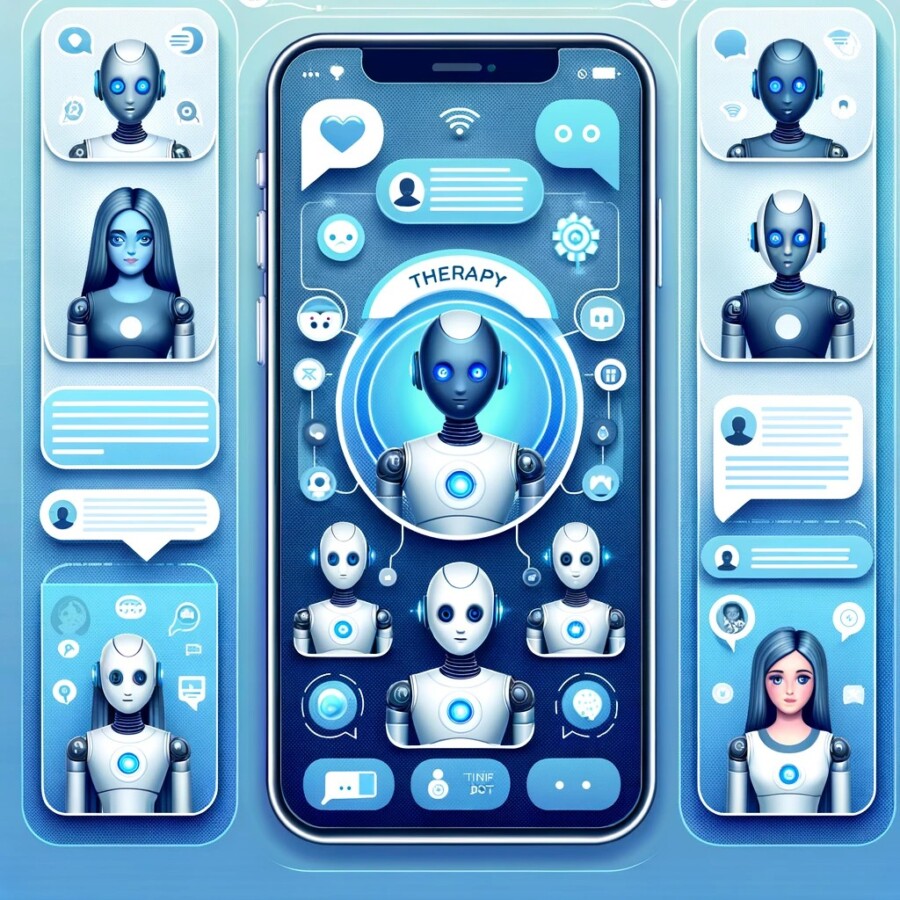
There is a computer program that lets people talk to robots as if they were talking to real people. One robot, called Psychologist, is like a helper who listens to people's problems. It has talked to people 78 million times in just over a year. Some people really like it because it helps them feel better, but others say it's not the same as talking to a real person.
A student named Sam made the Psychologist robot. He made it because he needed someone to talk to and couldn't pay for a real therapist. Now, Sam is studying why young people like talking to these robots. The place where you can talk to the Psychologist robot has lots of other helper robots and many young people use it.
Some experts aren't sure if talking to robots can really help people. But the robots are always there to talk, which can be good for some people. Still, it's a little worrying that so many people need to talk to these robots because they feel sad or have problems. The company that makes the robots says people should talk to real experts for serious help and that they keep the talks private, but they can look at them if they need to keep people safe.
Original news source: Character.ai: Young people turning to AI therapist bots (BBC)
🎧 Listen:
📖 Vocabulary:
Group or Classroom Activities
Warm-up Activities:
– News Summary
Instructions: Divide the class into pairs. Give each pair a copy of the article. Have them read the article together and then summarize the main points in their own words. After a few minutes, have pairs share their summaries with the class.
– Word Association
Instructions: Write the word "robot" on the board. Ask students to think of as many words as they can that are related to robots. Encourage them to think of both positive and negative associations. After a few minutes, have students share their words with the class and discuss the different associations.
– Vocabulary Pictionary
Instructions: Choose 5-10 vocabulary words from the article (e.g. psychologist, therapist, private, expert) and write them on separate pieces of paper. Divide the class into teams. One student from each team comes to the front of the class and picks a word from the pile. They then have one minute to draw a picture to represent that word, while their team tries to guess what word it is. The team with the most correct guesses wins.
– Opinion Poll
Instructions: Write the question "Do you think talking to robots can help people?" on the board. Have students individually think about their answer and write it down. Then, divide the class into small groups and have them share their opinions. Each group should choose a spokesperson to present their group's opinions to the class.
– Two Truths and a Lie
Instructions: Have students work in pairs. Each student should come up with two true statements and one false statement about their opinion on talking to robots. They should not tell their partner which statement is false. Students take turns sharing their statements and their partner tries to guess which one is the lie. After both students have shared, they can discuss their opinions on the topic.
🤔 Comprehension Questions:
The robot's name is Psychologist.
The Psychologist robot has talked to people 78 million times.
Sam made the Psychologist robot because he needed someone to talk to and couldn't afford a real therapist.
Many young people use the place where you can talk to the Psychologist robot.
Some experts aren't sure if talking to robots can really help people.
It is a little worrying because many people need to talk to these robots because they feel sad or have problems.
The company that makes the robots says people should talk to real experts for serious help.
🎧✍️ Listen and Fill in the Gaps:
There is a computer program that lets talk to robots as if they were talking to real people. One robot, called , is like a helper who listens to people's problems. It has talked to people 78 million in just over a year. Some people really like it because it helps them feel better, but others say it's not the same as ing to a real . A student named Sam made the Psychologist . He made it because he needed someone to talk to and couldn't pay for a real therapist. Now, Sam is studying why young people like talking to these robots. The place where you can talk to the Psychologist robot has lots of other er robots and young people use it. Some aren't sure if talking to robots can really help people. But the robots are always there to talk, which can be good for some people. Still, it's a little worrying that so many people need to talk to these robots because they feel sad or have . The company that makes the robots says people should talk to real experts for help and that they the talks private, but they can look at them if they need to keep people safe.
💬 Discussion Questions:
1. What is a robot?
2. How would you feel if you could talk to a robot when you're feeling sad or have problems?
3. Do you think talking to a robot is the same as talking to a real person? Why or why not?
4. Why do you think some people like talking to robots?
5. Do you like the idea of talking to a robot when you need someone to talk to? Why or why not?
6. What do you think about the fact that so many people need to talk to robots because they feel sad or have problems?
7. Do you think talking to robots can really help people? Why or why not?
8. If you could create your own robot to talk to, what would it be like?
9. How do you think talking to a robot is different from talking to a friend or family member?
10. Would you feel comfortable talking to a robot about your problems? Why or why not?
11. Do you think it's important for people to talk to real experts for serious help? Why or why not?
12. How do you think the robots can keep people safe when they look at the talks?
Individual Activities
📖💭 Vocabulary Meanings:
Click a dot next to a word, then click the dot next to its meaning to draw a line connecting them.
Words
Meanings
🔡 Multiple Choice Questions:
🕵️ True or False Questions:
📝 Write a Summary:
Write a summary of this news article in two sentences.
Check your writing now with the best free AI for English writing!