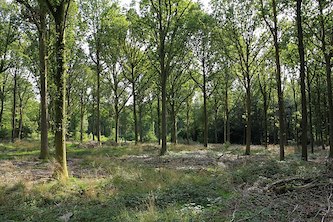
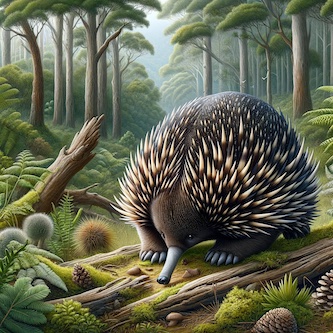
The scientists went to a faraway place with big mountains to find the echidna. They had to be very brave because there were dangerous snakes and bugs that suck your blood. But they found new kinds of bugs, frogs, and a secret place under the ground. They also saw some kangaroos that live in trees and very pretty birds.
The echidna is very hard to find, but finding it can help stop fights between people. The scientists hope that finding the echidna and other new animals will help protect the mountains. Right now, the echidna is in danger but not protected by the law. It's important to look after all the special animals and plants there.
Original news source: First-ever images prove 'lost echidna' not extinct (BBC)
📖 Vocabulary:
Group or Classroom Activities
Warm-up Activities:
– News Reporter Role-play
Instructions: Divide the students into pairs. One student is a news reporter, and the other is a scientist who has just discovered the Attenborough's long-beaked echidna. The reporter interviews the scientist, asking about the discovery, the difficulties faced during the expedition, and the importance of the discovery for conservation efforts. Students should use past tense for the discovery and present tense for explaining the current situation.
– Sketch It
Instructions: Provide each student with a piece of paper. Read the description of the Attenborough's long-beaked echidna (a mix of a hedgehog and an anteater) and the other animals mentioned in the text (tree kangaroos, pretty birds). Students should try to sketch the animals as they understand them from the descriptions. Afterward, have students share their drawings and discuss the features of each animal in English.
– Vocabulary Pictionary
Instructions: Write down key vocabulary from the article on pieces of paper (e.g., echidna, scientist, mountains, endangered, conservation). Divide the class into two teams. Each team takes turns drawing the word they pick while their team guesses the word in English. Set a time limit for each turn to keep the game moving quickly.
– Opinion Spectrum
Instructions: Create a line in the classroom with one end labeled 'very important' and the other 'not important'. Read statements related to the article, such as "Protecting endangered species is important" or "Exploring new places is exciting." Students position themselves along the spectrum according to their opinion. Then, select students from different points on the spectrum to explain their position.
– Future Predictions
Instructions: Have students work in small groups. They should discuss and make predictions about the future of the Attenborough's long-beaked echidna and the environment mentioned in the article. They can discuss what will happen if the echidna is not protected by law or if more scientific expeditions are conducted. Encourage the use of future tense (will, going to) and have them present their predictions to the class.
🤔 Comprehension Questions:
The special animal is called the Attenborough's long-beaked echidna.
It looks like a mix of a hedgehog and an anteater.
Sir David Attenborough was the famous person who was happy.
The scientists went to a faraway place with big mountains.
They faced dangerous snakes and bugs that suck your blood.
They found new kinds of bugs, frogs, a secret place under the ground, kangaroos that live in trees, and very pretty birds.
Finding the echidna can help protect the mountains, which can stop fights between people over the land.
🎧✍️ Listen and Fill in the Gaps:
Scientists found a special animal called the Attenborough's long-beaked echidna. People thought it was forever, but it's not. The scientists took videos of this animal that like a mix of a and an anteater. A very famous person, Sir David Attenborough, was very happy about this news. The went to a faraway place with big mountains to the echidna. They had to be very brave because there were dangerous and bugs that suck your blood. But they found new kinds of bugs, frogs, and a secret place under the ground. They also saw some kangaroos that live in trees and very pretty birds. The echidna is very to find, but finding it can stop between people. The scientists hope that finding the and other new will help the mountains. Right now, the echidna is in danger but not protected by the law. It's important to look after all the special animals and plants there.
💬 Discussion Questions:
1. What is a special animal you know about?
2. How would you feel if you found an animal people thought was gone?
3. Do you like going on adventures to find new things? Why or why not?
4. What do you think makes a person brave?
5. Are there any dangerous animals or bugs where you live? What are they?
6. Have you ever seen a very pretty bird? Can you describe it?
7. Do you think it's important to find animals that are hard to see? Why?
8. How can finding animals stop people from fighting?
9. Do you think we should protect all mountains? Why or why not?
10. What does it mean when an animal is in danger?
11. Do you think the law should protect special animals? Why or why not?
12. Can you think of ways to look after animals and plants?
Individual Activities
📖💭 Vocabulary Meanings:
Click a dot next to a word, then click the dot next to its meaning to draw a line connecting them.
Words
Meanings
🔡 Multiple Choice Questions:
🕵️ True or False Questions:
📝 Write a Summary:
Write a summary of this news article in two sentences.
Check your writing now with the best free AI for English writing!