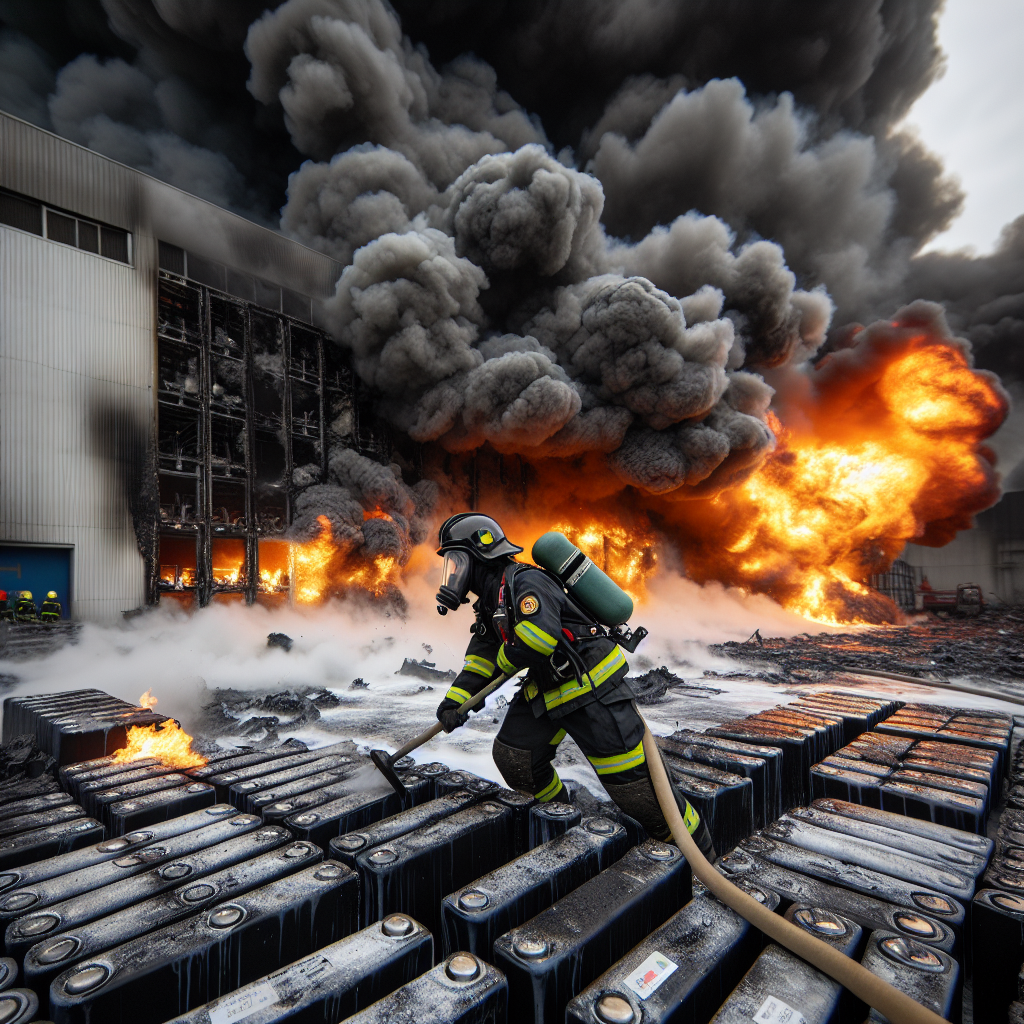
A big fire happened in a factory in South Korea, killing at least 22 people. The fire started on Monday morning in a city called Hwaseong, near Seoul. Firefighters worked for hours to stop the fire, using dry sand. They don't know yet why the batteries exploded, but lithium batteries can explode if they get too hot or are damaged.
The factory had about 35,000 battery cells on the second floor. The fire spread very fast, giving workers little time to get out. Firefighters used dry sand because water can make lithium fires worse. Even after the fire was put out, there is still a chance it could start again because of the chemicals.
South Korea makes a lot of lithium batteries for things like electric cars and laptops. The bodies of the people who died are badly burned, making it hard to know who they are. Eight people were also hurt in the fire, and two of them are very seriously injured.
Original news source: Exploding batteries spark deadly S Korea factory fire (BBC)
🎧 Listen:
📖 Vocabulary:
Group or Classroom Activities
Warm-up Activities:
– News Summary
Instructions: In pairs, students will read the article and write a summary of the main points in their own words. They should focus on key details such as the location of the fire, the cause, and the number of casualties. Afterward, they can share their summaries with the class.
– Vocabulary Pictionary
Instructions: Divide the class into teams. One person from each team will come to the front of the class and be shown a vocabulary word from the article. They must then draw a picture on the board to represent the word, while their team members try to guess what it is. The team that guesses correctly earns a point.
– Headline Creation
Instructions: In small groups, students will brainstorm and create a catchy headline for the news article. They should aim to capture the main idea and intrigue the reader. Each group will present their headline to the class and explain their reasoning behind it.
– Think-Pair-Share
Instructions: Students will individually think about and write down their opinions on the following question: "Do you think lithium batteries are safe? Why or why not?" They will then pair up with a classmate and share their thoughts, discussing any similarities or differences in their opinions. Finally, some pairs can share their opinions with the whole class.
– Future Predictions
Instructions: In pairs, students will discuss and make predictions about the future of lithium batteries. They can consider questions such as: "How do you think battery safety can be improved?" or "What other uses for lithium batteries might we see in the future?" Each pair will share their predictions with the class.
🤔 Comprehension Questions:
A big fire happened in a factory in South Korea.
The fire started in a city called Hwaseong, near Seoul.
Firefighters used dry sand to try to stop the fire.
Lithium batteries can explode if they get too hot or are damaged.
The battery cells were on the second floor of the factory.
Firefighters used dry sand because water can make lithium fires worse.
South Korea makes things like electric cars and laptops with lithium batteries.
🎧✍️ Listen and Fill in the Gaps:
A big happened in a factory in Korea, killing at least 22 people. The fire started on Monday morning in a city called Hwaseong, near . Firefighters worked for hours to stop the fire, using dry sand. They don't know yet why the exploded, but lithium batteries can explode if they get too hot or are . The had about 35,000 battery cells on the second floor. The fire spread very fast, giving workers little time to get out. Firefighters used dry because water can make worse. Even after the fire was put out, there is still a chance it could start again because of the chemicals. South Korea makes a lot of lithium batteries for things like cars and laptops. The of the people who died are badly , making it hard to know who they are. Eight people were also hurt in the fire, and two of them are very seriously injured.
💬 Discussion Questions:
1. What is a factory?
2. How would you feel if you were working in the factory when the fire started?
3. Do you like using lithium batteries? Why or why not?
4. What do you think caused the batteries to explode in the factory?
5. How do you think the firefighters felt while they were trying to stop the fire?
6. What is a lithium battery used for?
7. How would you feel if you were one of the injured people in the fire?
8. Do you think it's important for factories to have safety measures in place? Why or why not?
9. How do you think the families of the people who died in the fire feel?
10. What would you do if you saw a fire in a building?
11. Do you think the fire could have been prevented? Why or why not?
12. How do you think the community near the factory is affected by the fire?
Individual Activities
📖💭 Vocabulary Meanings:
Click a dot next to a word, then click the dot next to its meaning to draw a line connecting them.
Words
Meanings
🔡 Multiple Choice Questions:
🕵️ True or False Questions:
📝 Write a Summary:
Write a summary of this news article in two sentences.
Check your writing now with the best free AI for English writing!