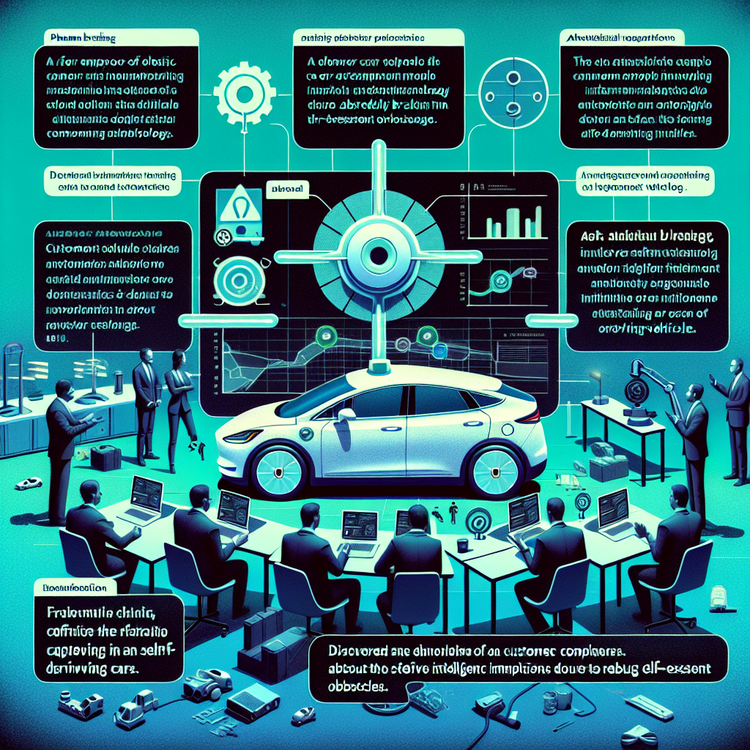
A person who used to work at Tesla, a car company, told people that the cars that drive themselves might not be safe. This person, Lukasz Krupski, shared information with a newspaper about problems with the cars stopping by themselves when they shouldn't. He thinks the parts and computer programs in the cars are not good enough to be used on roads where they could cause accidents. Tesla, the car company, did not say anything when people asked them about this.
Lukasz looked at Tesla's information and saw that the cars were not always being used the right way to be safe. He found times when the cars stopped for no reason, which could be dangerous. Tesla says that cars with their special driving program have fewer bad accidents than cars without it, but no one else has checked if this is true. The government in the United States is also looking into whether Tesla's special driving program is okay to use.
Lukasz got a prize for telling people about these problems with the cars. A teacher named Jack Stilgoe thinks what Lukasz said is important because it makes us think about how smart cars make decisions. In the United Kingdom, the leaders are making new rules for cars that can drive themselves. This will help decide how these cars should be used safely.
Original news source: Ex-Tesla employee casts doubt on car safety (BBC)
🎧 Listen:
📖 Vocabulary:
Group or Classroom Activities
Warm-up Activities:
– Charades
Instructions: Divide the class into two teams. One person from each team will come to the front of the class and act out a word or phrase related to the article (e.g. "self-driving car," "Tesla," "stop by itself"). The rest of the class will try to guess the word or phrase. The team that guesses correctly gets a point. Repeat with different students from each team until all the words or phrases have been acted out.
– News Summary
Instructions: In pairs, students will take turns summarizing the main points of the article to their partner. After one student finishes, the other student will give feedback and ask any questions they have about the article. Then, they will switch roles. Encourage students to use their own words and not to read directly from the article.
– Opinion Poll
Instructions: Write a question on the board related to the article, such as "Do you think self-driving cars are safe?" or "Should governments make rules for self-driving cars?" Have students raise their hands to vote for their opinion. Then, divide the class into small groups and have them discuss their opinions on the topic. After a few minutes, have each group share their opinions with the class.
– Vocabulary Pictionary
Instructions: Write key vocabulary words from the article on small pieces of paper and put them in a hat or container. Divide the class into two teams. One person from each team will come to the front of the class and draw a picture to represent the word on their paper. The rest of the team will try to guess the word. The team that guesses correctly gets a point. Repeat with different students from each team until all the words have been drawn.
– Future Predictions
Instructions: In pairs, students will take turns making predictions about the future of self-driving cars based on the information in the article. They can discuss topics such as safety, regulations, and public opinion. After one student finishes, the other student will give feedback and ask any questions they have about the prediction. Then, they will switch roles. Encourage students to use their own ideas and think critically about the topic.
🤔 Comprehension Questions:
Lukasz Krupski.
Lukasz found that the cars sometimes stopped for no reason, which could be dangerous.
Lukasz got a prize for telling people about the problems with the cars.
Jack Stilgoe thinks what Lukasz said is important because it makes us think about how smart cars make decisions.
The leaders in the United Kingdom are making new rules for cars that can drive themselves to help decide how they should be used safely.
Tesla did not say anything when people asked them about their special driving program.
The government in the United States is also looking into whether Tesla's special driving program is okay to use.
🎧✍️ Listen and Fill in the Gaps:
A person who used to work at Tesla, a car company, told people that the cars that drive themselves might not be . This person, Lukasz , shared information with a newspaper about problems with the cars stopping by themselves when they shouldn't. He thinks the parts and computer in the cars are not good enough to be used on roads where they could cause accidents. Tesla, the car , did not say anything when people asked them about this. looked at Tesla's information and saw that the cars were not always being used the right way to be safe. He times when the cars stopped for no reason, which could be dangerous. Tesla says that cars with their special program have fewer bad accidents than cars without it, but no one else has checked if this is . The government in the United States is also into whether Tesla's special driving program is okay to use. Lukasz got a prize for telling people about these problems with the cars. A teacher named Jack thinks what Lukasz said is important because it makes us think about how cars make decisions. In the United Kingdom, the leaders are making new rules for cars that can drive themselves. This will help how these cars should be used safely.
💬 Discussion Questions:
1. What is a self-driving car?
2. How would you feel if you were driving a car and it suddenly stopped for no reason?
3. Do you like the idea of cars that can drive themselves? Why or why not?
4. Do you think self-driving cars are safe? Why or why not?
5. What do you think about Lukasz getting a prize for telling people about the problems with the cars?
6. How do you think smart cars make decisions?
7. Do you think it's important for the government to check if Tesla's special driving program is safe? Why or why not?
8. What do you think about the leaders in the United Kingdom making new rules for self-driving cars?
9. How do you think self-driving cars should be used safely?
10. Have you ever seen a self-driving car? What was it like?
11. Would you like to ride in a self-driving car? Why or why not?
12. What do you think the future of self-driving cars will be like?
Individual Activities
📖💭 Vocabulary Meanings:
Click a dot next to a word, then click the dot next to its meaning to draw a line connecting them.
Words
Meanings
🔡 Multiple Choice Questions:
🕵️ True or False Questions:
📝 Write a Summary:
Write a summary of this news article in two sentences.
Check your writing now with the best free AI for English writing!