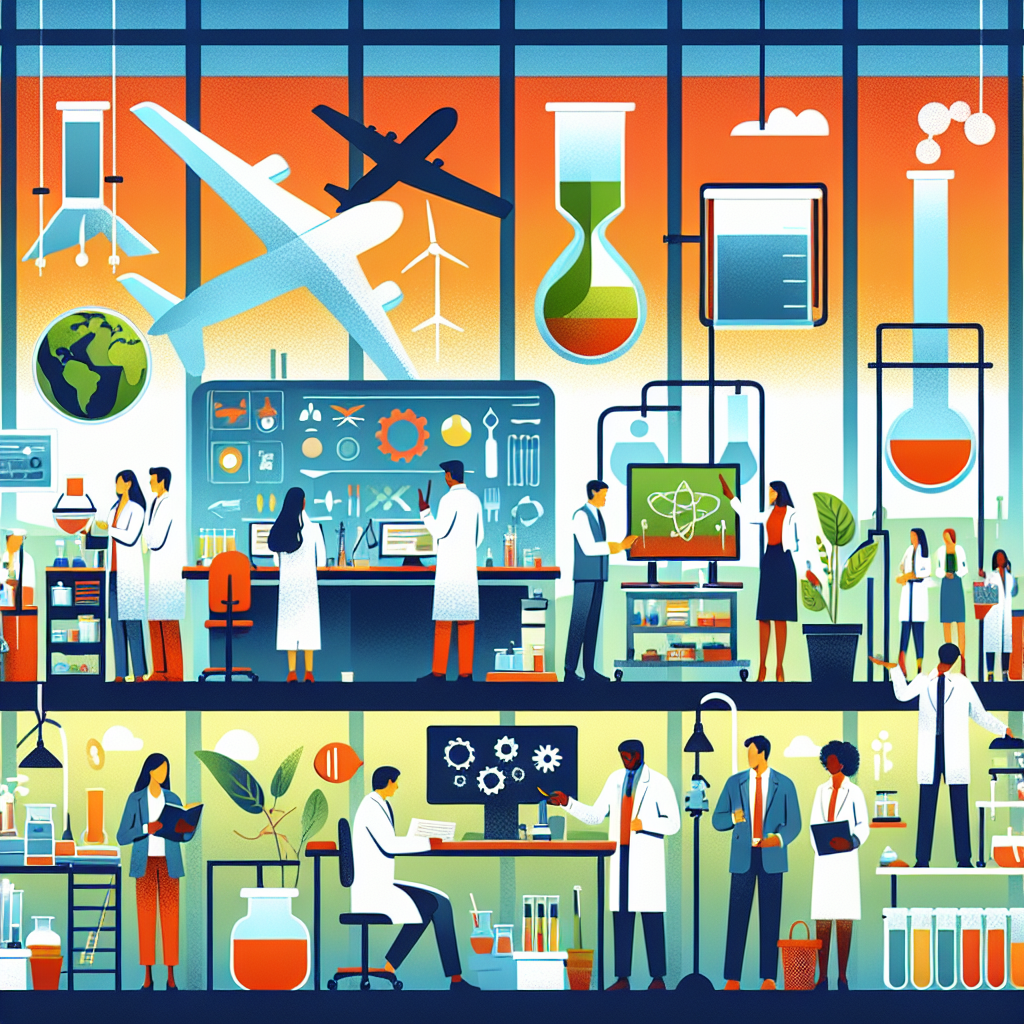
A researcher named Ihab Ahmed is working on a special project at Sheffield University. He is testing a small jet engine that runs on a new type of fuel called synthetic sustainable aviation fuels (SAF). These fuels are made from things like old cooking oils and farm waste. Using SAF can help airplanes be better for the environment by reducing pollution.
Airplanes need to find new fuels because more people are flying, and we need to protect the planet. New planes use less fuel, but scientists are also looking at other ideas like hydrogen and electric power. Right now, SAF is a good option for planes we already have. Some airlines, like Virgin Atlantic, have even flown planes using only SAF, but there are still problems like not having enough fuel and it being more expensive.
Governments and companies are trying to make SAF more popular by helping to make more of it and making it cheaper. They are looking at different ways to produce SAF, like using plants or special chemical processes. Even though there are still some challenges, people are working together to make air travel better for the environment. This gives hope that flying can be greener in the future.
Original news source: Will sustainable aviation fuels take off? (BBC)
🎧 Listen:
📖 Vocabulary:
Group or Classroom Activities
Warm-up Activities:
– Charades
Instructions: Write down some key vocabulary words from the article on small pieces of paper. Have students pick a word and act it out without speaking while the rest of the class guesses what word they are representing.
– News Summary
Instructions: Divide the class into small groups and have each group summarize the article in their own words. Encourage them to focus on the main idea and key points. Then, have each group present their summary to the class.
– Opinion Poll
Instructions: Create a set of questions related to the topic of sustainable aviation fuels and air travel. Have students walk around the classroom and ask their classmates these questions, recording their responses. After gathering data, have a group discussion on the opinions and views shared.
– Vocabulary Pictionary
Instructions: Select some key vocabulary words from the article and write them on the board. Divide the class into teams and have one student from each team come up to the board. They must draw the word while their team tries to guess what it is. This helps reinforce vocabulary learning in a fun and engaging way.
– Think-Pair-Share
Instructions: Pose a question related to the article to the class. Have students take a few minutes to think about their response individually. Then, pair them up with a classmate to discuss their thoughts. Finally, open up the discussion to the whole class, allowing students to share their ideas and opinions.
🤔 Comprehension Questions:
Ihab Ahmed is the researcher working on the special project.
The small jet engine is running on synthetic sustainable aviation fuels (SAF).
Airplanes need new fuels to protect the planet from pollution caused by flying.
Scientists are also looking at using hydrogen and electric power for airplanes.
Virgin Atlantic is the airline that has flown planes using only SAF.
Governments and companies are trying to make SAF more popular by making more of it and making it cheaper.
People working together to find ways to make air travel better for the environment gives hope that flying can be greener in the future.
🎧✍️ Listen and Fill in the Gaps:
A researcher named Ihab Ahmed is working on a special at Sheffield University. He is testing a small jet engine that runs on a new type of fuel called synthetic aviation fuels (SAF). These fuels are from things like old cooking oils and farm waste. Using SAF can help airplanes be better for the environment by reducing . Airplanes need to find new fuels because more people are flying, and we need to protect the planet. New planes use less fuel, but scientists are also looking at other like and electric power. Right now, SAF is a good option for planes we already . Some airlines, like Virgin Atlantic, have even flown planes using SAF, but there are still problems like not having enough fuel and it being more expensive. Governments and companies are to make SAF more popular by helping to make more of it and making it cheaper. They are looking at different ways to SAF, like using plants or special chemical processes. Even though there are still some challenges, people are working together to air better for the environment. This gives hope that flying can be greener in the future.
💬 Discussion Questions:
1. What do you think about using old cooking oils and farm waste to make fuel for airplanes?
2. How would you feel if airplanes started using hydrogen or electric power instead of regular fuel?
3. Do you like the idea of airplanes being better for the environment by using new types of fuel?
4. What is a sustainable aviation fuel (SAF) and why is it important?
5. How do you think using SAF can help protect the planet?
6. Do you think it's a good idea for governments and companies to work together to make SAF more popular?
7. Why do you think some airlines have already flown planes using only SAF?
8. How do you think scientists can make sure there is enough SAF for all the airplanes in the world?
9. What are some other ways besides SAF that airplanes can become more environmentally friendly?
10. Why do you think it's important for air travel to become greener in the future?
11. How would you feel if you knew that flying on an airplane was helping the environment instead of hurting it?
12. Do you think it's possible for air travel to be completely eco-friendly one day? Why or why not?
Individual Activities
📖💭 Vocabulary Meanings:
Click a dot next to a word, then click the dot next to its meaning to draw a line connecting them.
Words
Meanings
🔡 Multiple Choice Questions:
🕵️ True or False Questions:
📝 Write a Summary:
Write a summary of this news article in two sentences.
Check your writing now with the best free AI for English writing!