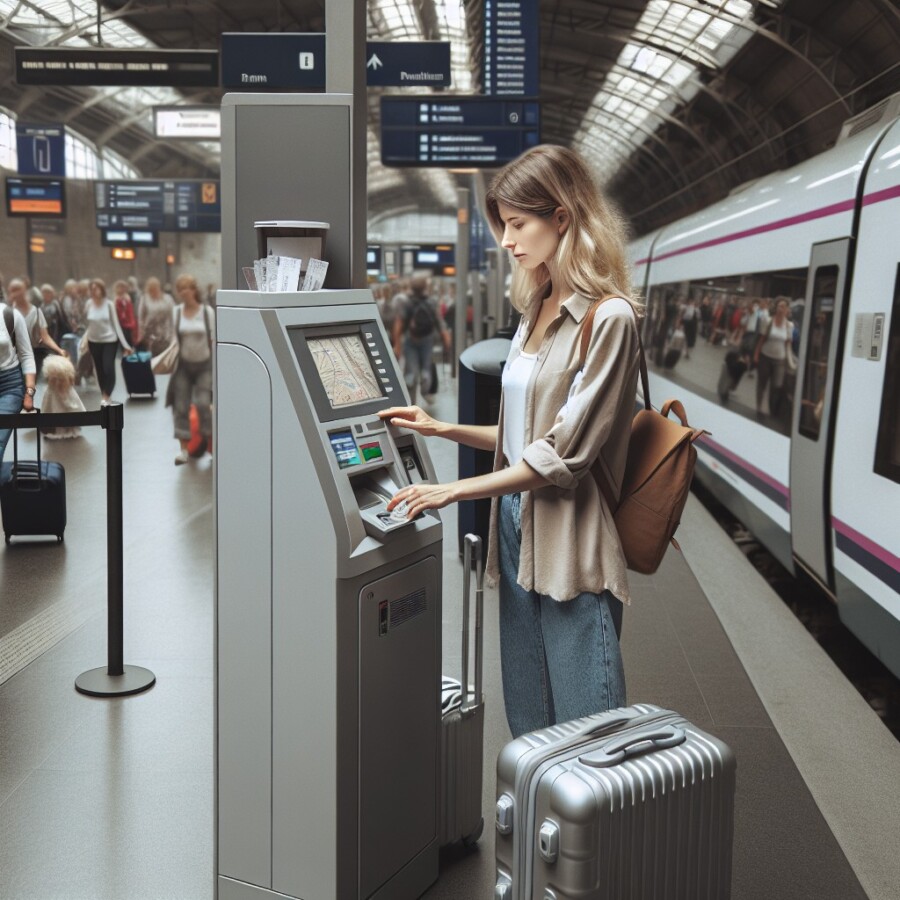
Some ticket machines at train stations are making people pay a lot more for tickets than if they bought them online. On average, tickets from machines are 50% more expensive than online. When people buy tickets from machines, they often can't find the cheapest options. There was a plan to close many places where you can buy tickets at stations, but people didn't like that idea, so it didn't happen.
A group called Which? checked prices at 15 train stations and found big differences. They looked at 75 trips and saw that some tickets from machines cost more than twice as much as online. The machines didn't offer cheaper tickets that you could buy before your trip or special deals for splitting your trip into parts. This means that people who can't use the internet or don't have a ticket office at their station might pay too much.
The Rail Delivery Group, which works for train companies, knows they need to make ticket prices better. They are trying to make it easier to understand prices and let people pay as they go with a special card. They want to keep making things better for people who ride trains. In December, the government said that some train ticket prices would go up in March, but the increase is smaller than before and is happening later than usual. These tickets that are going up in price are the kind that a lot of people use, like for going to work every day.
Original news source: Train ticket machines charging double online price (BBC)
🎧 Listen:
📖 Vocabulary:
Group or Classroom Activities
Warm-up Activities:
– News Summary
Instructions:
1. Provide a brief summary of the article to the students.
2. Divide the students into pairs or small groups.
3. Each group has to write a short news summary of the article, including the main points and key information.
4. After a set time, have each group share their summaries with the class.
– Opinion Poll
Instructions:
1. Divide the students into pairs or small groups.
2. Ask the students to discuss their opinions on the topic of train ticket prices and buying tickets from machines.
3. Each group should come up with at least three questions related to the topic.
4. Have each group take turns asking their questions to the rest of the class and record the responses.
5. Discuss the different opinions and reasons behind them as a class.
– Vocabulary Pictionary
Instructions:
1. Choose 5-10 vocabulary words from the article.
2. Divide the students into pairs or small groups.
3. Give each group a vocabulary word and ask them to draw a picture that represents the word.
4. The other groups have to guess the word based on the drawing.
5. Repeat with the remaining vocabulary words.
– Keyword Taboo
Instructions:
1. Choose 5-10 important keywords from the article.
2. Divide the students into pairs or small groups.
3. Give each group a keyword and ask them to describe it without using the word itself.
4. The other groups have to guess the keyword based on the description.
5. Repeat with the remaining keywords.
– Pros and Cons
Instructions:
1. Divide the students into pairs or small groups.
2. Ask the students to discuss the pros and cons of buying train tickets from machines.
3. Each group should come up with a list of at least three advantages and three disadvantages.
4. After a set time, have each group share their lists with the class.
5. Discuss the different perspectives and reasons behind them as a class.
🤔 Comprehension Questions:
🎧✍️ Listen and Fill in the Gaps:
Some ticket machines at train stations are making people pay a lot for tickets than if they bought them online. On average, tickets from machines are 50% more than online. When people buy tickets from machines, they often can't find the cheapest options. There was a plan to close places where you can buy tickets at stations, but people didn't like that idea, so it didn't . A group called Which? checked prices at 15 train stations and found big differences. They looked at 75 trips and saw that some from machines cost more than twice as much as online. The machines didn't cheaper tickets that you could buy before your trip or special deals for splitting your into . This means that people who can't use the internet or don't have a ticket office at their station might pay too much. The Rail Delivery Group, which works for train companies, knows they need to ticket prices better. They are trying to make it easier to understand prices and let people pay as they go with a special card. They to keep making better for people who ride . In December, the government said that some train ticket prices would go up in March, but the increase is smaller than before and is happening later than usual. These tickets that are going up in price are the kind that a lot of people use, like for going to work every day.
💬 Discussion Questions:
1. What is a ticket machine?
2. How would you feel if you had to pay more for a train ticket from a machine than if you bought it online?
3. Do you like the idea of closing places where you can buy tickets at train stations? Why or why not?
4. Do you think it's fair that some people have to pay more for train tickets because they can't use the internet or don't have a ticket office at their station? Why or why not?
5. What is the Rail Delivery Group?
6. How do you think train companies can make ticket prices better?
7. Do you think it's a good idea to have a special card to pay for train tickets? Why or why not?
8. How do you feel about train ticket prices going up in March?
9. Do you use train tickets to go to work every day? Why or why not?
10. How would you feel if train ticket prices went up for the kind of tickets you use? Why?
11. What other ways do you think train companies could improve their services for people who ride trains?
12. Do you think it's important for train companies to keep making things better for people who ride trains? Why or why not?
Individual Activities
📖💭 Vocabulary Meanings:
Click a dot next to a word, then click the dot next to its meaning to draw a line connecting them.
Words
Meanings
🔡 Multiple Choice Questions:
🕵️ True or False Questions:
📝 Write a Summary:
Write a summary of this news article in two sentences.
Check your writing now with the best free AI for English writing!