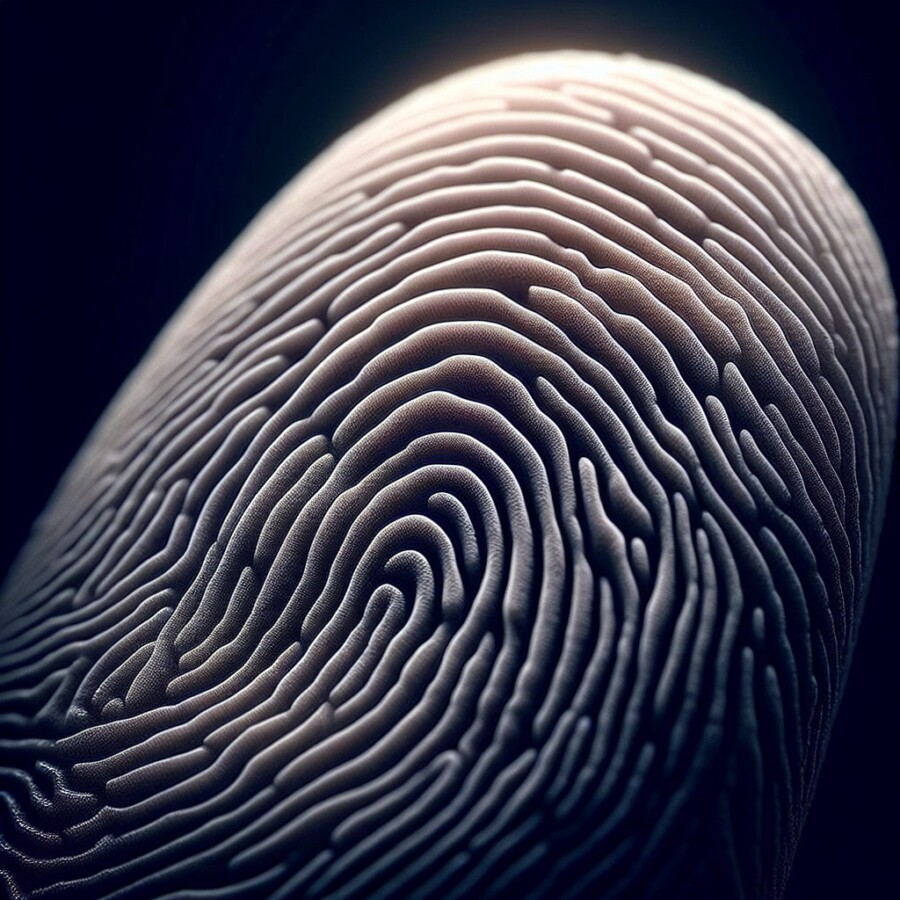
New research from Columbia University challenges the idea that every fingerprint is completely unique. The university's team used a special computer program to analyze 60,000 fingerprints and see if prints from different fingers belonged to the same person. The program was able to do this with about 75-90% accuracy, but the researchers aren't exactly sure how it worked. Instead of focusing on the little details of the ridges, like where they end or split, the program looked at the way the ridges were arranged in the middle of the finger. This is different from how forensic experts usually analyze fingerprints.
This study could have an impact on things like biometrics (using fingerprints to unlock phones, for example) and forensic science (solving crimes using fingerprints). Right now, if the police find a thumbprint at one crime scene and an index finger print at another, they can't say for sure if they're from the same person. But the computer program might be able to figure that out. The researchers say more research is needed before the program can be used in court, but it could be helpful for starting investigations.
Dr. Sarah Fieldhouse, who is an expert in forensic science, has some questions about the computer program. She wonders if the program's way of identifying fingerprints stays the same when the skin moves or changes over time. The researchers themselves aren't exactly sure how the program works, which is often the case with computer programs that use artificial intelligence.
The study from Columbia University has been reviewed by other experts and will be published in a scientific journal. But it's important to remember that these findings might not change much in real-life criminal investigations right now. Most people still believe that fingerprints are unique to each person.
Original news source: Our fingerprints may not be unique, claims AI (BBC)
🎧 Listen:
📖 Vocabulary:
Group or Classroom Activities
Warm-up Activities:
– News Summary
Instructions: Have students read the article individually or in pairs. Then, ask them to write a summary of the article in their own words, including the main points and any relevant details. After they finish, have them share their summaries with a partner or the whole class.
– Opinion Poll
Instructions: Divide the class into small groups. Give each group a list of statements related to the article (e.g. "Fingerprints are completely unique to each person"). Have the groups discuss each statement and indicate whether they agree or disagree. After the discussion, ask each group to share their opinions and reasons with the rest of the class.
– Vocabulary Pictionary
Instructions: Prepare a list of vocabulary words from the article (e.g. biometrics, forensic science, artificial intelligence). Divide the class into pairs or small groups. Give each group a word and have them draw a picture to represent the word. The other groups must guess the word based on the drawing. Encourage the use of English during the guessing process.
– Pros and Cons
Instructions: Divide the class into two groups. Assign one group to come up with the pros of using fingerprints as a form of identification and the other group to come up with the cons. Give them a few minutes to brainstorm and then have each group share their ideas. Facilitate a class discussion to explore different perspectives on the topic.
– Future Predictions
Instructions: Ask students to imagine how fingerprint technology might evolve in the future. Have them write down their predictions individually or in pairs. Then, have them share their predictions with the class and discuss the potential impact on society, privacy, and security. Encourage creativity and critical thinking.
🤔 Comprehension Questions:
The researchers at Columbia University used a special computer program to analyze the fingerprints.
The computer program was able to determine if prints from different fingers belonged to the same person with about 75-90% accuracy.
The program analyzed the fingerprints by looking at the way the ridges were arranged in the middle of the finger, instead of focusing on the little details of the ridges like where they end or split.
This research could have an impact on biometrics, such as using fingerprints to unlock phones, and forensic science, such as solving crimes using fingerprints.
The police currently can't determine if fingerprints from different crime scenes are from the same person because they don't have a reliable method to compare the prints and make a definitive match.
Dr. Sarah Fieldhouse wonders if the program's way of identifying fingerprints stays the same when the skin moves or changes over time.
The researchers are unsure about how the program works because, like many computer programs that use artificial intelligence, the inner workings of the program are often complex and difficult to fully understand.
Most people still believe that fingerprints are unique to each person.
🎧✍️ Listen and Fill in the Gaps:
New research from Columbia challenges the idea that every fingerprint is completely unique. The university's team used a special to analyze 60,000 fingerprints and see if prints from different belonged to the same person. The program was able to do this with about 75-90% accuracy, but the researchers aren't exactly sure how it worked. Instead of focusing on the little details of the ridges, like where they end or split, the program looked at the way the ridges were arranged in the middle of the finger. This is different from how experts usually analyze fingerprints. This could have an impact on things like biometrics (using fingerprints to unlock , for example) and forensic science (solving crimes using fingerprints). Right now, if the police find a thumbprint at one crime scene and an finger print at another, they can't say for sure if they're from the same person. But the computer program might be able to that out. The researchers say more research is needed before the program can be used in court, but it could be helpful for investigations. Dr. Sarah Fieldhouse, who is an expert in forensic science, has some questions about the computer program. She wonders if the program's way of identifying fingerprints stays the same when the skin or over time. The researchers themselves aren't exactly sure how the program , which is often the case with computer programs that use intelligence. The study from Columbia University has been reviewed by other and will be published in a scientific . But it's important to remember that these findings might not change much in real-life criminal investigations right now. Most people still believe that fingerprints are unique to each person.
💬 Discussion Questions:
1. What is biometrics and how is it used in everyday life?
2. How would you feel if your phone could only be unlocked using your fingerprint?
3. Do you think it's important for fingerprints to be completely unique? Why or why not?
4. Have you ever seen a crime show or movie where fingerprints were used to solve a case? What did you think about it?
5. What do you think about using fingerprints as a form of identification? Do you think it's reliable?
6. How do you think this new research could impact forensic science in the future?
7. Do you think it's a good idea to use a computer program to analyze fingerprints in criminal investigations? Why or why not?
8. Have you ever had your fingerprints taken before? If so, why?
9. What do you think about the idea that fingerprints might not be completely unique?
10. How do you think this new research could change the way crimes are solved in the future?
11. Do you think it's important for scientists to fully understand how a computer program works before using it in court? Why or why not?
12. Have you ever heard of artificial intelligence before? What do you know about it?
13. How do you think this new research could impact the field of biometrics?
14. Do you think it's necessary for the researchers to conduct more studies before using the computer program in court? Why or why not?
15. What are some other ways that fingerprints could be used in everyday life, besides unlocking phones or solving crimes?
Individual Activities
📖💭 Vocabulary Meanings:
Click a dot next to a word, then click the dot next to its meaning to draw a line connecting them.
Words
Meanings
🔡 Multiple Choice Questions:
🕵️ True or False Questions:
📝 Write a Summary:
Write a summary of this news article in two sentences.
Check your writing now with the best free AI for English writing!