

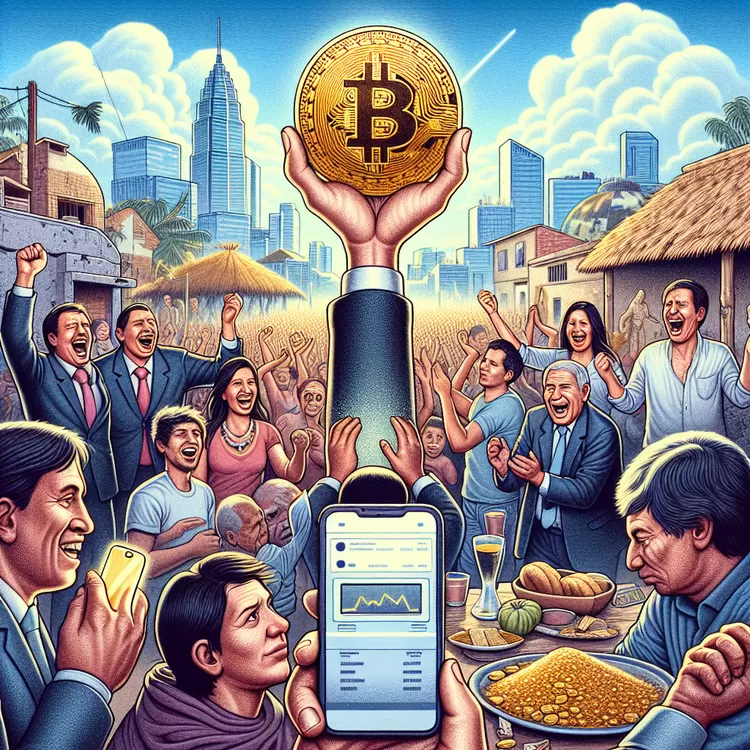
El Salvador's president, Nayib Bukele, is really happy about his investment in Bitcoin. He used more than $120 million of the country's money to buy Bitcoin, and now the value of his investment is worth more than what he paid for it. Bukele wants his critics to take back what they said and say sorry for doubting him. But some experts say it's too early to celebrate this risky bet on Bitcoin.
Bukele recently stepped down as president to campaign for a second term, which some people don't like. He's expected to win because he's popular in the country. According to a website that keeps track of his Bitcoin, the coins he bought are now worth more than what he paid. If he sold them now, he could make about $3.7 million. But we can't be sure about these numbers because the people who made the website didn't comment on it.
Some people are cheering for Bukele and his Bitcoin success, but some experts say it's not as important as he thinks. The $120 million spent on buying Bitcoin is just a part of the money used to promote Bitcoin in El Salvador since it became legal money. Critics say the government also spent money on making an app called Chivo Wallet, putting up ATMs that don't work, giving $30 to people over 18, and organizing events and propaganda. When you look at all these expenses, it's actually a negative result.
Another thing is that not many people in El Salvador are using Bitcoin, even though the government spent a lot of money on it. A BBC documentary found that most people aren't using the digital money. Experts say the money spent on Bitcoin could have been used to help poor people and make sure everyone has enough food to eat.
People are also worried about how the government is spending money on Bitcoin and what Bukele's reserves are. There's no public group keeping track of this information, and critics say Bukele's tweets aren't enough. Even some Bitcoin fans think there should be more transparency.
In the end, President Bukele is happy about his Bitcoin investment, but experts say it's too early to know what will happen in the long run. Bitcoin hasn't been as successful in El Salvador as people thought, and there are concerns about how the government is spending money and not being transparent.
Original news source: Bitcoin rally: Is El Salvador's Bitcoin bet paying off? (BBC)
🎧 Listen:
📖 Vocabulary:
Group or Classroom Activities
Warm-up Activities:
– News Summary
Instructions:
1. Divide the class into pairs or small groups.
2. Provide each group with a copy of the article.
3. Instruct the groups to read the article and summarize the main points in a paragraph or two.
4. After a designated amount of time, have each group share their summaries with the class.
5. Facilitate a discussion to compare and contrast the different summaries.
– Opinion Poll
Instructions:
1. Divide the class into pairs or small groups.
2. Assign each group a specific topic related to the article, such as "Government Spending on Bitcoin" or "Bitcoin Adoption in El Salvador."
3. Instruct the groups to come up with a poll question related to their assigned topic.
4. Give the groups time to create their poll question and possible answer choices.
5. Have each group present their poll question to the class and conduct a mini-poll by having students vote on their preferred answer choice.
6. After each group presents, facilitate a discussion about the different poll results and encourage students to share their opinions.
– Vocabulary Pictionary
Instructions:
1. Write a list of key vocabulary words from the article on the board or on a handout.
2. Divide the class into pairs or small groups.
3. Instruct each group to choose a word from the list and draw a visual representation of it.
4. Give the groups a designated amount of time to draw their pictures.
5. After the time is up, have each group take turns showing their picture to the class while the other students try to guess the word.
6. Repeat the process with different words from the list.
– Pros and Cons
Instructions:
1. Divide the class into pairs or small groups.
2. Instruct each group to make a list of the pros and cons of President Bukele's investment in Bitcoin.
3. Give the groups a designated amount of time to create their lists.
4. After the time is up, have each group share their lists with the class.
5. Facilitate a discussion about the different pros and cons presented, encouraging students to share their own opinions and perspectives.
– Future Predictions
Instructions:
1. Divide the class into pairs or small groups.
2. Instruct each group to discuss and make predictions about the future of Bitcoin in El Salvador based on the information in the article.
3. Give the groups a designated amount of time to discuss and make their predictions.
4. After the time is up, have each group share their predictions with the class.
5. Facilitate a discussion about the different predictions, encouraging students to support their ideas with evidence from the article.
🤔 Comprehension Questions:
Bukele is happy about his investment in Bitcoin because the value of his investment is now worth more than what he paid for it.
Bukele used more than $120 million of the country's money to buy Bitcoin.
The current value of Bukele's Bitcoin investment is not mentioned in the article.
Some experts say it's too early to celebrate Bukele's Bitcoin investment because they believe it is a risky bet and the long-term outcome is still uncertain.
Bukele stepped down as president to campaign for a second term in office.
Bukele is expected to win a second term because he is popular in the country.
If Bukele sold his Bitcoin now, he could make about $3.7 million, according to the article.
Some people are critical of Bukele's Bitcoin investment because they believe the money could have been used to help poor people and address other important issues in the country. They also have concerns about the government's transparency in spending money on Bitcoin.
🎧✍️ Listen and Fill in the Gaps:
El Salvador's president, Nayib Bukele, is really happy about his investment in Bitcoin. He used more than $120 million of the 's money to buy Bitcoin, and now the of his investment is worth more than what he paid for it. Bukele wants his critics to take back what they said and say sorry for him. But some experts say it's too early to celebrate this bet on Bitcoin. Bukele recently stepped down as president to campaign for a second term, which some people don't like. He's expected to win because he's popular in the country. According to a website that keeps track of his , the coins he bought are now worth more than what he paid. If he sold them now, he could make about $3.7 million. But we can't be sure about these numbers because the who made the website didn't comment on it. Some people are cheering for Bukele and his Bitcoin , but some experts say it's not as as he thinks. The $120 million spent on buying Bitcoin is just a part of the money used to promote Bitcoin in El Salvador since it became legal money. Critics say the government also spent money on making an app called Chivo Wallet, putting up ATMs that don't work, giving $30 to people over 18, and events and propaganda. When you look at all these expenses, it's actually a negative . Another thing is that not many people in El are using Bitcoin, even though the spent a lot of money on it. A BBC documentary found that most people aren't using the digital money. Experts say the money spent on Bitcoin could have been used to help poor people and make sure everyone has enough food to eat. People are also worried about how the government is money on Bitcoin and what Bukele's are. There's no public group track of this information, and critics say Bukele's tweets aren't . Even some Bitcoin fans think there should be more transparency. In the end, President Bukele is happy about his Bitcoin investment, but experts say it's too early to know what will happen in the long run. Bitcoin hasn't been as successful in El Salvador as people thought, and there are concerns about how the government is spending money and not being transparent.
💬 Discussion Questions:
1. What is Bitcoin and why is it important?
2. How would you feel if you invested a lot of money in something and it turned out to be successful?
3. Do you think it's a good idea for a government to invest in Bitcoin? Why or why not?
4. What do you think about President Bukele using the country's money to buy Bitcoin?
5. How do you think the people who doubted President Bukele feel now that his Bitcoin investment is making money?
6. Do you like the idea of using Bitcoin as a legal currency? Why or why not?
7. What do you think about the government spending money on creating an app and putting up ATMs for Bitcoin?
8. How do you think the money spent on Bitcoin could have been used to help poor people?
9. What concerns do you have about the government spending money on Bitcoin without transparency?
10. How would you feel if you were a citizen of El Salvador and your government was investing in Bitcoin instead of helping people in need?
11. Do you think it's important for the government to be transparent about how they spend money? Why or why not?
12. What do you think about the fact that not many people in El Salvador are using Bitcoin, despite the government's efforts?
13. How do you think President Bukele's Bitcoin investment will affect his chances of winning a second term?
14. What other ways do you think the government could have used the money instead of investing in Bitcoin?
15. Do you think Bitcoin will continue to be successful in El Salvador? Why or why not?
Individual Activities
📖💭 Vocabulary Meanings:
Click a dot next to a word, then click the dot next to its meaning to draw a line connecting them.
Words
Meanings
🔡 Multiple Choice Questions:
🕵️ True or False Questions:
📝 Write a Summary:
Write a summary of this news article in two sentences.
Check your writing now with the best free AI for English writing!