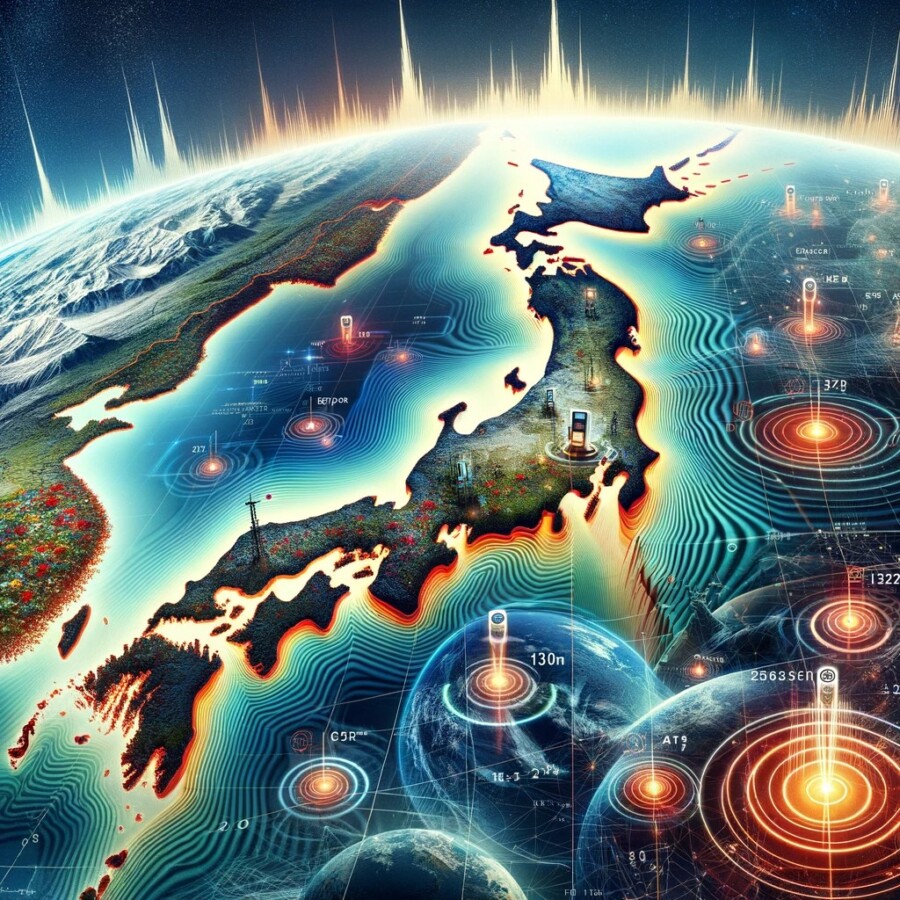
Japan is used to having big earthquakes, and the recent one was a big one. Japan has a bunch of GPS stations all over the country that can measure how much the ground moves during an earthquake. In this earthquake, the ground moved as much as 130cm to the west. Pictures taken from space also show that the ground went up because of the earthquake.
One good thing about the ground moving was that it made the tsunami waves smaller when they hit the coast. Even though the earthquake caused a lot of damage, not many people died compared to other countries. Japan is ready for earthquakes and has good buildings and people who know what to do during one. Japan also has a really good warning system that tells people on TV, radio, and cell phones when an earthquake is coming.
Scientists can't tell when or how big an earthquake will be, but Japan's warning system gives people a few seconds to get ready before the shaking starts. This helps with important things like stopping trains and opening doors at fire stations. People in Japan are also taught to "drop, cover, and hold on" during an earthquake. Because Japan is ready for earthquakes, not as many people get hurt compared to other places that have had big earthquakes.
Original news source: How Japan’s big quake shifted the land (BBC)
🎧 Listen:
📖 Vocabulary:
Group or Classroom Activities
Warm-up Activities:
– Charades
Instructions: Divide the class into small groups. Give each group a keyword related to the article (e.g. earthquake, tsunami, warning system). Each group must take turns acting out the keyword without using any words or sounds. The other groups have to guess the keyword within a certain time limit. The group that guesses correctly earns a point.
– News Summary
Instructions: Divide the class into pairs. Each pair must read the article and then write a summary of the main points in their own words. After a few minutes, have pairs share their summaries with the rest of the class. Encourage discussion and clarification of any misunderstood points.
– Opinion Poll
Instructions: Create a list of statements related to the article (e.g. "Japan's warning system is effective", "Earthquakes are natural disasters that cannot be prevented"). Have students individually rate their agreement with each statement on a scale of 1 to 5. Then, pair up students and have them discuss their ratings, explaining their reasons and trying to convince their partner to change their rating if they disagree.
– Vocabulary Pictionary
Instructions: Prepare a list of vocabulary words from the article (e.g. earthquake, tsunami, ground, damage). Divide the class into two teams. One person from each team takes turns drawing a word on the board while their team tries to guess the word within a certain time limit. The team that guesses correctly earns a point.
– Pros and Cons
Instructions: Divide the class into small groups. Give each group a topic related to the article (e.g. earthquake preparedness, warning systems). Each group must discuss the pros and cons of the topic and write them down. After a few minutes, have groups share their points with the rest of the class and facilitate a class discussion on the different perspectives.
🤔 Comprehension Questions:
Japan uses GPS stations all over the country to measure how much the ground moves during an earthquake.
Pictures taken from space show that the ground went up because of the earthquake.
The movement of the ground made the tsunami waves smaller when they hit the coast.
Japan is ready for earthquakes and has good buildings and people who know what to do during one.
Japan has a warning system that tells people on TV, radio, and cell phones when an earthquake is coming.
Scientists cannot predict when or how big an earthquake will be.
Japan's warning system gives people a few seconds to get ready before the shaking starts, allowing them to take necessary precautions such as stopping trains and opening doors at fire stations.
People in Japan are taught to "drop, cover, and hold on" during an earthquake to stay safe.
🎧✍️ Listen and Fill in the Gaps:
Japan is used to having big , and the recent one was a big one. Japan has a bunch of GPS stations all over the country that can measure how much the ground moves during an . In this earthquake, the ground as much as 130cm to the west. taken from space also show that the ground went up because of the earthquake. One good thing about the moving was that it made the tsunami waves smaller when they hit the coast. Even though the earthquake a lot of , not many people died to other countries. Japan is ready for earthquakes and has good buildings and who know what to do during one. Japan also has a really good warning that people on TV, radio, and cell phones when an earthquake is . Scientists can't tell when or how big an earthquake will be, but Japan's warning system gives people a few seconds to get ready before the shaking starts. This with things like stopping trains and opening doors at fire . in Japan are also taught to "drop, cover, and hold on" during an earthquake. Because Japan is ready for earthquakes, not as many people get hurt compared to other places that have had big earthquakes.
💬 Discussion Questions:
1. What is a GPS station and what does it do during an earthquake?
2. How would you feel if you experienced a big earthquake like the one in Japan?
3. Do you think it's important for a country to be prepared for earthquakes? Why or why not?
4. Have you ever experienced an earthquake? If so, what was it like?
5. What do you think are some important things to do during an earthquake?
6. How do you think Japan's warning system helps during an earthquake?
7. Do you think it's better to have a warning system that gives a few seconds of preparation or one that gives more time? Why?
8. Why do you think Japan's buildings are able to withstand earthquakes better than buildings in other countries?
9. Would you feel safer living in a country with a good warning system for earthquakes? Why or why not?
10. How do you think the ground moving during an earthquake can affect the size of tsunami waves?
11. What do you think are some challenges of predicting earthquakes?
12. Do you like the idea of having a warning system that sends alerts to your phone during an earthquake? Why or why not?
13. How do you think the "drop, cover, and hold on" technique can help during an earthquake?
14. Do you think other countries should learn from Japan's preparedness for earthquakes? Why or why not?
15. Why do you think Japan has a history of experiencing big earthquakes?
Individual Activities
📖💭 Vocabulary Meanings:
Click a dot next to a word, then click the dot next to its meaning to draw a line connecting them.
Words
Meanings
🔡 Multiple Choice Questions:
🕵️ True or False Questions:
📝 Write a Summary:
Write a summary of this news article in two sentences.
Check your writing now with the best free AI for English writing!