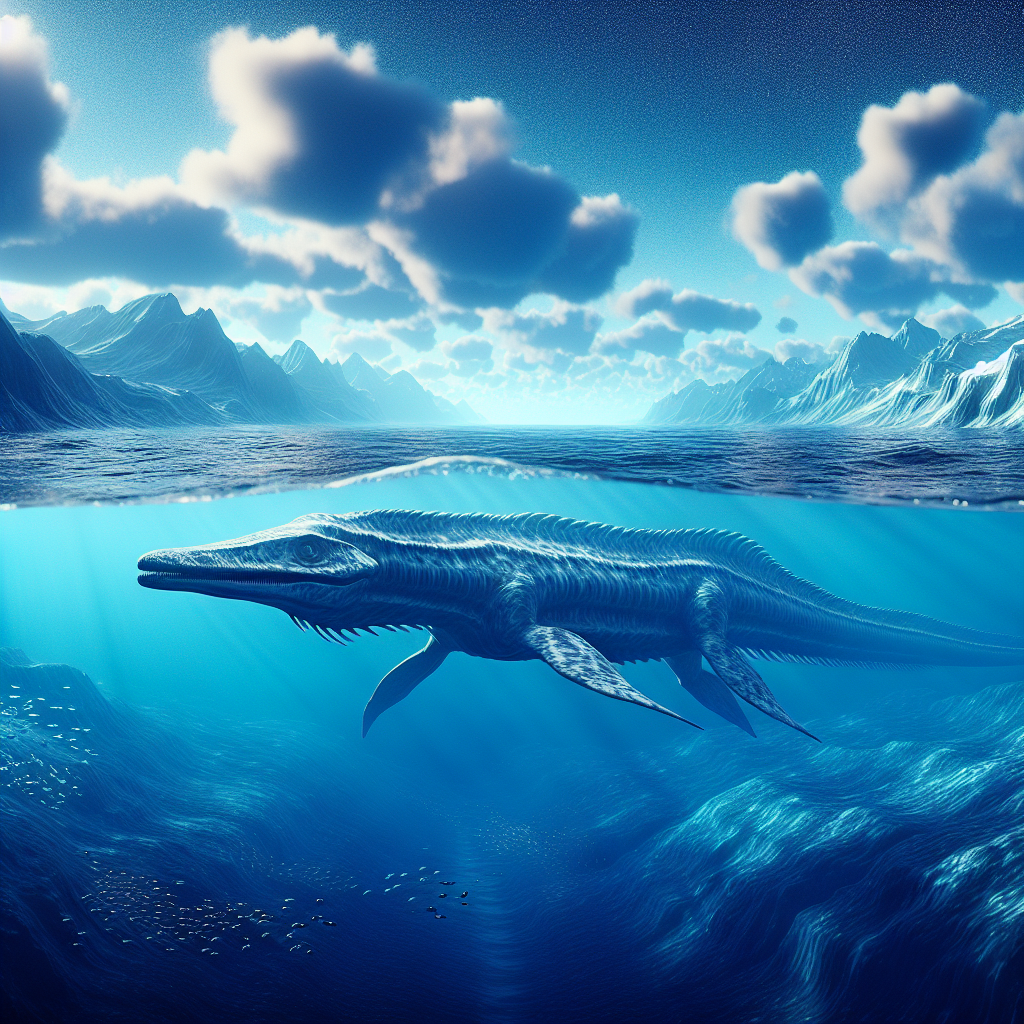
Scientists have found the biggest sea reptile ever known. This huge creature lived about 202 million years ago and was longer than two buses put together. In 2016, a fossil hunter found the fossilized jawbone of this reptile on a beach in Somerset, UK. Then, in 2020, another jawbone was found by a dad and his daughter. Experts think these fossils belong to two giant ichthyosaurs, which could have been as long as 25 meters. That's even bigger than a pliosaur, which was featured in a David Attenborough documentary.
Dr. Dean Lomax, a scientist who studies fossils, says that the size of the jawbones suggests that the whole animal would have been about 25 meters long, which is about the same size as a blue whale. But we need more evidence, like a complete skull and skeleton, to know for sure. So far, we've only found a few pieces. The giant ichthyosaur died out a long time ago, and the ones that came after it were never as big.
In 2016, a guy named Paul de la Salle found the first jawbone while he was looking for fossils on a beach in Somerset. He showed it to Dr. Dean Lomax, and they thought it might be something important. They published their findings in 2018, but they wanted more evidence to figure out how big the creature was. Then, in 2020, a dad and his daughter found another jawbone 10 kilometers away, which confirmed their suspicions.
The team, along with their family members, kept searching for more pieces of the second jawbone. They found the last piece in 2022. This helped them estimate the size of the creature. The scientists have now decided that this huge animal is a new kind of ichthyosaur. They named it Ichthyotitan severnensis, which means "giant fish lizard of the Severn." The jawbone found by Paul de la Salle has been studied for three years and will soon be shown at the Bristol Museum and Art Gallery.
This discovery shows how important it is to have amateur fossil collectors. Dr. Dean Lomax says that anyone, no matter how much they know about fossils, can make amazing discoveries if they're patient and observant. He thinks that families and individuals from all different backgrounds can help scientists learn more about paleontology.
Original news source: Prehistoric sea reptile 'twice as long as bus' (BBC)
🎧 Listen:
📖 Vocabulary:
Group or Classroom Activities
Warm-up Activities:
– News Summary
Instructions: Divide the students into pairs. Give each pair a copy of the article. Ask them to read the article and write a summary of the main points in their own words. After a few minutes, have the pairs share their summaries with the class.
– Opinion Poll
Instructions: Divide the students into small groups. Ask each group to discuss and come up with their opinions on the following question: "Do you think amateur fossil collectors are important for scientific discoveries? Why or why not?" After the groups have discussed, have each group present their opinions to the class. Facilitate a class discussion on the topic.
– Vocabulary Pictionary
Instructions: Write a list of key vocabulary words from the article on the board. Divide the students into small groups. Give each group a piece of paper and a pen. Each group should take turns choosing a word from the list and drawing a picture to represent that word. The other groups should try to guess the word based on the drawing. The group that guesses correctly gets a point. The group with the most points at the end wins.
– Think-Pair-Share
Instructions: Ask the students to think about the following question: "What would you do if you found a fossil on a beach?" Give the students a few minutes to think individually. Then, pair them up and have them share their answers with each other. After that, ask a few pairs to share their answers with the class.
– Two Truths and a Lie
Instructions: Ask each student to come up with two true statements and one false statement related to the article. They should not reveal which statement is false. In small groups, have the students take turns sharing their statements and the rest of the group should guess which statement is the lie. After each student has shared, facilitate a class discussion on the topic of the article using the true statements as discussion points.
🤔 Comprehension Questions:
Scientists recently discovered the biggest sea reptile ever known.
The huge sea reptile lived about 202 million years ago.
The fossilized jawbones were found on a beach in Somerset, UK.
The giant ichthyosaurs could have been as long as 25 meters.
A complete skull and skeleton are needed to confirm the size of the whole animal.
A guy named Paul de la Salle found the first jawbone in 2016.
The second jawbone found by a dad and his daughter confirmed the scientists' suspicions about the size of the creature.
The new kind of ichthyosaur that was discovered is called Ichthyotitan severnensis.
🎧✍️ Listen and Fill in the Gaps:
Scientists have found the biggest sea reptile ever known. This huge lived about 202 million years ago and was longer than two buses put together. In 2016, a fossil hunter found the fossilized jawbone of this reptile on a beach in Somerset, UK. Then, in 2020, another jawbone was found by a dad and his daughter. Experts these fossils belong to two giant ichthyosaurs, which could have been as long as 25 meters. That's even than a pliosaur, which was featured in a David Attenborough documentary. Dr. Dean Lomax, a who studies fossils, says that the size of the s suggests that the whole animal would have been about 25 meters long, which is about the same size as a blue whale. But we need more evidence, like a complete and skeleton, to know for sure. So far, we've only found a few pieces. The giant ichthyosaur died out a long time ago, and the ones that came after it were never as big. In 2016, a guy named Paul de la Salle found the first jawbone while he was looking for fossils on a beach in Somerset. He it to Dr. Dean Lomax, and they thought it might be something important. They published their findings in 2018, but they wanted more evidence to figure out how big the creature was. Then, in 2020, a dad and his another jawbone 10 kilometers away, which confirmed their suspicions. The team, along with their family members, kept searching for more pieces of the second jawbone. They found the last piece in 2022. This them estimate the size of the creature. The scientists have now decided that this huge animal is a new kind of ichthyosaur. They it Ichthyotitan severnensis, which means "giant fish lizard of the Severn." The jawbone found by Paul de la has been studied for three years and will soon be shown at the Museum and Art . This discovery shows how important it is to have amateur fossil collectors. Dr. Dean says that anyone, no matter how much they know about fossils, can make amazing discoveries if they're patient and observant. He thinks that families and individuals from all different backgrounds can help scientists learn more about paleontology.
💬 Discussion Questions:
1. What is a fossil?
2. How do scientists know how big the sea reptile was?
3. How would you feel if you found a fossil on a beach?
4. Do you think it's important to have amateur fossil collectors? Why or why not?
5. Why do you think the scientists named the new kind of ichthyosaur "Ichthyotitan severnensis"?
6. Do you like learning about dinosaurs and prehistoric animals? Why or why not?
7. What do you think it would be like to see a complete skeleton of the giant ichthyosaur?
8. How do you think the giant ichthyosaur became extinct?
9. Why do you think the scientists needed more evidence to confirm the size of the creature?
10. Have you ever found something interesting or valuable? What was it?
11. Do you think it's important for families and individuals to contribute to scientific research? Why or why not?
12. How do you think the discovery of the giant ichthyosaur will contribute to our understanding of paleontology?
13. Would you like to study fossils and prehistoric animals? Why or why not?
14. What do you think it takes to be a successful fossil hunter?
15. Why do you think the scientists want to show the jawbone at the Bristol Museum and Art Gallery?
Individual Activities
📖💭 Vocabulary Meanings:
Click a dot next to a word, then click the dot next to its meaning to draw a line connecting them.
Words
Meanings
🔡 Multiple Choice Questions:
🕵️ True or False Questions:
📝 Write a Summary:
Write a summary of this news article in two sentences.
Check your writing now with the best free AI for English writing!