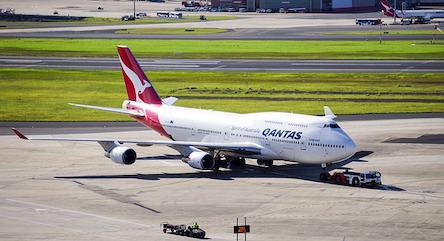
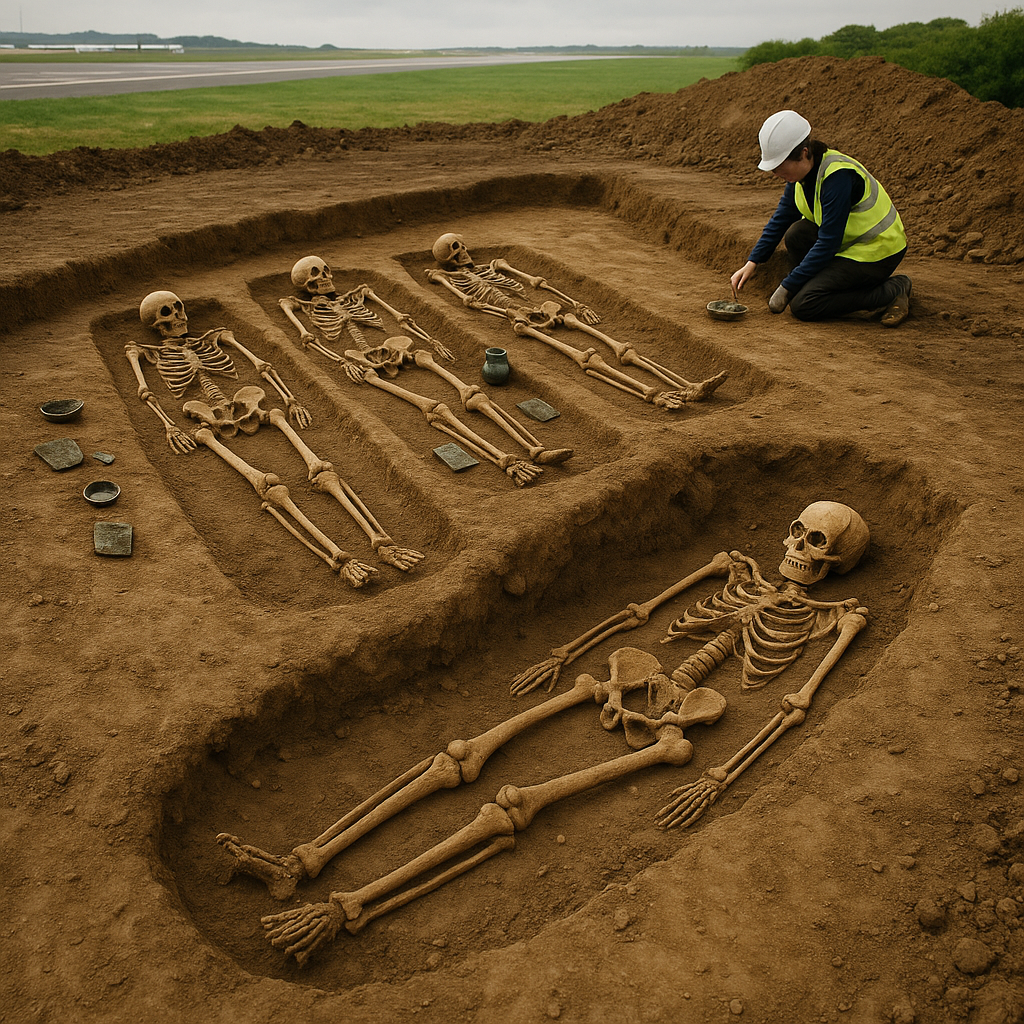
A medieval cemetery found near Cardiff Airport is raising a lot of interesting questions for archaeologists. This site, which was first announced last year, dates back to the 6th or 7th century and has revealed 41 skeletons buried in strange positions along with some surprising artifacts. Most of the skeletons belong to women, and their bones show signs that they did a lot of hard work. At the same time, these women also seem to have been wealthy, making it harder to understand what life was like for this community.
One skeleton is particularly unusual because it was found in a ditch, unlike the others that were buried carefully. Andy Seaman, the project leader from Cardiff University, mentioned that each new finding makes it harder to piece together the story of this cemetery. So far, they have found 39 adult skeletons, mostly female, and researchers are still trying to figure out what this gender pattern means for the people buried there.
The excavation has also revealed the remains of two children, which is surprising because many infants died during medieval times. The way these children were buried is different from the adults, suggesting there might have been a gap in time between the two burials. Archaeologist Dr. Marion Shiner pointed out that the soil used for the children's graves has unique features, adding to the mystery of the site.
The artifacts discovered, like pieces of pottery and fine glass, show that this community was likely quite special. The glass, which probably came from far away places like the Levant and was made in southern France, suggests that the people buried here had some status. Each burial was done with care, with bodies placed in different positions, all facing east to west. The treatment of the woman found in the ditch raises questions about her social status, leading researchers to think she might have been an outcast or a criminal. As the team continues their work, they hope to learn more about the diets and backgrounds of the people buried in this cemetery, revealing more about a time in history that often gets overlooked.
Original news source: Mystery of medieval cemetery near airport runway deepens (BBC)
🎧 Listen:
📖 Vocabulary:
Group or Classroom Activities
Warm-up Activities:
– CHARADES
Instructions: Students will take turns acting out key terms or concepts from the article (e.g., "archaeologist," "skeleton," "burial") without speaking, while their classmates guess the word. This activity will help reinforce vocabulary and encourage nonverbal communication skills.
– HEADLINE CREATION
Instructions: In small groups, students will create catchy headlines for the article. They should focus on summarizing the main points and intrigue potential readers. Afterward, each group will share their headlines with the class, and a discussion will follow about which headlines are most effective and why.
– OPINION POLL
Instructions: Students will discuss their views on the importance of archaeological findings like those mentioned in the article. They will then conduct a quick poll in pairs, asking each other questions like "Do you think it's important to study medieval cemeteries?" and "What do you think we can learn from them?" Groups will then share their findings with the class.
– MIND MAP
Instructions: As a class, create a mind map on the board that outlines the key points of the article. Students will contribute ideas and concepts related to the cemetery findings, the significance of the artifacts, and the gender patterns observed. This activity promotes collaborative thinking and helps students visualize connections between ideas.
– PASS THE STORY
Instructions: In a circle, students will take turns adding a sentence to create a story based on the article. They can incorporate elements from the findings, the artifacts, or the community's life. This encourages creativity and allows students to practice their speaking and storytelling skills while reinforcing the content from the article.
🤔 Comprehension Questions:
The cemetery dates back to the 6th or 7th century.
41 skeletons have been found, and many of them are buried in strange positions, unlike typical burials.
The discovery of mostly female skeletons raises questions about the role of women in the community, especially since they show signs of hard work but also seem to have been wealthy.
The different burial methods for the two children suggest there might have been a gap in time between their deaths and the deaths of the adults.
Artifacts like pottery and fine glass were found, indicating that the community was likely special and that the people buried there had some status.
The woman found in the ditch was not buried carefully like the others, raising questions about her social status and whether she might have been an outcast or a criminal.
The soil in the children's graves has unique features, which adds to the mystery of the site and may help researchers understand more about the burials.
Researchers hope to learn more about the diets and backgrounds of the people buried in the cemetery to reveal more about that time in history.
🎧✍️ Listen and Fill in the Gaps:
A medieval cemetery found near Cardiff is a lot of interesting questions for archaeologists. This site, which was first announced last year, dates back to the 6th or 7th century and has revealed 41 skeletons in strange positions along with some surprising . Most of the skeletons belong to women, and their bones show signs that they did a lot of hard work. At the same time, these women also seem to have been wealthy, making it harder to understand what life was like for this community. One skeleton is particularly unusual because it was found in a ditch, unlike the others that were buried carefully. Andy Seaman, the project leader from University, mentioned that each new finding makes it harder to piece together the story of this cemetery. So far, they have found 39 adult skeletons, mostly female, and are still trying to figure out what this gender pattern means for the people buried there. The has also revealed the remains of two , which is surprising because many infants died during medieval times. The way these children were buried is from the adults, suggesting there might have been a gap in time between the two burials. Archaeologist Dr. Marion Shiner pointed out that the soil used for the children's graves has unique , adding to the mystery of the site. The artifacts discovered, like pieces of pottery and fine glass, show that this was likely quite special. The glass, which probably came from far away places like the and was made in southern France, suggests that the people buried here had some status. Each was done with care, with bodies placed in different positions, all facing east to west. The treatment of the woman found in the ditch questions about her social status, leading researchers to she might have been an outcast or a criminal. As the team their work, they hope to learn more about the diets and backgrounds of the people buried in this cemetery, revealing more about a time in history that often gets overlooked.
💬 Discussion Questions:
1. What is your opinion on the importance of archaeology in understanding history?
2. How would you feel if you discovered an ancient artifact in your backyard?
3. Do you think it's important to study the lives of women in history? Why or why not?
4. What is a burial practice in your culture that you find interesting?
5. How do you think people in the past viewed social status compared to today?
6. Do you like learning about different cultures and their histories? Why or why not?
7. How would you feel if you were part of a team uncovering a historical site?
8. Do you think that the way people are buried says a lot about their lives? Why?
9. What is a mystery from history that you would like to solve?
10. How do you think discoveries like this cemetery change our understanding of the past?
11. Do you think it's fair to label someone as an outcast based on their burial? Why or why not?
12. What is your opinion on how children were treated in medieval times?
13. How would you feel if you were buried in a way that was different from everyone else?
14. Do you think that wealthy people in the past had very different lives than poorer people? Why?
15. What is a question you would ask an archaeologist if you had the chance?
Individual Activities
📖💭 Vocabulary Meanings:
Click a dot next to a word, then click the dot next to its meaning to draw a line connecting them.
Words
Meanings
🔡 Multiple Choice Questions:
🕵️ True or False Questions:
📝 Write a Summary:
Write a summary of this news article in two sentences.
Check your writing now with the best free AI for English writing!