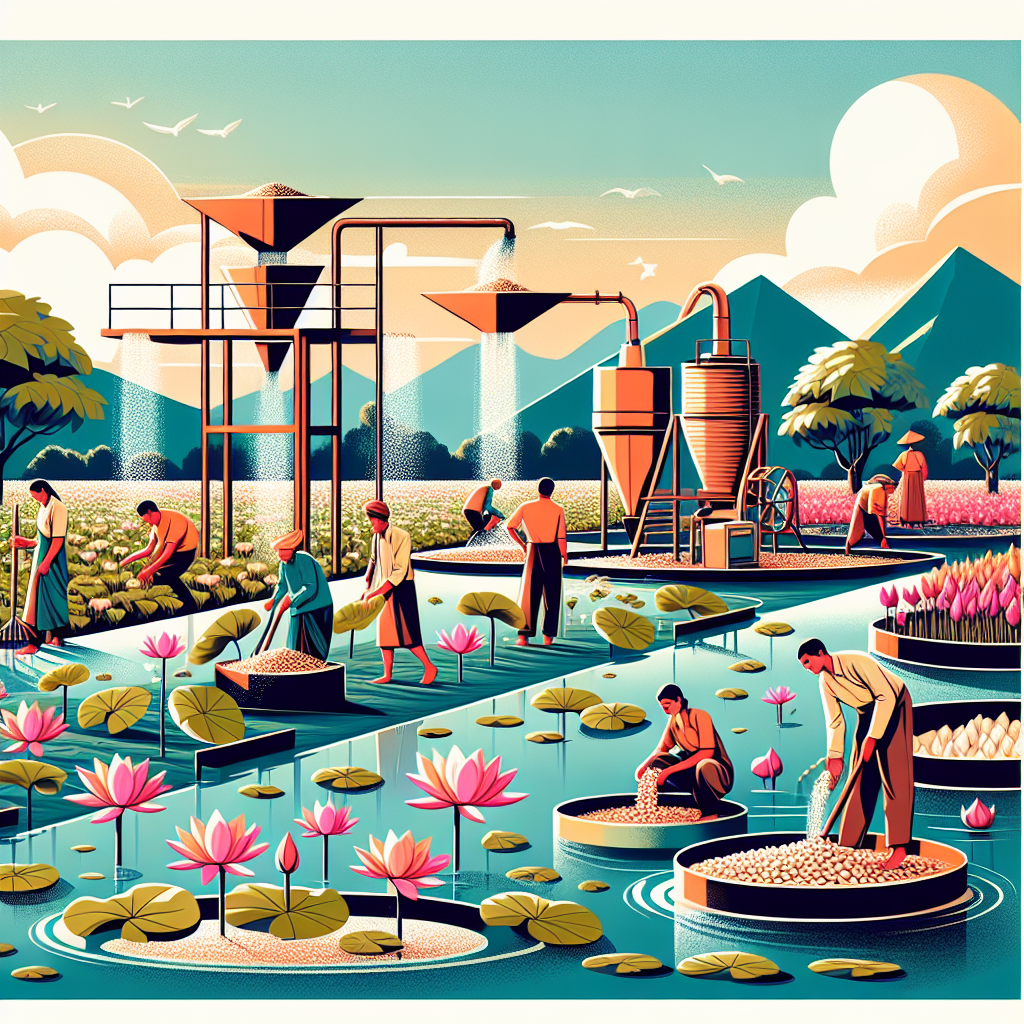
In northern India, the farming of makhana, also known as lotus seeds, is becoming popular as a superfood because it's very nutritious. Instead of the traditional way of diving into deep, muddy ponds to harvest makhana, farmers like Phool dev Shahni are now growing it in fields with shallower water. This makes it easier and more profitable for them.
Dr. Manoj Kumar, a scientist at the National Research Centre for Makhana, has helped change how makhana is grown by figuring out how to grow lilies in fields with less water. This has not only made farmers earn more money but also helped them deal with unpredictable weather and floods. More farmers are now growing makhana, and the farming area has grown a lot in recent years.
Dhirendra Kumar, a farmer who started growing makhana, has had great success on his family farm. By growing makhana, he has made more money and provided jobs for local women. Other farmers in the region are also switching to makhana because it's more sustainable and profitable than their usual crops.
Companies like Madhubani Makhana are working on better ways to process makhana, like machines to roast and pop the seeds efficiently. These improvements have made makhana better quality, increased production, and safer processing. Even though more makhana is being produced, the demand for it worldwide is going up, which should keep prices steady. The move to makhana farming is changing agriculture in Bihar, bringing new ideas, more money, and jobs. With more farmers and companies getting into makhana, the industry is set to grow more, offering a bright future for farming in the region.
Original news source: The 'superfood' taking over fields in northern India (BBC)
🎧 Listen:
📖 Vocabulary:
Group or Classroom Activities
Warm-up Activities:
– Charades
Instructions: Divide the students into two teams. Write down words related to the article on separate pieces of paper (e.g., makhana, lotus seeds, farmer, superfood). One student from each team will pick a word and act it out without speaking while their team tries to guess the word.
– Opinion Poll
Instructions: Ask students to think about whether they would consider trying makhana as a new food based on the information in the article. Have them write down their opinion and one reason to support it. Then, divide the class into small groups to discuss their opinions and reasons. Finally, conduct a class poll to see the overall opinion.
– Vocabulary Pictionary
Instructions: Write down key vocabulary words from the article (e.g., nutritious, profitable, sustainable) on separate pieces of paper. One student at a time will pick a word and have to draw it on the board without writing any letters or numbers. Their team will try to guess the word based on the drawing.
– Pros and Cons
Instructions: Divide the students into small groups and ask them to discuss the pros and cons of switching to makhana farming based on the information in the article. Have each group write down their points and then share them with the class. Encourage a class discussion on the topic.
– News Reporter Role-play
Instructions: Divide the class into pairs. One student will be the news reporter, and the other will be a farmer mentioned in the article. The news reporter will ask questions about the farmer's experience with growing makhana and the impact it has had on their life. Encourage students to be creative and ask follow-up questions to deepen the role-play.
🤔 Comprehension Questions:
The farming of makhana is becoming popular in northern India because it is considered a superfood that is very nutritious.
Farmers like Phool dev Shahni have changed the traditional way of harvesting makhana by growing it in fields with shallower water instead of diving into deep, muddy ponds.
Dr. Manoj Kumar has helped improve the way makhana is grown by figuring out how to grow lilies in fields with less water, making it easier for farmers to cultivate makhana.
Farmers like Dhirendra Kumar have experienced benefits such as making more money and providing jobs for local women by growing makhana on their family farms.
Companies like Madhubani Makhana are working on better ways to process makhana by using machines to roast and pop the seeds efficiently, leading to better quality, increased production, and safer processing.
The demand for makhana is increasing worldwide because more makhana is being produced, but the demand is also going up, which should keep prices steady.
The move to makhana farming is impacting agriculture in Bihar by bringing new ideas, more money, and jobs to the region, changing the traditional way of farming.
The article suggests that the future of makhana farming in the region looks bright, with more farmers and companies getting into makhana farming, leading to growth in the industry and offering a promising future for farming in the region.
🎧✍️ Listen and Fill in the Gaps:
In northern India, the farming of makhana, also known as lotus seeds, is becoming popular as a superfood because it's very nutritious. Instead of the traditional way of diving into deep, muddy to harvest makhana, farmers like Phool dev Shahni are now it in fields with shallower . This makes it easier and more profitable for them. Dr. Manoj Kumar, a at the National Research Centre for Makhana, has helped how makhana is grown by out how to grow lilies in fields with less water. This has not only made s earn more but also helped them deal with unpredictable weather and floods. More farmers are now growing makhana, and the farming area has grown a lot in recent years. Dhirendra Kumar, a farmer who started growing makhana, has had great success on his family farm. By growing makhana, he has made more money and provided jobs for local . farmers in the region are also switching to makhana because it's more and profitable than their usual . Companies like Madhubani Makhana are working on better ways to process makhana, like machines to roast and pop the seeds efficiently. These improvements have made makhana better quality, increased production, and processing. Even though more is being produced, the for it worldwide is going up, which should keep prices steady. The move to makhana farming is agriculture in Bihar, bringing new ideas, more money, and jobs. With more farmers and companies getting into makhana, the industry is set to grow more, offering a bright future for farming in the region.
💬 Discussion Questions:
1. What is a superfood, and why do you think people are interested in them?
2. How would you feel if you had to dive into deep, muddy ponds to harvest food every day?
3. Do you think it's important for farmers to adapt to new ways of growing food? Why or why not?
4. Why do you think growing makhana in fields with shallower water is easier for farmers?
5. Do you like the idea of growing lilies in fields with less water to help farmers earn more money? Why or why not?
6. How do you think unpredictable weather and floods can affect farmers and their crops?
7. Why do you think growing makhana has provided jobs for local women in the region?
8. What do you think are the benefits of makhana farming being more sustainable and profitable for farmers?
9. Why do you think companies are investing in better ways to process makhana?
10. How do you think safer processing of makhana seeds can benefit both farmers and consumers?
11. Do you think the increase in makhana production will help keep prices steady? Why or why not?
12. Why do you think the move to makhana farming is changing agriculture in Bihar?
13. How do you think the growth of the makhana industry can bring new ideas to farming in the region?
14. Do you think the increase in makhana farming will have a positive impact on the economy of the region? Why or why not?
15. What are your thoughts on the future of farming in the region with more farmers and companies getting into makhana production?
Individual Activities
📖💭 Vocabulary Meanings:
Click a dot next to a word, then click the dot next to its meaning to draw a line connecting them.
Words
Meanings
🔡 Multiple Choice Questions:
🕵️ True or False Questions:
📝 Write a Summary:
Write a summary of this news article in two sentences.
Check your writing now with the best free AI for English writing!