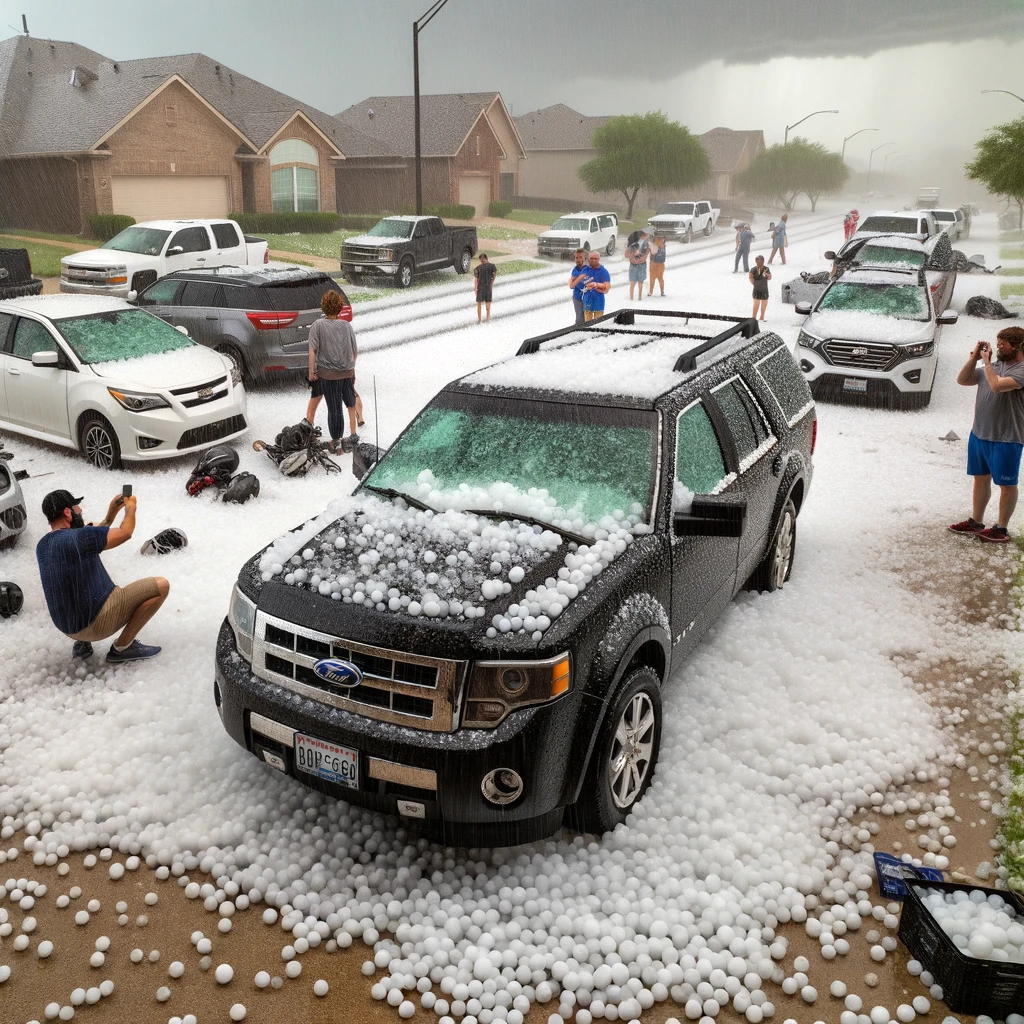
A really strong storm hit the middle of the United States recently, causing tornadoes, heavy rain, and big floods. Texas got hit with hail that was as big as golf balls because of the storm. Because of this crazy weather, at least 8 million Americans were told to watch out for tornadoes.
The storm caused a lot of damage and messed up things in the areas it hit. The hail was especially bad and wrecked houses and cars. The hailstones were as big as golf balls, so they did a lot of damage when they hit things. The people in charge told everyone to be careful and protect themselves and their stuff.
The bad weather has made people worry about tornadoes happening more often and being stronger in the United States. Scientists and weather experts are studying these patterns to figure out why they happen and what they can do. They want to be better at predicting tornadoes and getting ready for them so that not as many people get hurt or things get damaged.
The videos from Texas show how powerful and dangerous the weather can be. It's a reminder that we need to be ready and know what's going on when bad weather happens. People who live in places that got hit should pay attention to the weather alerts and listen to what the local people in charge say to stay safe.
As the middle of the US deals with the damage from the storm, it's really important for everyone to help each other out. Rebuilding and fixing things will need everyone to work together and have enough resources. By working together, communities can get through the problems caused by bad weather and be stronger in the future.
Original news source: Large hail seen in Texas after storms hit central US (BBC)
🎧 Listen:
📖 Vocabulary:
Group or Classroom Activities
Warm-up Activities:
– News Summary
Instructions: Divide the class into pairs or small groups. Give each group a few minutes to read the article. Then, have them summarize the main points of the article in 3-5 sentences. Each group can then share their summary with the rest of the class.
– Vocabulary Pictionary
Instructions: Write down 10-15 key vocabulary words from the article on separate cards or pieces of paper. Divide the class into two teams. One person from each team will come to the front of the class and pick a word. Without speaking, they must draw a picture to represent the word while their team tries to guess what it is. The team that guesses correctly gets a point. Continue until all the words have been guessed or time runs out.
– Pros and Cons
Instructions: Divide the class into pairs or small groups. Assign each group a topic related to the article, such as "increased tornado frequency" or "community rebuilding efforts." Have each group discuss the pros and cons of their assigned topic, considering both the positive and negative aspects. Each group can then present their findings to the class and engage in a class discussion.
– Think-Pair-Share
Instructions: Ask the students to think about a time when they experienced bad weather or a natural disaster. Give them a few minutes to reflect on their experience. Then, have them pair up with a partner and share their stories. Afterward, ask a few volunteers to share their partner's story with the class.
– Future Predictions
Instructions: Have the students work individually or in pairs to make predictions about the future of weather patterns and natural disasters. They can consider questions such as "Will tornadoes become more frequent?" or "How will communities prepare for future storms?" Encourage them to use their knowledge from the article and their own ideas. Afterward, have a class discussion where students share their predictions and reasons behind them.
🤔 Comprehension Questions:
The storm brought tornadoes, heavy rain, and big floods.
The hailstones were as big as golf balls.
8 million Americans were told to watch out for tornadoes because of the storm and the dangerous weather conditions it brought.
The hailstones caused damage to houses and cars because they were as big as golf balls and did a lot of damage when they hit things.
Scientists and weather experts are studying the patterns of tornadoes to figure out why they happen and how to better predict and prepare for them, in order to reduce the number of injuries and damages caused by tornadoes.
The videos from Texas show how powerful and dangerous the weather can be during the storm.
It is important for people to pay attention to weather alerts and listen to local authorities during bad weather because it helps them stay informed and take necessary precautions to keep themselves and their belongings safe.
It is important for communities to work together after a storm because rebuilding and fixing things will require collective effort and resources. By working together, communities can recover from the damage caused by the storm and become stronger in the future.
🎧✍️ Listen and Fill in the Gaps:
A really strong hit the middle of the United States recently, causing tornadoes, heavy rain, and big floods. Texas got hit with hail that was as big as golf because of the storm. Because of this crazy , at least 8 million were told to watch out for tornadoes. The storm caused a lot of damage and messed up things in the areas it hit. The hail was especially bad and wrecked houses and cars. The hailstones were as big as golf balls, so they did a lot of damage when they hit things. The people in charge told everyone to be and protect themselves and their stuff. The bad weather has made people worry about tornadoes happening more often and being stronger in the States. Scientists and weather are studying these patterns to out why they happen and what they can do. They want to be better at predicting and ready for them so that not as many people get hurt or things get damaged. The videos from Texas show how and dangerous the weather can be. It's a reminder that we need to be ready and know what's on when bad weather happens. People who live in places that got hit should pay attention to the weather alerts and listen to what the local people in charge say to stay safe. As the middle of the US deals with the damage from the storm, it's really important for everyone to help each out. Rebuilding and fixing will need everyone to work together and have enough resources. By working together, communities can get through the problems by bad weather and be in the future.
💬 Discussion Questions:
1. What is a tornado and what kind of damage can it cause?
2. Have you ever experienced a severe storm or natural disaster? How did it make you feel?
3. How would you feel if you were told to watch out for tornadoes in your area?
4. Do you like studying about weather patterns and natural disasters? Why or why not?
5. What do you think scientists can do to better predict tornadoes and protect people?
6. Have you ever seen videos or pictures of powerful storms? How did they make you feel?
7. How do you think people should prepare for bad weather and protect themselves and their belongings?
8. Do you think it's important for communities to work together during times of natural disasters? Why or why not?
9. How can communities support each other in the aftermath of a severe storm or natural disaster?
10. What resources do you think are necessary for rebuilding and fixing things after a storm?
11. How do you think the recent storm will affect the affected areas in the future?
12. How can individuals contribute to making their communities stronger and more resilient to bad weather?
13. Do you think the frequency and strength of tornadoes are increasing? Why or why not?
14. What precautions do you think people should take when they receive weather alerts?
15. How can technology help in predicting and preparing for severe weather conditions?
Individual Activities
📖💭 Vocabulary Meanings:
Click a dot next to a word, then click the dot next to its meaning to draw a line connecting them.
Words
Meanings
🔡 Multiple Choice Questions:
🕵️ True or False Questions:
📝 Write a Summary:
Write a summary of this news article in two sentences.
Check your writing now with the best free AI for English writing!