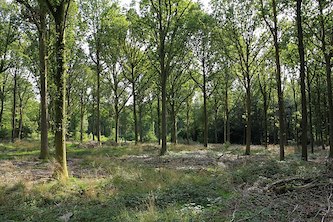
The UK has fewer forests compared to other European countries, and it's facing a bunch of challenges like climate change, loss of different types of plants and animals, invasive species, and damage from deer and grey squirrels. There's also a lack of skills in the forestry sector, which makes it hard to meet the government's goals for planting trees. To deal with these problems, the experts suggest planting forests with a mix of different tree types that can handle environmental pressures and are good for wildlife.
A study by Forestry England and the University of Cambridge also found other issues like competition with people for water, new pests and diseases, and extreme weather affecting how forests are managed. This study was published in the journal, Forestry, and it's the first time that experts have looked ahead to see what could happen to UK forests.
Dr. Eleanor Tew from Forestry England and Cambridge University stressed the importance of taking action to make forests stronger for the next generations. She said that even though the situation is worrying, there's still time to make a good difference and protect the happiness and benefits that forests bring to people.
In short, the experts are urging us to take action right away to deal with the problems facing the UK's forests. By doing things like planting different types of trees and dealing with new issues, we can stop the forests from potentially collapsing and make sure they keep thriving for the next generations.
Original news source: UK forests face 'catastrophic ecosystem collapse' (BBC)
📖 Vocabulary:
Group or Classroom Activities
Warm-up Activities:
– News Summary
Instructions: Divide the students into small groups. Give each group a few minutes to read the article and prepare a short news summary that they will present to the class. Encourage them to focus on the main points and to use their own words. After the presentations, discuss any new vocabulary or difficult phrases.
– Vocabulary Pictionary
Instructions: Write down key terms from the article (e.g., pests, invasive species, forestry, biodiversity) on individual slips of paper. Students take turns drawing a slip and illustrating the term on the board without speaking or writing words. Their teammates must guess the word based on the drawing. This activity helps reinforce vocabulary from the article.
– Future Predictions
Instructions: Have the students work in pairs to discuss and write down their predictions about the future of forests in the UK and around the world based on the information from the article. Afterward, ask each pair to share their predictions with the class and provide reasons for their thoughts. This can lead to a discussion on environmental issues and the importance of conservation.
– Opinion Spectrum
Instructions: Create a line in the classroom representing a spectrum of opinions from "strongly agree" to "strongly disagree." Read out statements related to the article's content, such as "The government is doing enough to protect forests" or "Climate change is the biggest threat to forests." Students position themselves along the spectrum according to their opinion and then discuss their reasons with students nearby. This activity encourages speaking and critical thinking.
– Think-Pair-Share
Instructions: Pose a question to the class related to the article, such as "What steps can individuals take to help protect forests?" or "How do forests benefit society as a whole?" Students first think individually, then pair up to discuss their thoughts, and finally share their ideas with the larger group. This activity allows students to process information and articulate their thoughts in English.
🤔 Comprehension Questions:
The experts have warned that the UK forests could face a major die-off of trees within the next 50 years due to various threats.
Factors such as wind, fire, pests, and disease could lead to the sudden death of trees in the forests.
The UK has less forest area compared to other European countries.
Challenges include climate change, loss of biodiversity, invasive species, damage from deer and grey squirrels, and a lack of forestry skills.
Experts suggest planting a variety of tree species that can withstand environmental pressures and support wildlife, as well as addressing new threats as they arise.
The study found issues like competition for water, new pests and diseases, and the impact of extreme weather on forest management.
Dr. Eleanor Tew is from Forestry England and Cambridge University, and she says that while the situation is concerning, there is still time to take positive action to strengthen forests for future generations.
Experts are urging immediate action to address the problems, such as planting diverse types of trees and tackling new challenges to prevent potential forest collapse and ensure their continued health.
🎧✍️ Listen and Fill in the Gaps:
A team of British experts has issued a that the in the UK could be in big trouble in the next 50 years. They're concerned that like wind, fire, pests, and disease could cause the trees to suddenly die off, leaving the forests empty and lifeless. However, the experts believe that if we act quickly, we can prevent this disaster from happening. The UK has fewer forests compared to other European countries, and it's facing a of challenges like change, loss of of plants and animals, invasive species, and damage from deer and grey squirrels. There's also a lack of skills in the forestry sector, which makes it hard to meet the government's goals for planting trees. To deal with these problems, the experts suggest planting forests with a mix of different tree types that can handle environmental pressures and are good for . A study by Forestry England and the University of Cambridge also other issues like competition with for water, new pests and diseases, and weather affecting how forests are managed. This study was published in the journal, Forestry, and it's the first time that experts have looked ahead to see what could happen to UK forests. Dr. Eleanor Tew from Forestry England and Cambridge University stressed the importance of action to make forests stronger for the next generations. She said that even though the situation is worrying, there's still time to make a good difference and protect the happiness and benefits that forests bring to people. In , the experts are urging us to take action right away to deal with the facing the UK's forests. By things like planting different types of trees and dealing with new , we can stop the forests from potentially collapsing and make sure they keep thriving for the next generations.
💬 Discussion Questions:
1. What is your favorite type of forest to visit, and why do you like it?
2. How would you feel if the forests near where you live started to disappear?
3. Do you think it's important for countries to have lots of forests? Why or why not?
4. Have you ever seen the effects of pests or diseases on trees? What was that like?
5. What do you think could happen if we don't take care of our forests?
6. Do you believe climate change is a big threat to forests? Why or why not?
7. How do you think wildlife would be affected if forests started dying?
8. What is an invasive species, and can you think of any examples?
9. Have you ever heard of any projects to plant new trees in your area? What did you think about it?
10. Why do you think having a variety of different trees in a forest might be good?
11. Do you think it's a good idea to share water with forests even if people need it too? Why or why not?
12. Can you think of any jobs that involve taking care of forests? Would you ever consider working in that field?
13. How do you think extreme weather could change the way forests look or function?
14. What actions do you think we could take right now to help protect forests for future generations?
15. Do you like the idea of making forests stronger? How do you think we could do that?
Individual Activities
📖💭 Vocabulary Meanings:
Click a dot next to a word, then click the dot next to its meaning to draw a line connecting them.
Words
Meanings
🔡 Multiple Choice Questions:
🕵️ True or False Questions:
📝 Write a Summary:
Write a summary of this news article in two sentences.
Check your writing now with the best free AI for English writing!