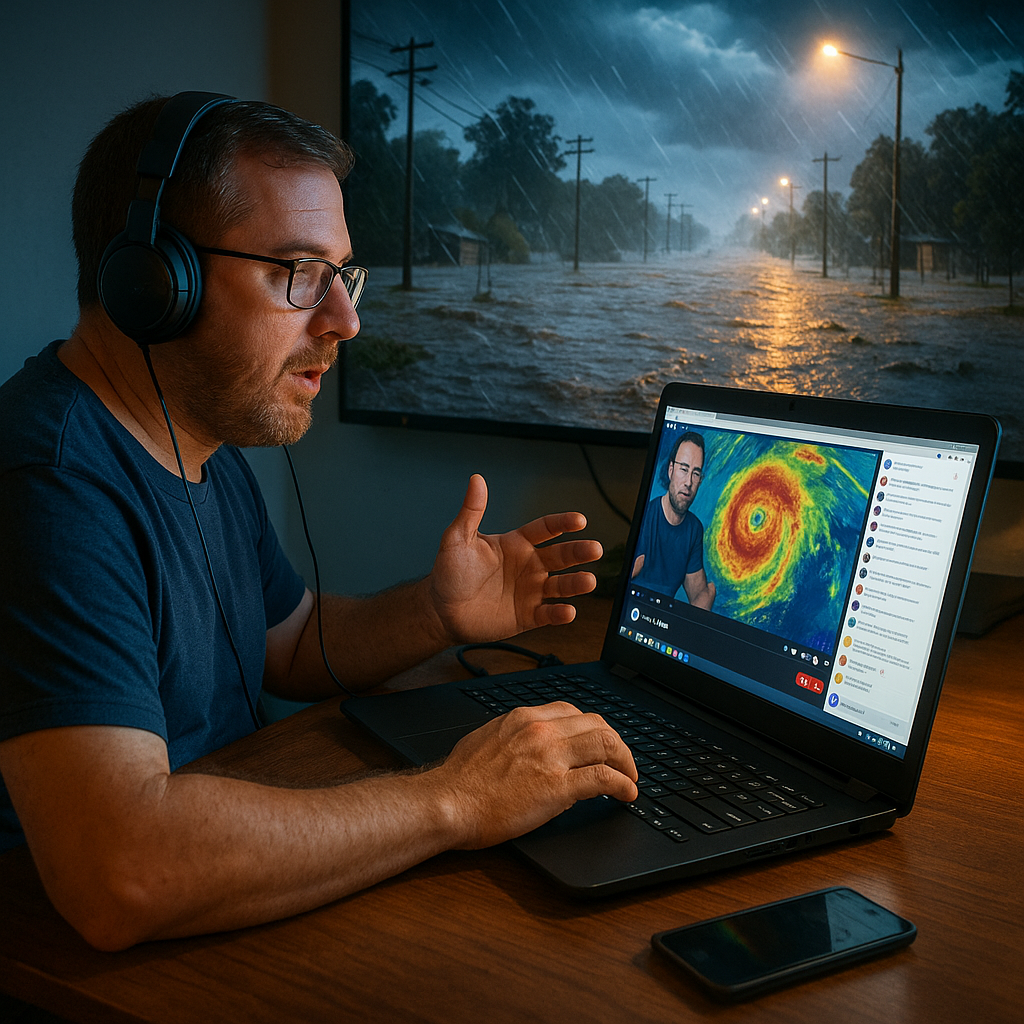
In the past few months, people in North Queensland, Australia, have been dealing with tough situations because of extreme weather, especially severe flooding. One person affected is Andrew Brown, a cybersecurity teacher who has become well-known as an amateur weather forecaster on his Facebook page called Wally's Weather. With over 107,000 followers and 24 million views each month, Brown has become an important source of weather updates for his community, especially during the floods that forced many to leave their homes. He works hard to keep everyone informed, posting updates even at night.
The rise of weather influencers like Brown shows that more people are turning to social media for news and weather updates. Research from the Pew Research Centre found that about 20% of adults in the United States use social media for this kind of information. This change suggests that many people trust these influencers just as much, or even more than, traditional news reporters. Prof. Daniel Angus from Queensland University of Technology explains that weather influencers often give local, real-time updates that mainstream media might miss, especially in rural areas. Their direct connection with the audience helps create a sense of community that traditional news outlets might not provide.
However, there are some downsides to the popularity of weather influencers. Prof. Angus points out that some of them have been criticized for making weather events sound more dramatic than they really are, which can lead to misinformation and panic. For example, a weather influencer called Higgins Storm Chasing faced criticism for making exaggerated predictions about rain and flooding in 2018 that didn’t happen. Unlike official weather organizations, these influencers don’t have to follow the same rules, which raises concerns about their responsibility and the risk of causing fear.
Experts like Alan Sealls, a former TV weatherman and current meteorology professor, stress the importance of trained meteorologists for accurate weather forecasts. While some weather influencers know what they’re doing and have the right tools to provide reliable updates during emergencies, others might not have formal training and could confuse people with uncertain long-range forecasts. Sealls believes that trained professionals are better at avoiding misleading the public, especially when it comes to serious weather events. Despite these challenges, there are still opportunities for people like Andrew Brown to make money from their weather expertise while helping their communities.
Original news source: Who should you trust for a weather forecast? (BBC)
🎧 Listen:
📖 Vocabulary:
Group or Classroom Activities
Warm-up Activities:
– CHARADES
Instructions: Divide the class into small groups. Each group will take turns acting out terms related to weather and social media (e.g., flooding, influencer, forecast) without speaking, while the other groups guess the word or phrase. This will help students reinforce vocabulary in an engaging way.
– OPINION POLL
Instructions: Present students with a series of statements related to weather influencers and traditional news sources (e.g., "Weather influencers are more trustworthy than traditional news sources"). Students will move to different parts of the classroom based on whether they agree, disagree, or are neutral. Afterward, facilitate a discussion on their choices.
– MIND MAP
Instructions: In pairs, students will create a mind map on the board about the pros and cons of relying on weather influencers for news. They can include aspects such as community connection, misinformation, and traditional media. This will help them visualize their thoughts and encourage collaborative learning.
– HEADLINE CREATION
Instructions: Students will work in small groups to come up with catchy headlines for the article about Andrew Brown and weather influencers. Encourage them to be creative and think about what would grab the attention of readers. Each group will share their headline with the class.
– TWO TRUTHS AND A LIE
Instructions: Each student will come up with two true statements and one false statement about weather influencers, traditional news, or the impact of social media on news reporting. They will share their statements with a partner, who will then guess which one is the lie. This activity promotes critical thinking and discussion.
🤔 Comprehension Questions:
Andrew Brown is a cybersecurity teacher who has become an amateur weather forecaster on his Facebook page called Wally's Weather. During the floods in North Queensland, he has taken on the role of providing important weather updates to his community.
Wally's Weather has become a vital source of weather information for his community, especially during the floods. With over 107,000 followers, Brown keeps people informed with regular updates, even at night, helping them navigate the tough situations caused by the extreme weather.
Research from the Pew Research Centre shows that about 20% of adults in the United States use social media to get news and weather updates, indicating a shift towards trusting these platforms for information.
Prof. Daniel Angus explains that weather influencers often provide local, real-time updates that mainstream media might overlook, especially in rural areas. Their direct connection with the audience fosters a sense of community that traditional news outlets may not offer.
Weather influencers face criticism for sometimes making weather events sound more dramatic than they are, which can lead to misinformation and panic. This exaggeration can create confusion and fear among the public.
Higgins Storm Chasing faced criticism for making exaggerated predictions about rain and flooding in 2018 that did not occur. This incident highlights concerns about the responsibility of weather influencers and the potential risks of spreading fear through inaccurate information.
Experts like Alan Sealls stress that trained meteorologists have the skills and knowledge to provide accurate weather forecasts. They are better at avoiding misleading the public, especially during serious weather events, compared to some influencers who may lack formal training.
Despite the challenges, weather influencers like Andrew Brown have the opportunity to monetize their weather expertise while helping their communities stay informed during emergencies.
🎧✍️ Listen and Fill in the Gaps:
In the past few , people in North Queensland, Australia, have been dealing with tough situations because of extreme , especially severe flooding. One person affected is Andrew Brown, a cybersecurity teacher who has become well-known as an amateur weather forecaster on his Facebook page called Wally's . With over 107,000 followers and 24 million views each month, Brown has become an important source of weather updates for his , especially during the floods that forced many to leave their homes. He works hard to keep everyone informed, posting updates even at night. The rise of weather influencers like Brown shows that more people are turning to social media for news and weather . Research from the Pew Research Centre found that about 20% of adults in the United States use social media for this kind of information. This suggests that many people trust these influencers just as much, or even more than, traditional news reporters. Prof. Daniel Angus from Queensland University of Technology explains that weather influencers often give local, real-time updates that media might miss, especially in rural . Their direct connection with the audience helps create a sense of community that traditional news outlets might not provide. However, there are some to the popularity of weather influencers. Prof. Angus out that some of them have been criticized for making weather events sound more dramatic than they really are, which can lead to misinformation and panic. For example, a weather influencer called Higgins Storm Chasing faced for making exaggerated about rain and flooding in 2018 that didn’t happen. Unlike official weather organizations, these influencers don’t have to follow the same rules, which raises concerns about their responsibility and the risk of causing fear. Experts like Alan Sealls, a former TV weatherman and current meteorology professor, stress the of trained meteorologists for accurate weather forecasts. While some weather influencers know what they’re doing and have the right to provide reliable updates during , others might not have formal training and could confuse people with uncertain long-range forecasts. Sealls believes that trained professionals are better at avoiding the public, especially when it comes to serious weather events. Despite these challenges, there are still opportunities for people like Andrew Brown to make money from their weather expertise while helping their communities.
💬 Discussion Questions:
1. What is your opinion on using social media for news and weather updates?
2. How would you feel if you had to rely on social media for important information during an emergency?
3. Do you think it's a good idea for regular people to become weather influencers? Why or why not?
4. Have you ever followed someone on social media for news updates? What was your experience like?
5. What is a major weather event you’ve experienced in your life? How did it affect you?
6. Do you believe that social media influencers can provide accurate information? Why or why not?
7. How would you feel if a weather influencer made a prediction that caused panic in your community?
8. Do you think traditional news outlets are still important? Why or why not?
9. What is a responsibility that influencers should have when sharing information about weather events?
10. How do you usually stay informed about the weather? Do you prefer social media or traditional methods?
11. Do you think people trust social media influencers more than trained professionals? Why do you think that is?
12. What is a situation where you think having a trained professional is essential?
13. How would you feel if someone you trusted gave you wrong information about the weather?
14. Do you think weather influencers should be held responsible for spreading misinformation? Why or why not?
15. What is your experience with community support during tough times, like bad weather? How did it make you feel?
Individual Activities
📖💭 Vocabulary Meanings:
Click a dot next to a word, then click the dot next to its meaning to draw a line connecting them.
Words
Meanings
🔡 Multiple Choice Questions:
🕵️ True or False Questions:
📝 Write a Summary:
Write a summary of this news article in two sentences.
Check your writing now with the best free AI for English writing!