


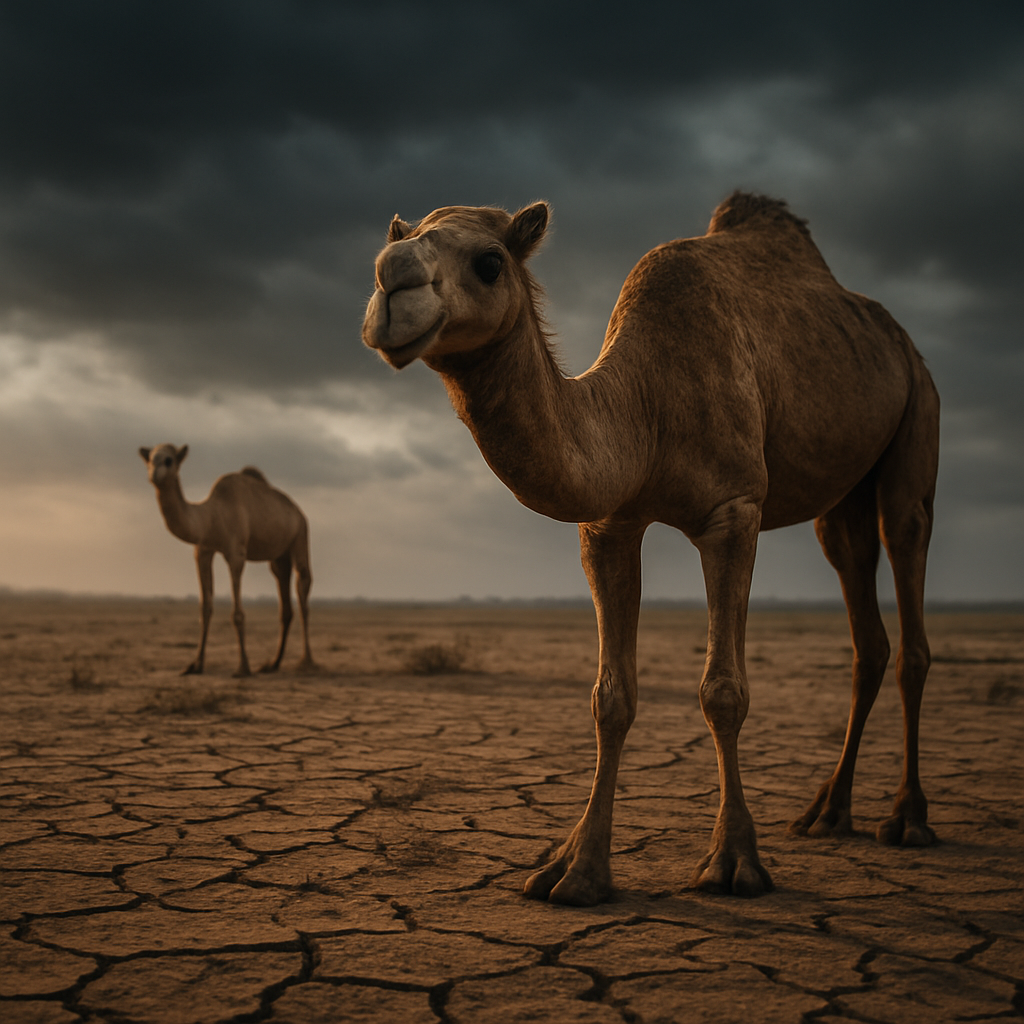
In Africa, camels are vital for survival in desert regions due to their resilience against tough climates. However, rising temperatures are proving harsh even for these hardy animals. Ali Umer, a camel herder in Afar, Ethiopia, reports severe impacts on his camel herd due to extreme heat, resulting in painful blisters and hair loss.
The intense heat has also led to dehydration and reduced food sources for camels in the region. A study in southern Ethiopia highlights that increased temperatures have negatively affected camel health, productivity, and reproduction. Ali experienced the loss of eight young camels because the weather has been hotter than ever.
In Somalia, research revealed that nearly half of all camel-owning households face significant camel losses due to persistent drought conditions. Scientists observe growing incidences of diseases in camels, heightened by the worsening climate. Camels, traditionally able to handle harsh conditions, now find it difficult as temperatures continue to rise significantly.
Efforts to address these issues are important, as camels hold significant importance in these communities. There is a need for improved animal care, including better veterinary services and managing shaded and watered areas to support the well-being of camels. Addressing climate change impacts could help sustain these crucial animals and support the livelihoods that depend on them.
Original news source: Africa's camels are dying from extreme heat as temperatures soar – BBC News (BBC)
🎧 Listen:
📖 Vocabulary:
Group or Classroom Activities
Warm-up Activities:
1. Discuss with a partner what resilience means to you and give an example.
2. Think about how animals adapt to their environment. Share an animal you know and discuss its adaptations.
3. Share a time when you experienced extremely hot weather. How did you cope with it?
4. Brainstorm ways communities can help animals affected by climate change.
5. Define drought and discuss its effects on both people and animals in small groups.
🤔 Comprehension Questions:
Rising temperatures are causing severe impacts like blisters, hair loss, and increased dehydration in camels.
Ali Umer is a camel herder from Afar, Ethiopia, who reports severe impacts on his camel herd.
Extreme heat has caused blisters, hair loss, dehydration, and death of young camels.
The study reveals that increased temperatures have negatively affected camel health, productivity, and reproduction.
They are facing significant camel losses due to persistent drought conditions.
Research shows growing incidences of diseases in camels, increased by the worsening climate.
Improved veterinary services, managing shaded and watered areas, and addressing climate change impacts are needed.
🎧✍️ Listen and Fill in the Gaps:
In Africa, camels are vital for survival in desert regions due to their against tough climates. However, rising temperatures are proving harsh even for these hardy . Ali Umer, a herder in Afar, Ethiopia, reports severe impacts on his camel herd due to extreme heat, in painful blisters and hair loss. The intense heat has also led to dehydration and reduced food sources for camels in the region. A study in southern Ethiopia highlights that increased temperatures have affected camel health, , and reproduction. Ali experienced the loss of eight young camels because the has been than ever. In Somalia, research that nearly half of all camel-owning households face significant camel losses due to persistent drought . observe growing incidences of diseases in camels, heightened by the worsening climate. Camels, traditionally able to handle harsh conditions, now find it difficult as temperatures continue to rise significantly. Efforts to address these are important, as camels hold significant in these communities. There is a need for improved animal care, including services and managing shaded and watered areas to support the well-being of camels. Addressing change impacts could help sustain these crucial animals and support the livelihoods that depend on them.
💬 Discussion Questions:
1. Why do you think camels are important to people living in desert regions?
2. How do rising temperatures affect the environment around us?
3. What are some measures people can take to adapt to climate change?
4. Have you ever been responsible for taking care of an animal? What challenges did you face?
5. In your opinion, what is the most important action to combat climate change?
6. What role do you think science plays in understanding climate change?
7. How can communities better prepare for the impacts of climate change?
8. Do you think global efforts are enough to tackle climate issues? Why or why not?
9. How can governments support regions heavily affected by climate change?
10. In what ways do you think youth can contribute to addressing climate issues?
11. What do you think about the importance of biodiversity in maintaining ecosystems?
12. How does losing animals like camels affect people's cultural and economic lives?
Individual Activities
📖💭 Vocabulary Meanings:
Click a dot next to a word, then click the dot next to its meaning to draw a line connecting them.