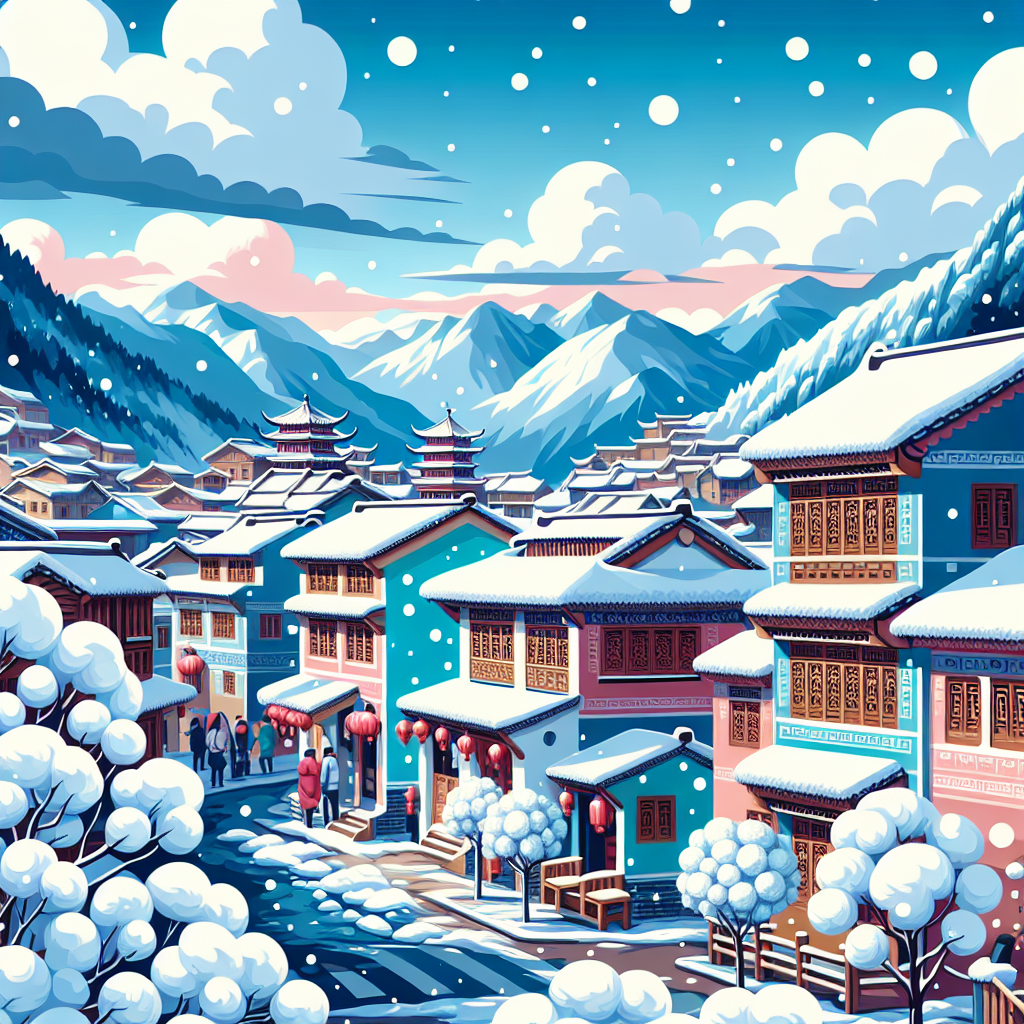
A tourist village in China, famous for its beautiful snowy views, recently apologized for using fake materials to make it look like there was snow. This happened in Chengdu, the capital of Sichuan province, during the Lunar New Year holiday at the end of January. Because of unusually warm weather, the village couldn't provide the real snow that many visitors were hoping to see.
To keep the winter vibe alive, the Chengdu Snow Village used cotton wool and soapy water to create the fake snow. They posted pictures on social media showing big piles of cotton spread out across the village and on rooftops. However, many tourists were upset because they felt tricked, as the village didn't make it clear that the snow was not real. Some people even pointed out the funny situation of a "snow village without snow."
After receiving a lot of criticism, the village apologized on WeChat, a popular social media platform in China. They admitted that their attempts to create a snowy atmosphere disappointed many visitors and offered refunds to those who felt misled. The village recognized that their plan to create a winter wonderland didn't go as expected and left a bad impression on tourists.
This situation has highlighted the bigger issue of climate change in China, where weather is becoming more unpredictable. The weather bureau has reported that the country is facing longer heat waves and sudden heavy rains. These changes are affecting seasonal activities and tourism, making it harder for businesses to attract visitors. In response, the Chengdu Snow Village has removed the fake snow and is reminded of the difficulties tourist spots face in adapting to changing climate while still meeting visitor expectations.
Original news source: Snow village in China apologises for using fake snow during unusually warm weather (Sky News)
🎧 Listen:
📖 Vocabulary:
Group or Classroom Activities
Warm-up Activities:
– CHARADES
Instructions: Divide the students into two teams. Each team takes turns acting out different phrases related to the article, such as "fake snow," "Lunar New Year," or "climate change," without speaking. The other team must guess what the phrase is. This will help students practice vocabulary and context clues.
– OPINION POLL
Instructions: Pose the question, "Is it acceptable for a tourist destination to use fake materials to enhance the visitor experience?" Have students walk around the classroom and ask each other for their opinions. Afterward, come together as a class to discuss the results and reasons behind their viewpoints.
– HEADLINE CREATION
Instructions: In small groups, ask students to create a catchy headline for the article. Encourage them to think creatively while incorporating key elements from the story. After they have created their headlines, each group will present their headline to the class, explaining the reasoning behind their choice.
– MIND MAP
Instructions: On the board, draw a large circle in the center labeled "Chengdu Snow Village." Have students work in pairs to brainstorm and write down related words and phrases that connect to the article, such as "fake snow," "apology," "climate change," and "tourism." This activity helps with vocabulary retention and understanding complex topics.
– TWO TRUTHS AND A LIE
Instructions: Each student will think of two true statements and one false statement about the article's content. They will share their three statements with a partner, who must guess which one is the lie. This activity encourages critical thinking and comprehension of the article.
🤔 Comprehension Questions:
They used cotton wool and soapy water to create the fake snow.
The village wanted to provide a winter vibe because they couldn't produce real snow due to unusually warm weather during the Lunar New Year holiday.
Many tourists were upset and felt tricked because the village didn't clearly indicate that the snow was fake. Some found it funny to have a "snow village without snow."
The village used WeChat to apologize to visitors.
The village offered refunds to those who felt misled by the fake snow.
Climate change has led to longer heat waves and sudden heavy rains, making the weather more unpredictable in China.
Tourist spots face challenges in attracting visitors because changing weather conditions affect seasonal activities and their ability to meet visitor expectations.
The situation highlights the broader issue of climate change and its impact on tourism and seasonal activities in China, showing how businesses struggle to adapt to these changes.
🎧✍️ Listen and Fill in the Gaps:
A tourist village in , famous for its beautiful views, recently apologized for using fake materials to make it look like there was snow. This happened in , the capital of province, during the Lunar New Year holiday at the end of January. Because of unusually warm weather, the village couldn't provide the real snow that many visitors were hoping to see. To keep the winter vibe alive, the Chengdu Snow Village used cotton wool and soapy to the fake snow. They posted pictures on social media showing big piles of cotton spread out across the and on rooftops. However, many were upset because they felt tricked, as the village didn't make it clear that the snow was not real. Some people even pointed out the funny situation of a "snow village without snow." After receiving a lot of criticism, the village apologized on WeChat, a popular social platform in China. They that their attempts to create a snowy atmosphere disappointed many visitors and offered refunds to those who felt misled. The village recognized that their plan to create a winter wonderland didn't go as and left a bad impression on tourists. This situation has highlighted the bigger of climate change in China, where weather is becoming more . The weather has reported that the country is facing longer heat waves and sudden heavy rains. These changes are affecting seasonal activities and tourism, making it harder for businesses to attract visitors. In response, the Chengdu Snow Village has the fake snow and is reminded of the difficulties tourist spots face in adapting to changing climate while still visitor expectations.
💬 Discussion Questions:
1. What is your opinion on using fake materials to create something that is not real, like snow?
2. How would you feel if you traveled somewhere expecting a winter wonderland and found out it was all fake?
3. Do you think the village should have been honest about the snow being fake from the beginning? Why or why not?
4. Have you ever felt disappointed by a tourist attraction? What happened?
5. What is a memorable experience you’ve had while traveling?
6. Do you think social media plays a big role in how people choose their travel destinations? Why?
7. How would you feel if a place you visited offered refunds for a disappointing experience?
8. Do you believe that climate change is affecting tourism in your country? Why or why not?
9. What is your favorite season, and why do you like it?
10. How do you think businesses can adapt to the effects of climate change on tourism?
11. Do you enjoy winter activities like skiing or snowboarding? Why or why not?
12. What is a popular tourist spot in your country that you think could be affected by climate change?
13. How would you feel if you were in charge of a tourist village that had to deal with unpredictable weather?
14. Do you think it's important for tourists to be aware of environmental issues when they travel? Why?
15. What is a unique way you think places can create an enjoyable experience for visitors, even without perfect weather?
Individual Activities
📖💭 Vocabulary Meanings:
Click a dot next to a word, then click the dot next to its meaning to draw a line connecting them.
Words
Meanings
🔡 Multiple Choice Questions:
🕵️ True or False Questions:
📝 Write a Summary:
Write a summary of this news article in two sentences.
Check your writing now with the best free AI for English writing!