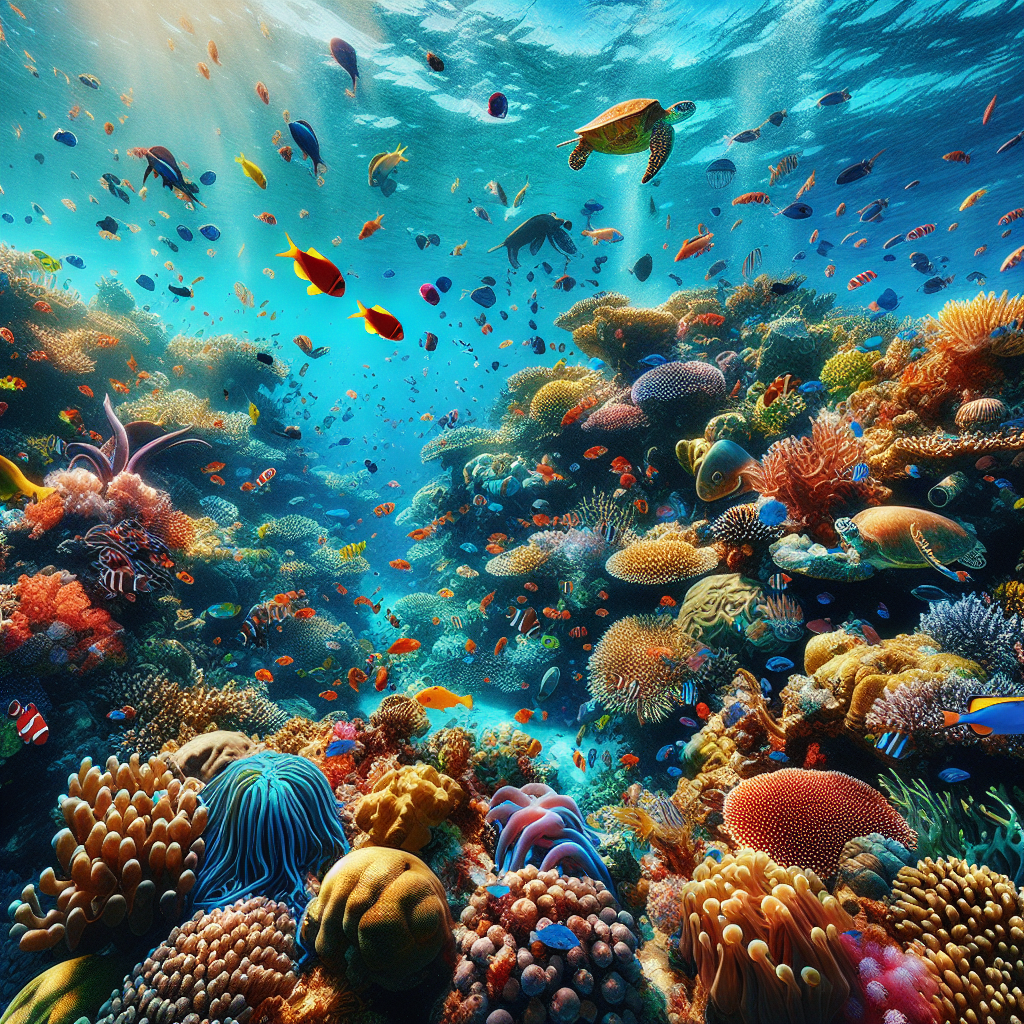
Coral reefs all over the world are facing a big problem called coral bleaching. This happens when the coral gets stressed because the water is too hot, and it turns white. The National Oceanic and Atmospheric Administration (NOAA) in the United States says that this is the fourth time this has happened on a global scale. Coral reefs are really important for the ocean, fishing, and making a lot of money. Scientists from the US, Australia, Kenya, and Brazil are upset and angry because they see the coral they love being hurt or killed by warm oceans.
The first signs of coral bleaching were seen in the Caribbean last year when people noticed that the water off the coast of Florida was as warm as a hot tub. Since then, more than half of the world's coral, including the Great Barrier Reef in Australia and coastlines in Tanzania, Mauritius, Brazil, Pacific islands, the Red Sea, and the Persian Gulf, have been affected. The reason for this is that the temperature of the ocean is getting higher because of climate change and a natural climate event called El Niño. The ocean temperature broke its record last August and has been higher than normal almost every day since then.
Coral is really important because it gives homes to 25% of all the sea animals. But if the coral gets too stressed and the temperature is 1°C higher than it can handle for two months, it can die. When the coral dies, fish and other animals that use the coral to find their way can have a hard time getting back home. Coral can get better after being stressed, but it takes a few years. As the bleaching events happen more often and get worse, the time for the coral to recover gets shorter. The last big bleaching event happened from 2014 to 2016, and since then, the ocean has been getting hotter.
Some coral that lives in cooler and deeper water might be able to survive longer as the planet gets warmer, but scientists agree that coral reefs will change forever. Trying to fix small parts of the coral is not enough to save it all over the world. The only way to make sure the coral survives is if we quickly and globally reduce the amount of greenhouse gases we make to stop the ocean from getting too hot. Coral reefs show us what will happen to nature when the planet gets warmer, and we need to learn from this to stop the same thing from happening to other ecosystems.
Original news source: World's coral turns white from deadly ocean heat (BBC)
🎧 Listen:
📖 Vocabulary:
Group or Classroom Activities
Warm-up Activities:
– News Summary
Instructions: Have students read the article individually or in pairs. Then, ask them to write a summary of the article in their own words. They should include the main points and key details. Afterward, have students share their summaries with a partner or in small groups.
– Opinion Poll
Instructions: Divide the class into groups of 3-4 students. Each group should discuss their opinions on the issue of coral bleaching and its impact on the environment. Then, have each group create a set of poll questions related to the topic. Each group should take turns asking their poll questions to the other groups and recording their responses. Finally, have a class discussion where groups share the results of their polls and compare their findings.
– Vocabulary Pictionary
Instructions: Create a list of key vocabulary words from the article, such as "coral bleaching," "ocean temperature," "greenhouse gases," etc. Divide the class into pairs. Give each pair a vocabulary word and ask them to draw a picture that represents the word. Once they have finished drawing, have pairs take turns showing their pictures to the class while the rest of the class tries to guess the word. This activity helps reinforce understanding of the article's vocabulary.
– Keyword Hangman
Instructions: Write a keyword from the article on the board, leaving out a few letters and replacing them with dashes (e.g., "_ _ _ a l"). Have students take turns guessing letters to try and uncover the keyword. If a student guesses a correct letter, write it in the appropriate space. If a student guesses a wrong letter, begin drawing a hangman gallows. The students must guess the keyword before the hangman is complete. This activity helps students practice spelling and recall of key terms from the article.
– Future Predictions
Instructions: After discussing the impact of coral bleaching on the environment, have students work individually or in pairs to brainstorm and write down their predictions for the future. They should consider the potential consequences of coral bleaching and climate change, as well as possible solutions. Once they have completed their predictions, have students share their ideas with the class and engage in a discussion about the different possibilities for the future.
🤔 Comprehension Questions:
Coral bleaching is when the coral gets stressed because the water is too hot and it turns white. This is a problem for coral reefs because it can cause the coral to die, which can have a negative impact on the ocean, fishing, and the economy.
Scientists from the United States, Australia, Kenya, and Brazil are upset and angry about the coral bleaching.
The first signs of coral bleaching were seen in the Caribbean, specifically off the coast of Florida.
The increase in ocean temperature is due to climate change and a natural climate event called El Niño.
Coral is important for sea animals because it provides homes for 25% of all sea animals. It serves as a habitat and a source of food for many marine species.
If the temperature is too high for two months, coral can die. It needs the temperature to stay within a certain range in order to survive.
It is becoming more difficult for coral to recover from bleaching events because the bleaching events are happening more frequently and getting worse. This means that the coral has less time to recover before the next bleaching event occurs.
The only way to ensure the survival of coral reefs is to quickly and globally reduce the amount of greenhouse gases we produce. This will help to stop the ocean from getting too hot and causing coral bleaching.
🎧✍️ Listen and Fill in the Gaps:
Coral reefs all over the world are facing a big problem called bleaching. This happens when the coral gets stressed because the water is too hot, and it turns . The National Oceanic and Administration (NOAA) in the United States says that this is the fourth time this has happened on a global scale. Coral reefs are really important for the ocean, fishing, and making a lot of . Scientists from the US, Australia, Kenya, and Brazil are upset and angry because they see the coral they love being hurt or killed by warm oceans. The first signs of coral bleaching were seen in the Caribbean last year when noticed that the off the coast of Florida was as warm as a hot tub. Since then, more than half of the world's coral, including the Great Barrier Reef in and coastlines in Tanzania, Mauritius, Brazil, Pacific islands, the Red Sea, and the Persian Gulf, have been affected. The reason for this is that the temperature of the ocean is getting because of climate change and a natural climate event called El Niño. The ocean temperature broke its record last August and has been higher than normal almost every day since then. Coral is really because it gives homes to 25% of all the sea animals. But if the coral gets too stressed and the temperature is 1°C higher than it can for two months, it can die. When the coral dies, fish and animals that use the coral to find their way can have a hard time getting back home. Coral can get better after being stressed, but it takes a few years. As the bleaching events happen more often and get worse, the time for the coral to recover gets shorter. The last big bleaching event from 2014 to 2016, and since then, the ocean has been getting hotter. Some coral that lives in cooler and deeper water might be able to survive longer as the planet gets warmer, but scientists agree that coral reefs will change forever. Trying to fix small parts of the coral is not enough to save it all over the world. The only way to make sure the coral is if we quickly and globally reduce the amount of greenhouse gases we make to stop the ocean from getting too hot. Coral reefs show us what will to nature when the planet gets warmer, and we need to learn from this to stop the same from to other ecosystems.
💬 Discussion Questions:
1. What is coral bleaching and why is it a problem?
2. How do you think scientists feel about coral bleaching? Why?
3. Have you ever seen a coral reef? If so, how did it make you feel?
4. How would you feel if you saw the coral reef you love being hurt or killed by warm oceans?
5. Do you think it's important to protect coral reefs? Why or why not?
6. What do you think will happen to fish and other sea animals if coral reefs continue to die?
7. Do you like going swimming or snorkeling in the ocean? Why or why not?
8. How do you think coral reefs contribute to the ocean ecosystem?
9. What can be done to help save coral reefs from bleaching?
10. Why do you think it's important to reduce greenhouse gases to protect coral reefs?
11. Do you think humans are responsible for coral bleaching? Why or why not?
12. How do you think coral reefs changing forever will impact the environment?
13. Have you ever experienced any effects of climate change in your country? If so, what were they?
14. What other ecosystems do you think could be affected by climate change? Why?
15. How can we learn from the bleaching of coral reefs to protect other ecosystems?
Individual Activities
📖💭 Vocabulary Meanings:
Click a dot next to a word, then click the dot next to its meaning to draw a line connecting them.
Words
Meanings
🔡 Multiple Choice Questions:
🕵️ True or False Questions:
📝 Write a Summary:
Write a summary of this news article in two sentences.
Check your writing now with the best free AI for English writing!