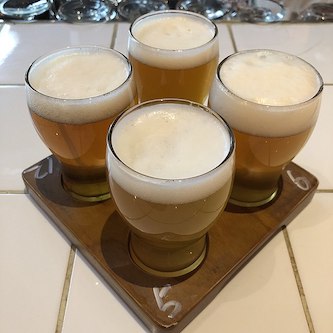
Berkeley Yeast's GM yeasts have uses beyond just making beer taste better. They've made strains that can get rid of bad flavors and speed up making certain types of beer. But using GM technology in brewing is still a big debate, with worries about what people will think and if it'll be allowed by the rules. Some brewers, like Lagunitas Brewing, are careful about using GM yeasts because they're worried about what customers will think and because of the connection between GM foods and certain companies.
On the other hand, Carlsberg, a big beer maker, has a policy against using GM stuff. They focus on natural ways to breed barley and hops that can handle tough conditions. This lines up with the company's commitment to traditional methods and what customers like. The argument about GM beers shows how different brewers have different ways of doing things, with some liking genetic engineering and others putting natural breeding methods first.
In the future, people who support GM beers hope to make brews that stay fresh for longer and always taste the same. Even though there's still a big argument and rules against it, the idea of GM technology changing how beer is made is something that people are really interested in. As the industry keeps changing, having both GM and non-GM ways of making beer shows how complicated things are in the future of beer.
Original news source: Would you drink genetically modified beer? (BBC)
📖 Vocabulary:
Group or Classroom Activities
Warm-up Activities:
– News Summary
Instructions: Students will work in pairs to summarize the article in their own words, focusing on the main points. They should aim to create a summary in under 100 words. Afterward, they can share their summaries with the class and discuss any differences in what they considered important information.
– Opinion Poll
Instructions: Conduct a class opinion poll on the use of genetically modified yeast in brewing beer. Create a scale from 'strongly agree' to 'strongly disagree' and have students stand at the point that represents their opinion. Then, ask volunteers to explain their stance and encourage a respectful class discussion on the topic.
– Vocabulary Pictionary
Instructions: Write down key vocabulary from the article on slips of paper (e.g., genetically modified, strains, brewing, natural breeding, etc.). Divide the class into two teams. Members of each team take turns drawing the words for their teammates to guess within a given time limit. The team with the most correct guesses wins.
– Synonym Challenge
Instructions: List several keywords from the article (e.g., alter, debate, commitment, policy, etc.). In groups, students must come up with as many synonyms as they can for each word. This can be done as a competition to see which group can come up with the most synonyms.
– Future Predictions
Instructions: Individually or in small groups, students will write down their predictions about the future of beer production based on the article. They should consider the role of GM technology and natural methods. Afterward, ask them to share their predictions with the class and discuss which seem most likely and why.
🤔 Comprehension Questions:
Charles Denby is the co-founder and CEO of Berkeley Yeast, and his main goal is to improve the taste of beer by changing the genetic makeup of yeast.
The Tropics yeast is engineered to give beer the flavors of passion fruit and guava without the need for adding extra ingredients to achieve that taste.
Genetically modified yeasts are banned in some countries because of strict regulations against genetically modified organisms (GMOs).
Berkeley Yeast's GM strains can also eliminate off-flavors and speed up the brewing process for certain types of beer.
Lagunitas Brewing is cautious about using GM yeasts because of concerns about customer perception and the negative reputation of GM foods associated with certain companies.
Carlsberg has a policy against using genetically modified ingredients and instead focuses on natural breeding techniques for barley and hops that can withstand harsh conditions, aligning with their commitment to traditional methods and customer preferences.
Supporters of GM beers hope to create brews that have a longer shelf life and consistent taste.
The debate on GM beers highlights the varying philosophies of brewers, with some embracing genetic engineering to improve beer and others prioritizing natural breeding methods.
🎧✍️ Listen and Fill in the Gaps:
Charles Denby, the co-founder and CEO of Berkeley Yeast, is passionate about making beer taste better by changing the genetic of yeast. His company focuses on altering yeast to add new flavors and get rid of ones that aren't so . For example, their Tropics yeast is designed to give beer the flavors of passion fruit and guava, so brewers don't have to add extra ingredients for that taste. Even though these genetically (GM) yeasts are popular in the US, they have rules against them in many countries, like the UK. Berkeley Yeast's GM yeasts have uses beyond just making beer better. They've made strains that can get rid of bad flavors and speed up making certain types of beer. But GM technology in is still a big debate, with worries about what people will think and if it'll be allowed by the rules. Some brewers, like Lagunitas Brewing, are careful about using GM yeasts because they're about what customers will and because of the connection between GM foods and certain companies. On the other hand, Carlsberg, a big beer maker, has a policy against using GM stuff. They focus on natural ways to breed barley and hops that can handle tough conditions. This lines up with the company's commitment to traditional and what customers like. The argument about GM beers shows how different brewers have different ways of doing , with some genetic engineering and others natural breeding methods first. In the future, people who support GM beers hope to make brews that stay fresh for longer and always taste the same. Even though there's still a big argument and rules against it, the idea of GM technology changing how beer is made is something that people are really in. As the industry keeps changing, having both GM and non-GM ways of beer how complicated things are in the future of beer.
💬 Discussion Questions:
1. What is your favorite flavor to taste in a drink, and why?
2. How would you feel if you found out your favorite beer was made with genetically modified yeast?
3. Do you think changing the genetic makeup of food or drinks is a good idea? Why or why not?
4. Have you ever tried a beer or drink with unusual flavors like passion fruit or guava? Did you like it?
5. What is something you eat or drink that you wish could have a better taste?
6. Do you prefer natural ingredients in your food and drinks, or are you open to artificial flavors?
7. How do you think a company should balance tradition and innovation when making their products?
8. What are some of the benefits and drawbacks of using genetically modified organisms in food production?
9. Would you buy a beer that promises to stay fresh longer, even if it uses GM technology? Why or why not?
10. Do you think it's important for companies to listen to their customers' concerns about GM foods?
11. Can you think of any other industries where using genetic modification might be beneficial or controversial?
12. How do you think laws and regulations should handle genetically modified products?
13. What is more important to you when choosing a drink: the flavor or how it's made?
14. Do you think genetically modifying yeast could have any unexpected effects on the environment or health?
15. Would you be willing to try a beer made with genetically modified yeast if it was proven to be safe? Why or why not?
Individual Activities
📖💭 Vocabulary Meanings:
Click a dot next to a word, then click the dot next to its meaning to draw a line connecting them.
Words
Meanings
🔡 Multiple Choice Questions:
🕵️ True or False Questions:
📝 Write a Summary:
Write a summary of this news article in two sentences.
Check your writing now with the best free AI for English writing!