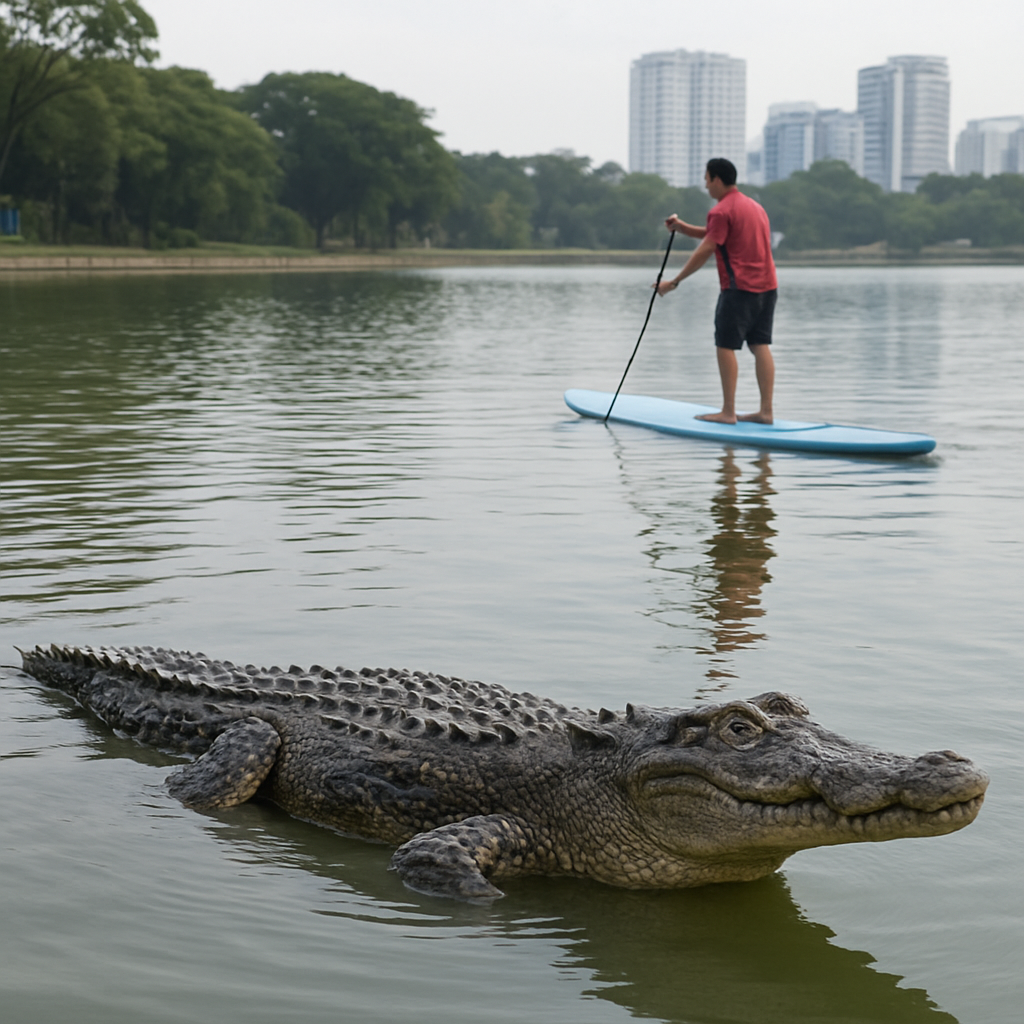
In Singapore, a man named Ye Lin has been charged for creating a fake image of a crocodile using AI technology. The image was shared widely and suggested a crocodile was in Pandan Reservoir. This caused public concern, leading authorities to halt recreational activities like jogging and kayaking.
The local water agency, PUB, took action to search and capture the supposed crocodile before confirming the image was fake. This incident illustrated the impact false information can have on public facilities and their users' safety.
Ye Lin allegedly removed the image and the application used to create it, attempting to hide his actions. He has stated his intention to plead guilty, as reported in local media.
In Singapore, spreading false information can lead to significant legal repercussions. Ye Lin faces possible jail time and a heavy fine if found guilty when he returns to court in November.
Original news source: Singapore crocodile: Man charged over AI image (BBC)
🎧 Listen:
📖 Vocabulary:
Group or Classroom Activities
Warm-up Activities:
1. Have you ever heard or seen fake news in your area?
2. Why is sharing false information harmful to a community?
3. How do you verify if an image is real or not?
4. Discuss a time when technology was used in a surprising way.
5. How should authorities handle people who spread fake news?
🤔 Comprehension Questions:
He was charged with creating a fake image of a crocodile using AI technology.
The image suggested it was in Pandan Reservoir.
Jogging and kayaking were halted by authorities.
The local water agency, PUB, was involved.
He removed the image and the application used to create it.
He faces possible jail time and a heavy fine.
He is scheduled to return to court in November.
🎧✍️ Listen and Fill in the Gaps:
In , a man named Ye Lin has been charged for creating a fake image of a crocodile AI technology. The image was shared and suggested a crocodile was in Pandan . This public concern, leading authorities to halt recreational activities like jogging and kayaking. The local water , PUB, took action to and capture the supposed crocodile before confirming the image was fake. This incident the false can have on facilities and their users' safety. Ye Lin removed the image and the application used to create it, attempting to hide his actions. He has stated his intention to guilty, as reported in local . In Singapore, spreading information can lead to significant legal repercussions. Ye Lin faces possible jail time and a fine if found guilty when he returns to court in November.
💬 Discussion Questions:
1. What motivates people to create and share fake images?
2. How can false information impact public trust?
3. What should be the role of social media in managing false news?
4. In what ways can AI technology help prevent the spread of misinformation?
5. How do different countries handle cases of misinformation?
6. Why is it important for individuals to be critical of the information they consume?
7. What are the challenges in controlling misinformation on the internet?
8. How can educational systems help prepare students to deal with misinformation?
9. Is the punishment for spreading false information in Singapore fair? Why or why not?
10. What role do ethics play in the use of AI technology?
11. Can misinformation ever be beneficial to society? Why or why not?
12. In your opinion, what's the future of news and information sharing?
Individual Activities
📖💭 Vocabulary Meanings:
Click a dot next to a word, then click the dot next to its meaning to draw a line connecting them.