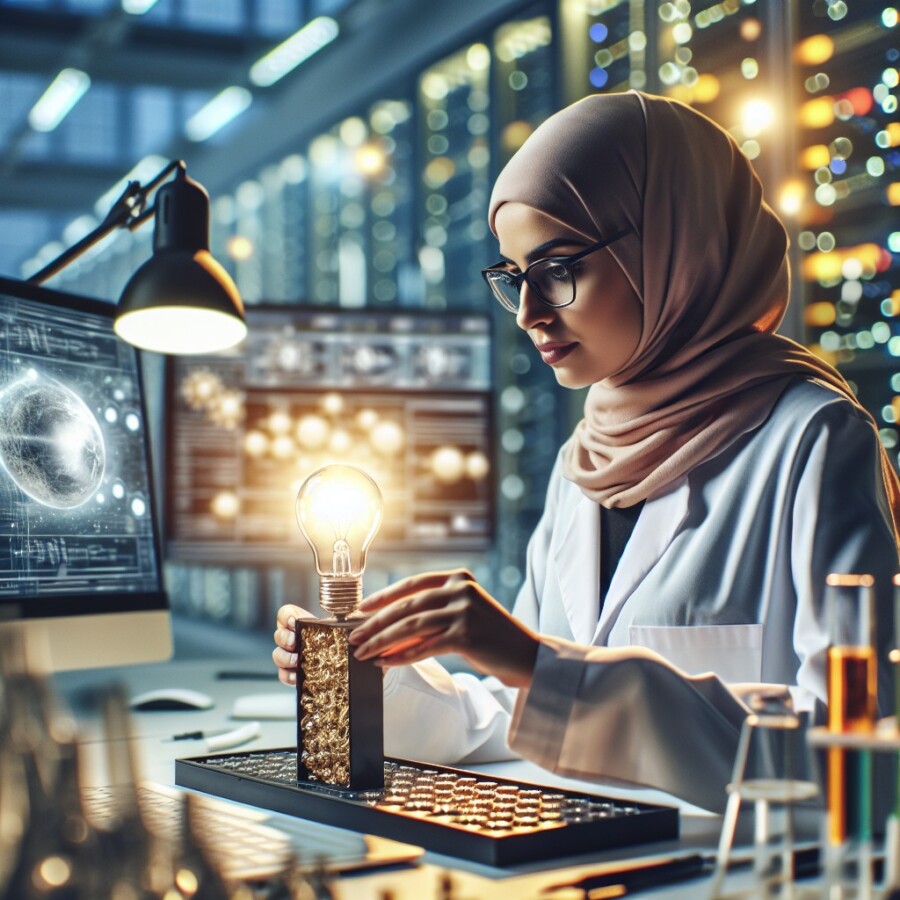
Microsoft and the Pacific Northwest National Laboratory (PNNL) have found a new material using artificial intelligence (AI) and supercomputing that could reduce the amount of lithium used in batteries by up to 70%. They've already used this material to power a lightbulb. By using AI and supercomputers, Microsoft researchers were able to narrow down 32 million possible materials to 18 good candidates in less than a week. This would have taken over 20 years using traditional lab methods. It only took them nine months to create a working battery prototype. AI and high-performance computing are going to change the way we make scientific discoveries in the future.
Lithium is an important part of rechargeable batteries, like the ones in electric cars and smartphones. The demand for lithium is increasing, and by 2025, there might not be enough of it. Extracting lithium has a big impact on the environment and can take a long time. The new material made with AI, called N2116, is a solid-state electrolyte that has been tested and could be a sustainable energy storage solution. Solid-state batteries are safer than regular liquid or gel-like lithium batteries and can charge faster and hold more energy.
In the future, AI and supercomputing will be really important for battery researchers to find new materials that work well. But we have to be careful because sometimes the technology can give us wrong results or materials that can't be made in the lab. The AI used by Microsoft is based on scientific data, so we can trust the information it gives us. Microsoft's AI helped PNNL find a material that could be really good for batteries, and this shows how AI can speed up innovation in the battery industry.
Original news source: New material found by AI could reduce lithium use in batteries (BBC)
🎧 Listen:
📖 Vocabulary:
Group or Classroom Activities
Warm-up Activities:
– News Summary
Instructions: Divide the class into pairs or small groups. Give each group a copy of the article. Ask them to read the article and then write a summary of the key points. After a few minutes, have each group share their summary with the rest of the class.
– Vocabulary Pictionary
Instructions: Write some key vocabulary words from the article on the board. Divide the class into teams. One student from each team comes to the board and chooses a word. They must then draw a picture to represent that word, while their team tries to guess what it is. The first team to guess correctly earns a point.
– Pros and Cons
Instructions: Divide the class into pairs or small groups. Ask each group to discuss the pros and cons of using AI and supercomputing to find new battery materials. After a few minutes, have each group share their ideas with the rest of the class. Encourage a discussion and debate among the students.
– Future Predictions
Instructions: Ask the students to imagine what the future of battery technology could look like with the advancements in AI and supercomputing. Have them write down their predictions and then share them with a partner or small group. Afterward, have a class discussion where students can share their predictions with the rest of the class.
– Headline Creation
Instructions: Divide the class into pairs or small groups. Give each group a few minutes to come up with a catchy headline for the article. The headline should capture the main idea and be attention-grabbing. Afterward, have each group share their headline with the rest of the class. Consider having a class vote to determine the best headline.
🤔 Comprehension Questions:
🎧✍️ Listen and Fill in the Gaps:
Microsoft and the Pacific National Laboratory (PNNL) have found a new material using artificial intelligence (AI) and that could reduce the amount of lithium used in by up to 70%. They've already used this material to power a lightbulb. By using AI and supercomputers, Microsoft researchers were able to narrow down 32 million possible materials to 18 good in less than a week. This would have taken over 20 years using traditional lab methods. It only took them nine months to create a working battery . AI and high-performance computing are going to change the way we make discoveries in the future. Lithium is an important part of rechargeable batteries, like the ones in electric cars and smartphones. The for is increasing, and by 2025, there might not be enough of it. Extracting lithium has a big impact on the environment and can take a long time. The new material made with AI, called , is a solid-state electrolyte that has been tested and could be a energy storage solution. Solid-state batteries are than liquid or gel-like lithium batteries and can charge faster and hold more energy. In the future, AI and supercomputing will be really important for battery researchers to find new that work well. But we have to be careful because sometimes the technology can give us results or materials that can't be made in the lab. The AI used by Microsoft is based on scientific data, so we can trust the information it gives us. Microsoft's AI helped PNNL find a material that could be really good for batteries, and this shows how AI can up in the battery industry.
💬 Discussion Questions:
1. What is artificial intelligence (AI) and how is it used in this article?
2. How would you feel if you could charge your smartphone in just a few minutes?
3. Do you think it's important to find alternative materials for batteries? Why or why not?
4. What is a solid-state battery and why is it safer than other types of batteries?
5. How would you feel if there was a shortage of lithium in the future?
6. Do you think AI and supercomputing will play a big role in scientific discoveries in the future? Why or why not?
7. What is the impact of extracting lithium on the environment?
8. How would you feel if scientists were able to find a material that could replace lithium in batteries?
9. Do you like the idea of using AI to speed up innovation? Why or why not?
10. What is the difference between traditional lab methods and using AI and supercomputing?
11. How would you feel if you didn't have to worry about your smartphone battery dying quickly?
12. Do you think it's important to prioritize sustainable energy solutions? Why or why not?
13. What other areas do you think AI and supercomputing could be used to make scientific discoveries?
14. How would you feel if AI technology gave us wrong results or materials that couldn't be made in the lab?
15. Do you think the use of AI in scientific research will continue to grow in the future? Why or why not?
Individual Activities
📖💭 Vocabulary Meanings:
Click a dot next to a word, then click the dot next to its meaning to draw a line connecting them.
Words
Meanings
🔡 Multiple Choice Questions:
🕵️ True or False Questions:
📝 Write a Summary:
Write a summary of this news article in two sentences.
Check your writing now with the best free AI for English writing!